

Shredded Hash Browns
Ingredients

Equipment
Method
- Dissolve the salt in the water.
- Open the box and pour in the salted water.
- If cooking later, put the carton with hashbrowns and water in the refrigerator overnight.
- The next day, drain any excess water.
- If cooking immediately, let the hashbrowns and water sit for at least 1 hour to refresh, stirring halfway through.
- Drain excess water.
- If you will not eat the full box within a week, prepare half the carton with half the water and salt.
- Store refreshed hashbrowns in the refrigerator for up to a week.
- Heat a large cast iron skillet or griddle to medium-high (375°F).
- Add 2 Tbsp ghee per serving and let it get hot.
- Scatter 1 cup of refreshed hashbrowns per person into the skillet or griddle.
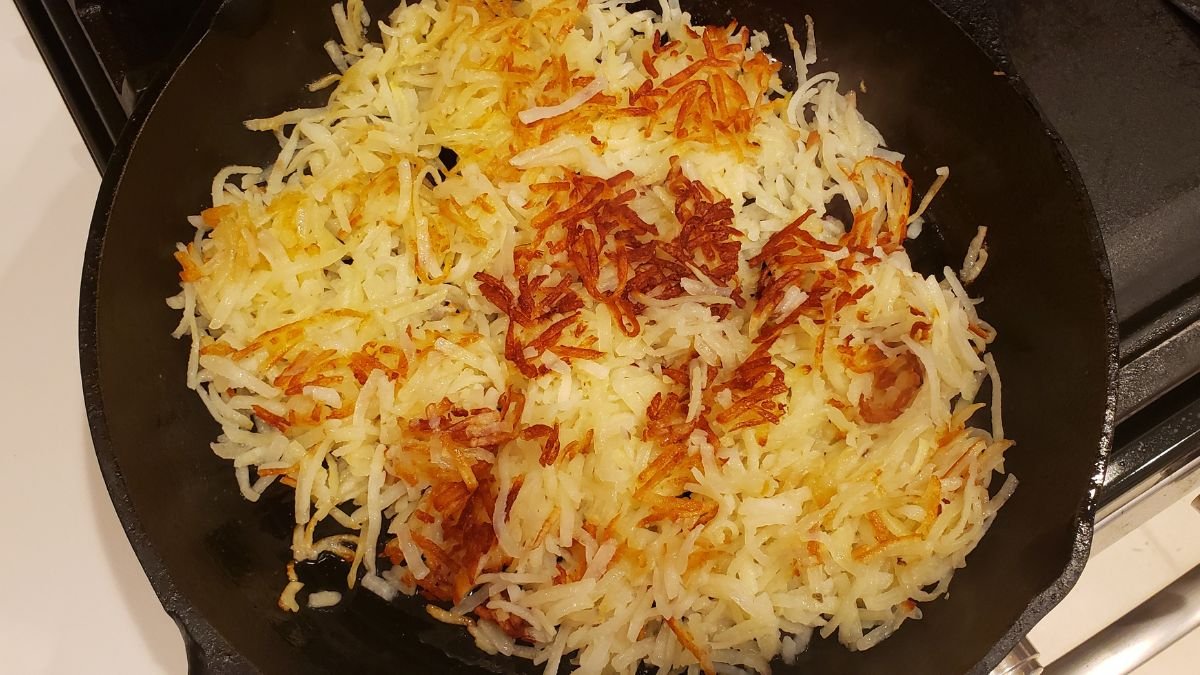
- Let cook undisturbed on the first side for 3-4 minutes until golden brown and crispy on the bottom.
- Flip and cook another 3-4 minutes until both sides are golden brown.
- Serve immediately.
- Top with American cheese, diced ham, sautéed onions, sautéed mushrooms, grilled tomatoes, jalapeño peppers, chili, or sausage gravy.
Notes
Tried this recipe?
Let us know how it was!Why This Recipe Works
There's a specific moment when you become a hash brown person. For me, it happened at Waffle House-scattered hash browns with cheese and ham. That first bite of crispy, golden shreds with the cheese melted into every crevice changed everything. I've never looked back, and to this day, those hash browns are what I crave when I want real breakfast. This isn't about fancy ingredients or complex techniques. It's about understanding what Waffle House and every diner in America already knows: the refresh technique. Commercial dehydrated shredded potatoes, when rehydrated properly with salted water, deliver better texture and more consistent results than anything you'll get from a bag of frozen hash browns. The key is treating those dried potato shreds right-getting them to the exact moisture level that allows proper browning without steaming.
The Technique That Matters
Refreshing is the make-or-break step that separates diner-quality hash browns from the disappointing pile of steamed potatoes most home cooks end up with. You're not just soaking potatoes-you're rehydrating them to precise moisture content while seasoning from the inside out.
What You're Actually Doing
The refreshing process rehydrates dehydrated potato shreds while the salt penetrates every piece, seasoning throughout instead of just on the surface. Cold water creates loose, separated shreds perfect for scattered-style hash browns that crisp beautifully on a griddle. The salt isn't optional-it's working its way into the potato as it absorbs water, which is why restaurant hash browns taste seasoned all the way through while home versions taste bland unless you oversalt the outside.
Professional kitchens refresh potatoes in large batches at the start of service and hold them ready in the walk-in. At home, you can refresh exactly what you need. The ratio matters: 40 oz of dehydrated potatoes to ¾ gallon of salted water. This isn't forgiving-too much water and you get mush that steams instead of crisps, too little and you have crunchy, underhydrated shreds that won't cook through. Morton kosher salt is specified because different salt brands have different crystal sizes, which changes how much seasoning actually dissolves into your water.
Selecting and Preparing Potatoes
Golden Grill Redi-Shred is the industry standard because these aren't grocery store dehydrated potatoes from the baking aisle-they're restaurant-grade shredded potatoes designed for high-volume professional cooking. Consistency matters when you're cooking hundreds of orders.
What to Look For
- Color consistency: Dried shreds should be pale and uniform, not brown or oxidized from age
- Shred thickness: Restaurant-grade products have uniform shred size, which means even rehydration and consistent cooking
- Packaging integrity: Even dehydrated potatoes can go stale-look for well-sealed bags without any moisture inside
Common Mistakes and How to Avoid Them
Hash browns seem foolproof until you end up with soggy mush or burnt shreds. There are specific failure points that ruin perfectly good potatoes.
Problems and Solutions
- Problem: Soggy, steamed hash browns that never develop a crust → Solution: You over-refreshed or didn't drain them properly. After refreshing, potatoes should be moist but not dripping wet. Drain them well.
- Problem: Potatoes stick and tear on the griddle → Solution: Not enough fat, or your cooking surface isn't hot enough before the potatoes hit it. Heat your ghee until it shimmers.
- Problem: Burnt exterior with raw interior → Solution: Heat too high. Hash browns need medium-high heat to develop crust while cooking through completely.
- Problem: Bland flavor throughout → Solution: You salted after cooking instead of during refreshing. The salt must penetrate while the potatoes rehydrate.
Timing and Doneness
Hash browns cook quickly once they hit hot fat-usually 3-4 minutes per side for scattered style. The biggest mistake is flipping too early or stirring constantly. Let them sit and develop that crust.
What Done Looks Like
The bottom should be deeply golden brown with crispy edges before you even think about flipping. You'll see steam rising from the top surface as moisture releases. When you lift an edge with your spatula, it should release cleanly from the pan-not stick or fall apart into individual shreds. The color you want is the color of good diner hash browns: amber to deep gold, with darker crispy bits at the edges where the shreds get extra contact with the hot griddle.
Variations and Serving Suggestions
Once you've refreshed your hash browns, you're working with the same blank canvas every Waffle House cook has. All the classic treatments work.
Make It Your Own
- Classic scattered styles: Scattered (plain), smothered (onions), covered (cheese), chunked (ham), diced (tomatoes), peppered (jalapeños), capped (mushrooms), topped (chili)
- Cooking fat variations: Ghee doesn't burn at high heat, but bacon fat adds serious flavor, or use clarified butter for classic diner taste
- Serving ideas: Breakfast plates with eggs and bacon, loaded as a main dish with sausage gravy, or as a base for breakfast bowls
Why It's Worth Making
Mastering hash browns isn't about impressing anyone-it's about having Waffle House-quality breakfast at home whenever the craving hits. The refreshing technique takes five minutes of actual work, and once you've done it, you have perfectly prepped potatoes ready to hit the griddle. There's something satisfying about understanding a restaurant technique that seems mysterious until someone shows you how simple it actually is. These aren't fancy. They're just hash browns done right-the kind that made me a believer at Waffle House years ago, and the kind I still crave today.
Recipe
Shredded Hash Browns
Ingredients
Equipment
Method
- Dissolve the salt in the water.
- Open the box and pour in the salted water.
- If cooking later, put the carton with hashbrowns and water in the refrigerator overnight.
- The next day, drain any excess water.
- If cooking immediately, let the hashbrowns and water sit for at least 1 hour to refresh, stirring halfway through.
- Drain excess water.
- If you will not eat the full box within a week, prepare half the carton with half the water and salt.
- Store refreshed hashbrowns in the refrigerator for up to a week.
- Heat a large cast iron skillet or griddle to medium-high (375°F).
- Add 2 tablespoon ghee per serving and let it get hot.
- Scatter 1 cup of refreshed hashbrowns per person into the skillet or griddle.
- Let cook undisturbed on the first side for 3-4 minutes until golden brown and crispy on the bottom.
- Flip and cook another 3-4 minutes until both sides are golden brown.
- Serve immediately.
- Top with American cheese, diced ham, sautéed onions, sautéed mushrooms, grilled tomatoes, jalapeño peppers, chili, or sausage gravy.


Was this helpful?
You must be logged in to post a comment.