
Learning how to meal prep doesn't start with buying containers or picking recipes. It starts with understanding why you're still standing in the kitchen every night even though you swore you'd figure this out weeks ago.
Here's what happened: you looked up meal prep ideas, maybe saved a few to your phone, and told yourself Sunday would be the day. Then Sunday came and went. Or you did meal prep once, spent three hours making five identical containers of chicken and rice, ate two of them, and let the rest turn into a science experiment in the back of the fridge.
That's not a discipline problem. That's a method problem.
This guide is built from 15 years of professional food production experience - from managing catering vendor operations at major event venues to supporting executive-level kitchen operations at the Atlanta Marriott Marquis. The system that feeds 500 guests at a catering event is the same system that can replace most of your weeknight dinners with 30 minutes of actual effort. The only difference is scale.
Below, you'll find the actual system - not a Pinterest board of ideas, but the operational thinking that makes meal prep work week after week. It's easier than you think, it will save you thousands of dollars a year, and the food you eat will be cleaner than anything you're getting from a drive-thru or a delivery app.
Disclosure: Some links on BatchAndGather are affiliate links. If you click one and buy something, I may earn a small commission - at no extra cost to you. I only recommend things I'd actually use or that meet the standards I'd apply in a professional kitchen. As an Amazon Associate I earn from qualifying purchases.
Why Meal Prep Feels Harder Than It Should
You've tried some version of this before. Maybe it was a meal plan you found online - a neat little grid with Monday through Friday mapped out. Looks great on paper. Then Monday arrives and you realize you forgot to buy the cilantro, the recipe takes 45 minutes instead of 20, and by Wednesday you're back to drive-thru because the planned meal sounds exhausting.
Meal planning solves the wrong problem. It answers "what should I eat?" but it doesn't answer "when am I supposed to cook it?" You still end up cooking from scratch every night. You just planned which scratch cooking you'd do. The decision fatigue doesn't disappear - it moves. Instead of deciding what to eat at 6 PM, you're deciding at the grocery store on Saturday. The actual cooking still happens five separate times.
The version that works flips this entirely. Instead of planning five different meals and cooking them five different times, you cook a protein once, in bulk, and it replaces two or three dinners that week without repeating the same meal. Add a second protein to your rotation and you've covered most of the week. The decisions are already made because the food is already done.
That's the shift. Not better planning. Better execution.
What Meal Prep Actually Is (And What Most People Get Wrong)
Most meal prep advice treats it like a Sunday marathon. Block out four hours, cook twelve things, fill a fridge full of containers, and hope you eat it all before it goes bad. That's not a system. That's a project - and projects have a 100% failure rate when you have to do them every single week.
Real meal prep is simpler than that. It's cooking one base ingredient in bulk so that two or three weeknight dinners become assembly instead of production. The protein is done. You're just combining it with whatever starch and vegetables you have on hand.
Here's the distinction that changes everything: most people treat meal prep as "cook complete meals ahead of time." Five finished dinners in five containers. That's why it fails - nobody wants to eat the same finished meal three days in a row, no matter how you dress it up.
The approach that actually sticks is cooking components, not meals. A batch of seasoned ground beef isn't one meal repeated five times. Paired with tortillas one night, it's tacos. Spooned over chips with cheese the next night, it's nachos. Wrapped in a flour tortilla with rice and beans, it's a burrito. The protein is the same. The meals feel different. And because you're only pulling from that batch two or three times in a week - not five - you never hit the wall where you're sick of it.
The real power shows up when you add a second batch component. A pot of shredded chicken sitting next to the seasoned beef means your weeknight options just doubled. Chicken tacos, chicken salad, chicken quesadillas, soup, sandwiches - all from a second protein that took the same 30 minutes of attention to prepare. Two batches, and you've effectively replaced your weeknight cooking for the entire week.
This is how every restaurant kitchen on the planet operates. They don't cook your specific dish from scratch when you order it. They've already prepped the proteins, the sauces, the starches, and the vegetables. Your order is just assembly. That's what meal prep looks like when it's done right - and it's exactly what you can do at home.
When you cook components in bulk like this, the method has a name in professional kitchens: batch cooking. It's not a trend or a hack. It's the standard operating procedure for feeding large numbers of people efficiently. And scaled down to a home kitchen, it's the fastest path from "I don't know what's for dinner" to "dinner's ready in ten minutes."
How to Meal Prep for the Week in One Cook Session
Here's what a real meal prep session looks like when you strip away the Instagram aesthetics and the seventeen-container photos. One ingredient. About 30 minutes of your actual attention. A couple hours of total time, most of which the stove handles while you do literally anything else.
The Ground Beef Example
Buy 10 pounds of ground beef. At Sam's Club, that's roughly $5.50 per pound in a 10-pound family pack. Compare that to $8-9 per pound for a single pound at Kroger. We'll come back to that math.
Brown the beef in your largest skillet or pot. Add your seasoning - paprika, cumin, oregano, garlic, onion, salt, and black pepper. These are already in your cabinet. If they're not, one restock run covers you for months of batches, not just this one.
Here's the part that matters: the total cook takes about two hours, but you're only active for about 30 minutes of it. You brown the meat, add the seasoning, stir it a few times, put the lid on, and walk away. The stove does the rest. Go throw in a load of laundry. Watch your show. Scroll your phone. Check back occasionally. The 90 minutes of hands-off time is the stove's job, not yours.
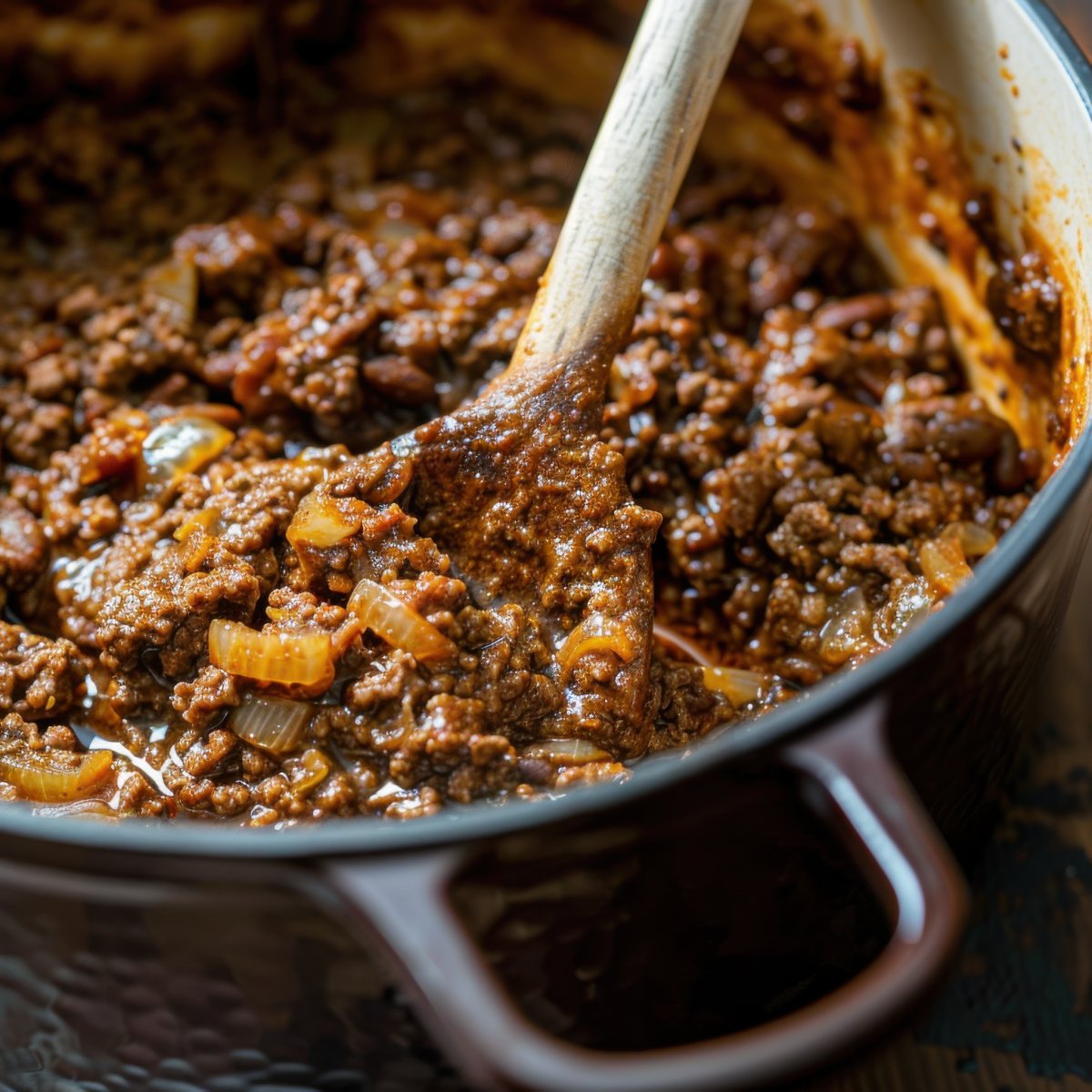
Batch Taco Meat
Restaurant-Style
When it's done, portion it into individual servings and vacuum seal what you won't use in the next 48 hours. The rest goes in the fridge.
Now look at what's in your kitchen this week:
- Tuesday - Tacos: warm the meat, load up tortillas, whatever toppings you've got. Dinner in 10 minutes.
- Thursday - Nachos: chips on a sheet pan, meat and cheese on top, broil for 4 minutes. Done.
- Next Tuesday - Burritos: pull a vacuum-sealed portion from the freezer in the morning. Meat, rice, beans, cheese, wrap it up.
That's three dinners handled from one batch plus 5 batches in the freezer. Not 8 identical meals - three different ones, spread across the week or even across two weeks, with reserves built in the freezer whenever you want a Mexican ground beef meal. The rest of your nights, you cook something else, order in, or pull from a second batch component you prepped the week before.
When you're ready, add a second protein. Chicken thighs, Rotisserie chicken, Italian sauce meat - whatever your household eats. Now you've got two batch components in rotation, and most of your weeknight dinners are just assembly. The more proteins you add to your inventory, the more meals you can replace. One batch covers a few nights. Three or four batches in your freezer and you're barely cooking during the week at all.
The Real Time Commitment
Let's be honest about the time. A batch cook is a 2-hour window, not a 30-minute project. But the actual work - the standing, stirring, measuring, browning - is about 30 minutes. The rest is passive time. The stove is working. You're not.
Compare that to cooking from scratch five nights a week: 30-45 minutes of active cooking per meal, times five. That's 2.5 to 3.5 hours of active kitchen time spread across a week, plus five separate cleanup sessions. One batch cook replaces two or three of those nights with 10-20-minute assembly and almost no cleanup. Even if you batch cook twice a week, you're spending less total active time than nightly cooking.
Meal Prep on a Budget: Why Cooking in Bulk Saves You Thousands
Cooking one serving at a time is the most expensive way to eat. Every trip to the grocery store is a separate transaction with its own impulse buys, its own forgotten ingredients, and its own waste cycle. You buy a bunch of cilantro for one recipe, use three sprigs, and throw the rest away on Thursday.
Batch cooking changes your purchasing behavior, not just your cooking behavior. And the savings stack up fast.
The Bulk Buying Math
One pound of ground beef at Kroger runs $8-9 per pound. A 10-pound family pack at Sam's Club is about $5.50 per pound. That's a $3-3.50 savings per pound just by buying in bulk.
If your household goes through 4 pounds of ground beef per week - a modest number for a family of four - that's $12-14 saved per week. Across a year, that's over $700 in savings on a single protein. And you haven't changed what you eat. You haven't clipped a coupon. You've just stopped buying one pound at a time.
Now apply the same math to chicken thighs, pork shoulder, and every other protein your family eats regularly. The per-unit savings compound across every ingredient.
Waste Elimination
Here's the savings most people don't calculate: the food they throw away. The average American household wastes roughly $1,500 worth of food per year. That's meat that went bad because you forgot about it, vegetables that wilted in the drawer, and leftovers that sat in the fridge for six days until you gave up and tossed them.
The vacuum sealer is non-negotiable for batch cooking. Portioned and sealed, your cooked proteins last months in the freezer instead of days in the fridge. The 24/48 Rule applies here: anything you won't eat within 48 hours gets vacuum sealed and frozen immediately. No more "I forgot about the leftovers" waste. No more $15 worth of chicken turning into a trash can contribution because life got busy.
The Eating-Out Replacement
This is where the real money lives. Five nights of feeding a family of four through takeout or delivery runs $40-60 per meal - that's $200-300 per week, or $10,000-15,000 per year. Drive-thru is cheaper but still $28-40 per stop, adding up to $7,000-10,000 annually. Even "quick" grocery runs for tonight's dinner cost $25-35 per trip when you factor in impulse buys.
Every meal you replace with a batch-prepped dinner that cost $3-4 per serving is money that stays in your pocket. Replace just three dinners a week with batch-prepped meals and you're saving $100-150 per week compared to takeout. That's $5,000-8,000 per year.
The Total Picture
Add it up: lower per-unit costs from bulk buying, near-zero food waste from proper storage, and fewer meals eaten out. Families running this system consistently save thousands of dollars per year - not a theoretical number from a budgeting blog, but tracked real-world data from running this system in my own household.
If you're only saving a thousand dollars a year, you're shopping better but you're not batch cooking. The savings from batch cooking come from all three layers working together: buy in bulk, waste nothing, and replace the expensive meals you're currently buying from someone else.
How to Store Meal Prep So It Lasts All Week
Storage is where most meal prep fails silently. You do the work on Sunday, and by Thursday the food tastes like the inside of a plastic container. The fix isn't complicated, but it's not optional.
The Storage Rule That Makes It Work
Cook raw meat within 24 hours, vacuum seal and freeze portions within 48 hours of purchase, that you won't eat this week. No exceptions. This is a professional kitchen standard that works just as well at home, and it's the single most important habit for making meal prep sustainable long-term.

The 24/48 Rule
he Batch Cooking System That Stops You From Throwing Away Grocery Money
Fridge vs. Freezer
Most cooked proteins and grains last 3-4 days in the fridge before quality drops. In a vacuum-sealed bag in the freezer, the same food holds for 2-3 months with minimal quality loss. So your batch isn't just this week's dinners - it's a reserve. Make a batch of Italian meat sauce on Sunday, eat from it twice this week, and the sealed portions in the freezer give you easy dinners three weeks from now without any additional work.
This is how the inventory builds. Week one, you batch cook ground beef. Week two, you batch cook shredded chicken. Week three, you batch cook Italian meat sauce. By week four, you've got three different proteins in your freezer, each one ready to pull and assemble into a completely different dinner on any given night. You're not meal prepping anymore. You're running a system.
Why the Container Matters Less Than You Think
The meal prep container industry is a massive search volume business. Glass containers, compartment containers, matching lid sets - it's a rabbit hole. Here's what actually matters: for fridge storage, any container with a tight seal works. For freezer storage, vacuum-sealed bags beat rigid containers because they eliminate air exposure and stack flat. Don't let the container decision delay the cooking.
Meal Prep for Beginners: Start With One Ingredient
The biggest mistake beginners make is trying to meal prep an entire week of food on their first attempt. Five proteins, three sides, chopped vegetables, portioned snacks - and suddenly a simple idea has become a six-hour Sunday project you'll never do again.
Start with one ingredient. Just one.
Pick the protein your household eats most often. Ground beef, chicken thighs, pulled pork - whatever shows up on your table the most. Buy it in bulk, cook it with a simple seasoning profile, portion it, and store it. That's your first batch. Two hours of total time, 30 minutes of actual attention.
That single batch is going to replace two or three dinners this week. Not all of them - just enough that you notice the difference. Two nights where you open the fridge and dinner is a 10-minute assembly job instead of a 45-minute production. That's the win. That's what hooks you.
Your Second Batch
After a week or two of running one batch component, add a second. If your first was seasoned ground beef, your second might be shredded chicken - cooked plain so it works in any cuisine. Now you've got two proteins in your fridge or freezer, and your weeknight options just doubled without doubling your time.
This is how the system scales. It's not about one batch replacing every meal. It's about adding to your inventory over time until the inventory does the work for you. One protein covers a couple of nights. Two proteins cover most of the week. Three or four proteins in your freezer and you can go weeks without a traditional from-scratch cooking session.
When It Clicks
There's a moment - usually around week three - where you open the fridge and realize you have three different dinners ready to assemble without doing any cooking. That's the moment the system takes over. You're no longer motivated by willpower or a meal plan on your fridge. You're motivated by the fact that dinner is already done and you'd have to actively choose to make it harder by starting from scratch.
And here's the part nobody talks about: you're eating better. Not because you went on a diet, but because a batch-cooked protein seasoned in your own kitchen with ingredients you chose is cleaner than anything you'd get from a drive-thru window or a delivery bag. You know exactly what's in it. There's no mystery oil, no preservative list, no added sugar hiding in a sauce. Cleaner eating is a byproduct of the system, not an extra effort.
Meal Prep Like a Restaurant: The System Behind the System
Every restaurant you've ever eaten at uses the same fundamental approach to food: prep everything ahead, store it properly, and assemble to order. When you sit down and order a grilled chicken sandwich, the kitchen doesn't start from raw chicken. The chicken was seasoned, cooked, and portioned during prep. Your order triggers assembly - bread, chicken, toppings, plate, out the door in four minutes.
That's not a restaurant secret. It's an operational system. And it scales in both directions - from a 200-seat restaurant kitchen down to your kitchen at home.
I spent 15 years in professional food production. I ran catering vendor operations at major event venues in Atlanta, managed a food court kitchen for the Georgia Pacific building under Marriott's Institutions division, and served as the Executive Chef's Administrative Assistant at the Atlanta Marriott Marquis - a property with five restaurants, a 3,000-capacity banquet kitchen, and over 1,600 rooms. I watched world-class kitchen operations from the inside, and the system that produced dinner for 500 people on a Saturday night is the same system that produces dinner for my family from a Sunday cook session. The principles don't change with the headcount:
- Cook components, not complete meals.
- Season and store in portions that match how you'll use them.
- Separate components that have different shelf lives. Noodles never sit in broth. Sauce stores apart from protein.
- Label everything with a date. Rotate oldest to the front.
This is what separates meal prep that lasts from meal prep that fizzles out after two weeks. The Instagram version of meal prep is about making food look organized in matching containers. The professional version is about building an inventory of ready-to-use components so that weeknight cooking becomes a five-minute assembly job.
The Formula Underneath
Here's something that shifts how you think about cooking entirely. Most home cooks operate by following recipes. A recipe is a set of specific instructions for a specific dish - this ingredient, this amount, this technique, this result. That works, but it only gives you one meal per recipe you learn.
What restaurants teach their cooks is the formula underneath the recipe. A roux is just fat and flour cooked together. Add milk and it's béchamel. Add stock and it's velouté. Add cheese to the béchamel and it's the base for mac and cheese, for au gratin, for a hundred different dishes. One formula, unlimited meals.
The same thing happens with batch cooking. Seasoned ground beef is a formula. Change the seasoning profile from taco to Italian, and the same method produces a completely different set of meals: spaghetti, lasagna, baked ziti, stuffed peppers, Italian meatball subs. The method didn't change. The flavor did. And you didn't need a new recipe for any of them.
My daughter explained this once using music. She said you can write a song without knowing music theory - plenty of people do. But music theory gives you a vocabulary for understanding why certain things sound good together. Once you have that vocabulary, you're not limited to the songs you've memorized. You can create new ones because you understand the structure underneath.
That's the difference between following a recipe and understanding a cooking system. The recipe gives you one meal. The system gives you the ability to create meals you were never taught, because you understand how the components work together.
What to Meal Prep This Week
If you've read this far and you're ready to try, don't overthink the first one. Pick one starting point:
If your household eats Mexican-ish food (tacos, burritos, nachos):
Start with the Batch Taco Meat recipe. 5 pounds of ground beef, about 30 minutes of active work during a 2-hour cook, and you've got enough seasoned protein to replace two or three dinners this week - with extra portions vacuum sealed for future weeks.
If your household eats Italian-ish food (pasta, baked ziti, lasagna):
Start with the Batch Italian Meat Base recipe. Same method, different seasoning, completely different set of meals.
If you want to go all in:
Do both. Two batch cooks in one weekend - about an hour of total active time - and you've got enough protein variety to cover nearly every weeknight dinner for the next two weeks.
Every recipe includes full ingredient lists, step-by-step instructions, storage guidance, and an Instacart button if you don't want to deal with the grocery store. Pick one. Make it this week. See what it feels like to open the fridge on a Tuesday and know dinner is already handled.




Stop Cooking Every Night
The kitchen doesn't have to be the hardest part of your day. One batch. A couple hours of total time with 30 minutes of actual work. Dinners that don't require you to think, plan, shop, or start from scratch at 6 PM when you're already done.
You'll spend less money because you're buying in bulk instead of one meal at a time. You'll waste less food because everything is portioned and stored properly. And you'll eat cleaner because you know exactly what's in your food - no mystery ingredients, no preservative lists, no hidden sugars.
Every batch recipe on Batch and Gather is free. The method, the grocery lists, the storage instructions - all of it. If you want the weekly systems, seasonal cooking guides, and the kind of real-world food cost data nobody else publishes, join the free email list. You'll get a 5-day email series that walks you through your first batch from grocery list to assembled dinners.
Get the 5-Email Walkthrough
If you want a step-by-step introduction to batch cooking - the grocery list, the cook session, the five meals you'll build from it - I'll walk you through it over five days. One email per day, no fluff.