
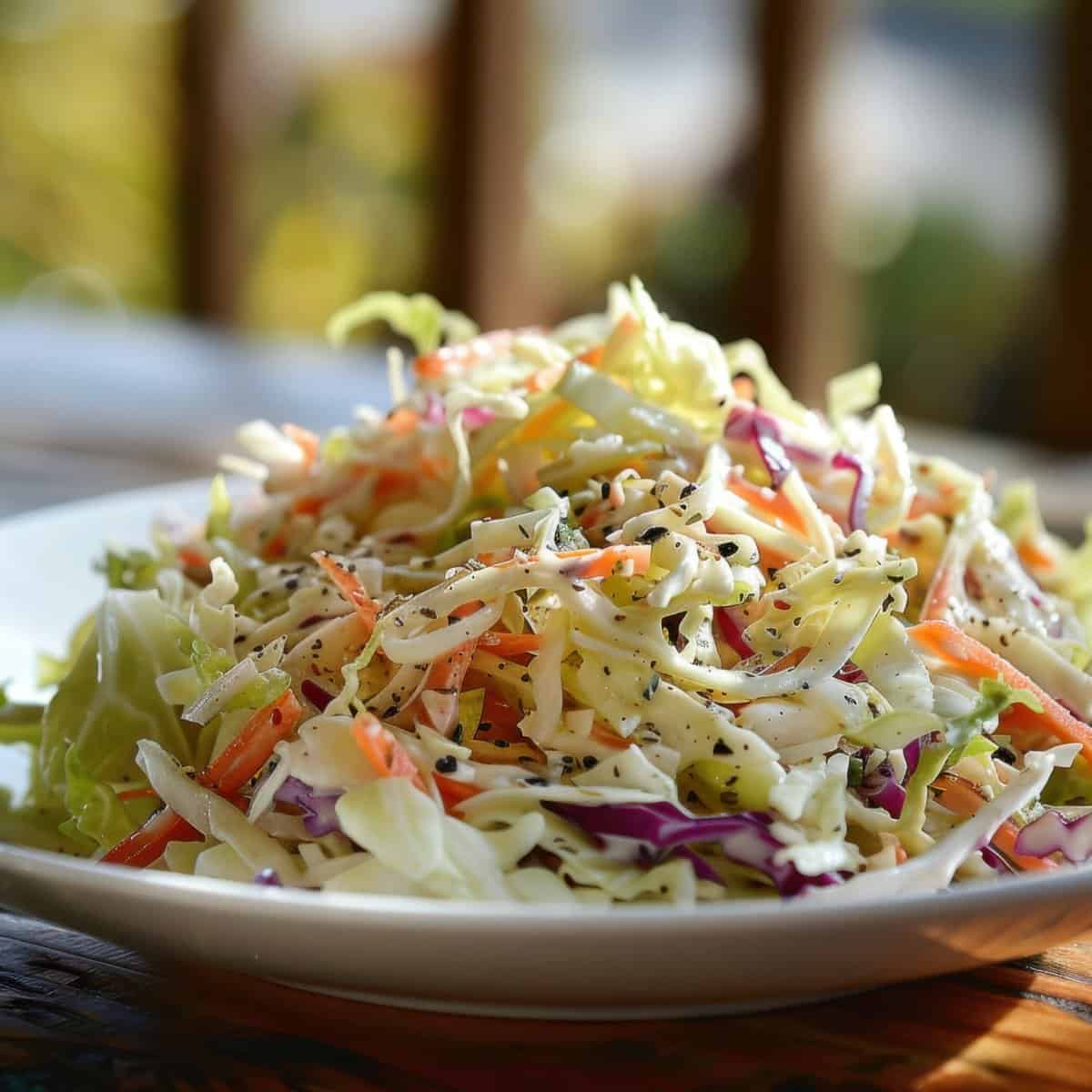

Southern Coleslaw
Ingredients

Equipment
Method
- Finely shred the cabbage using a sharp knife, mandoline, or food processor.
- Grate the carrots.
- Combine cabbage and carrots in a large mixing bowl.
- Whisk together mayonnaise, white vinegar, sugar, celery seed, salt, and black pepper in a separate bowl until smooth.
- Pour the dressing over the shredded vegetables and mix well to coat evenly.
- Cover and refrigerate for at least 30 minutes to allow the flavors to meld.
- Serve cold as a side dish or as a topping for BBQ pork sandwiches, hot dogs, or burgers.
Notes
Tried this recipe?
Let us know how it was!Why This Recipe Works
It took me a long time to figure out the Southern coleslaw I really wanted after trying countless commercial versions. I finally settled on something similar to what the Varsity restaurant serves-not really sweet, a little bit salty, and tangy, but functioning as a fresh condiment rather than a statement side dish. This is the slaw I love on hot dogs, chili dogs, any kind of barbecue or saucy sandwich. It goes great with pork and helps cut through sweetness and salty flavors with its acidity and the cooling richness from the mayonnaise. The Duke's mayonnaise is essential here-it's tangier and less sweet than other brands, which means you control the flavor profile instead of fighting sugar that's already built into the mayo. The celery seed is the signature that makes this taste like proper Southern slaw instead of just dressed cabbage.
The Technique That Matters
The key to coleslaw that doesn't become a watery disaster is achieving the right cabbage texture and building a dressing with proper acid-to-fat balance. Too thick and the dressing clumps on top; too thin and it runs off, pooling at the bottom where it does nothing.
What You're Actually Doing
You're creating uniform vegetable pieces that maximize surface area for dressing adhesion while maintaining structural integrity. Fine shredding-not chopping-gives you long, thin strips that hold dressing without turning mushy. A sharp knife works if you've got good knife skills, but a mandoline or food processor with a shredding disk gives you the consistency that's hard to achieve by hand and saves serious time when you're working through a full head of cabbage.
The dressing comes together in a separate bowl first, which lets you taste and adjust before it hits the vegetables. You're emulsifying the mayo with vinegar and seasonings, creating a coating that clings rather than separates. Mixing the dressing separately also prevents overdressing-you can add gradually until the slaw is properly coated but not swimming. Professional kitchens prep slaw this way because it's easier to maintain quality when components come together at service time rather than hours ahead.
Selecting and Preparing Cabbage
Green cabbage is the foundation here. It's sturdy, holds its crunch through dressing and sitting time, and has a clean flavor that doesn't compete with the dressing. You want tight, heavy heads with crisp outer leaves-no wilting, no brown spots, no sad-looking cores.
What to Look For
- Weight: A heavy head means dense, fresh leaves with high moisture content-these stay crisp longer after dressing
- Color: Bright green outer leaves indicate freshness; faded or yellowing leaves mean old cabbage that's already lost the crunch you need
- Core: The cut end should look fresh and moist, not dried out or discolored-that tells you how long it's been sitting
- Carrots: Medium-sized carrots with good color add sweetness and visual contrast; grate them on the large holes of a box grater for texture that matches the shredded cabbage
Common Mistakes and How to Avoid Them
Most coleslaw problems come from rushing the prep or misjudging the dressing ratio. Here's what typically goes sideways.
Problems and Solutions
- Problem: Watery slaw after sitting → Solution: Don't salt the cabbage ahead to "draw out moisture"-that's for fermented slaw, not creamy Southern style; the salt in the dressing is sufficient
- Problem: Dressing slides off and pools at the bottom → Solution: Make sure vegetables are completely dry before dressing; any surface water prevents the mayo from adhering
- Problem: Bland, flat flavor → Solution: Taste your dressing before mixing-it should be slightly overseasoned on its own because the cabbage will dilute it significantly
- Problem: Too sweet or cloying → Solution: The vinegar should be as prominent as the sugar; if it tastes like dessert, add more vinegar in small increments until balanced
Timing and Doneness
Coleslaw doesn't cook, but it needs time for flavors to marry. The sweet spot is letting it chill for at least 30 minutes before serving, but not so long that it gets soggy and loses its purpose.
What Done Looks Like
The cabbage should still have noticeable crunch when you bite into it-it softens slightly as it sits, but it should never be limp. The dressing should coat every piece without excess liquid visible in the bowl. After the initial rest, the slaw holds well for several hours if kept cold. It's actually better after an hour than immediately after mixing because the celery seed blooms and the flavors integrate. Beyond four hours, quality starts declining as the acid begins breaking down the cabbage texture.
Variations and Serving Suggestions
This base recipe adapts easily depending on what you're serving it with or what flavor profile you're chasing.
Make It Your Own
- Tangy version: Increase vinegar to 3 tablespoons and add a teaspoon of Dijon mustard for sharper flavor that pairs well with rich pulled pork
- Lighter option: Replace half the mayo with Greek yogurt-you lose some richness but gain tang and cut calories significantly
- Add crunch: Toss in thinly sliced red onion or a handful of sunflower seeds just before serving for additional texture
- Serving ideas: Classic alongside barbecue or fried fish, piled on pulled pork sandwiches, on top of hot dogs and chili dogs, next to any saucy sandwich that needs cooling contrast
Why It's Worth Making
Southern coleslaw is one of those recipes where proper technique elevates something simple into something reliable and consistently good. It's not complicated, but doing it right-proper shredding, balanced dressing, correct timing-means you'll have a side dish that actually gets eaten instead of pushed around the plate. This is the slaw that holds up at a backyard party, that doesn't make your sandwich bun soggy, and that people scrape the bottom of the bowl to finish. It's the condiment that makes rich, saucy foods better by providing that cool, acidic, crunchy contrast they need. Master this version and you've got a go-to recipe that works for everything from weeknight dinners to feeding a crowd at a cookout.
Recipe
Southern Coleslaw
Ingredients
Equipment
Method
- Finely shred the cabbage using a sharp knife, mandoline, or food processor.
- Grate the carrots.
- Combine cabbage and carrots in a large mixing bowl.
- Whisk together mayonnaise, white vinegar, sugar, celery seed, salt, and black pepper in a separate bowl until smooth.
- Pour the dressing over the shredded vegetables and mix well to coat evenly.
- Cover and refrigerate for at least 30 minutes to allow the flavors to meld.
- Serve cold as a side dish or as a topping for BBQ pork sandwiches, hot dogs, or burgers.


Was this helpful?
You must be logged in to post a comment.