
Every recipe tells you to "heat oil in a pan." Almost none tell you which fat, or why the choice matters. It matters, especially in batch cooking, where you're cooking at high heat, in large quantities, and storing food for days. The wrong fat at the wrong temperature smokes, breaks down, and changes the flavor of everything it touches.
Professional kitchens don't grab whatever bottle is closest. They choose fats based on the job: heat tolerance for searing, flavor profile for finishing, cost efficiency for volume cooking. That same thinking applies to your batch cooking, you just haven't been taught to think about it that way.
This page breaks down the fats and oils that actually belong in a batch cooking kitchen. Not fifteen options with a chart you'll never memorize,a core set of fats with clear jobs, plus the additions that matter for specific cuisines. That's the system.
Disclosure: Some links on BatchAndGather are affiliate links. If you click one and buy something, I may earn a small commission - at no extra cost to you. I only recommend things I'd actually use or that meet the standards I'd apply in a professional kitchen. As an Amazon Associate I earn from qualifying purchases.
Tallow, Beef Fat, and What Nobody Explains
Tallow, Beef Fat, and What Nobody Explains
Before you buy anything, you need to understand a naming problem that confuses almost everyone, including most of the people making YouTube videos about cooking fats.
The word "tallow" gets used for two different things, and they don't behave the same way.
Rendered suet (organ fat) is what tallow originally meant. Suet is the hard fat surrounding beef kidneys and organs. When you render it down, it solidifies at room temperature into something firm, almost hard-tack. It creates a plastic-like, non-stick finish when used to season cast iron, and it performs beautifully in baking where you want pockets of air (pie crusts, biscuits) because of its higher melting point. This is the hardest to find commercially. Regenerative farms like White Oak Pastures sell suet if you want to render your own.
Rendered muscle fat is what many commercial "tallow" products may actually be. This is the fat you trim from steaks, roasts, and ground beef, the fat that renders out when you brown a pound of chuck. At room temperature, it stays soft or semi-liquid, not hard like true suet tallow. It's an excellent cooking fat, but it doesn't give you that hard seasoning finish on cast iron, and it behaves differently in baking.
The challenge is that most products labeled "tallow" don't specify which type of fat was rendered. The term has become a catch-all across commercial producers, YouTube, and food media. That's not necessarily a problem, both are quality cooking fats, but if you're buying tallow specifically for cast iron seasoning or for baking where melting point matters, you want to know what you're getting. Check the consistency at room temperature: hard and firm means suet-rendered; soft or semi-liquid means muscle fat. Both are worth buying. They're just different tools.
The takeaway: if someone recommends "tallow" without specifying which kind, ask questions. The distinction matters for seasoning cast iron, for baking, and for understanding what you're actually buying.
The Base Fats, What's Actually in My Kitchen
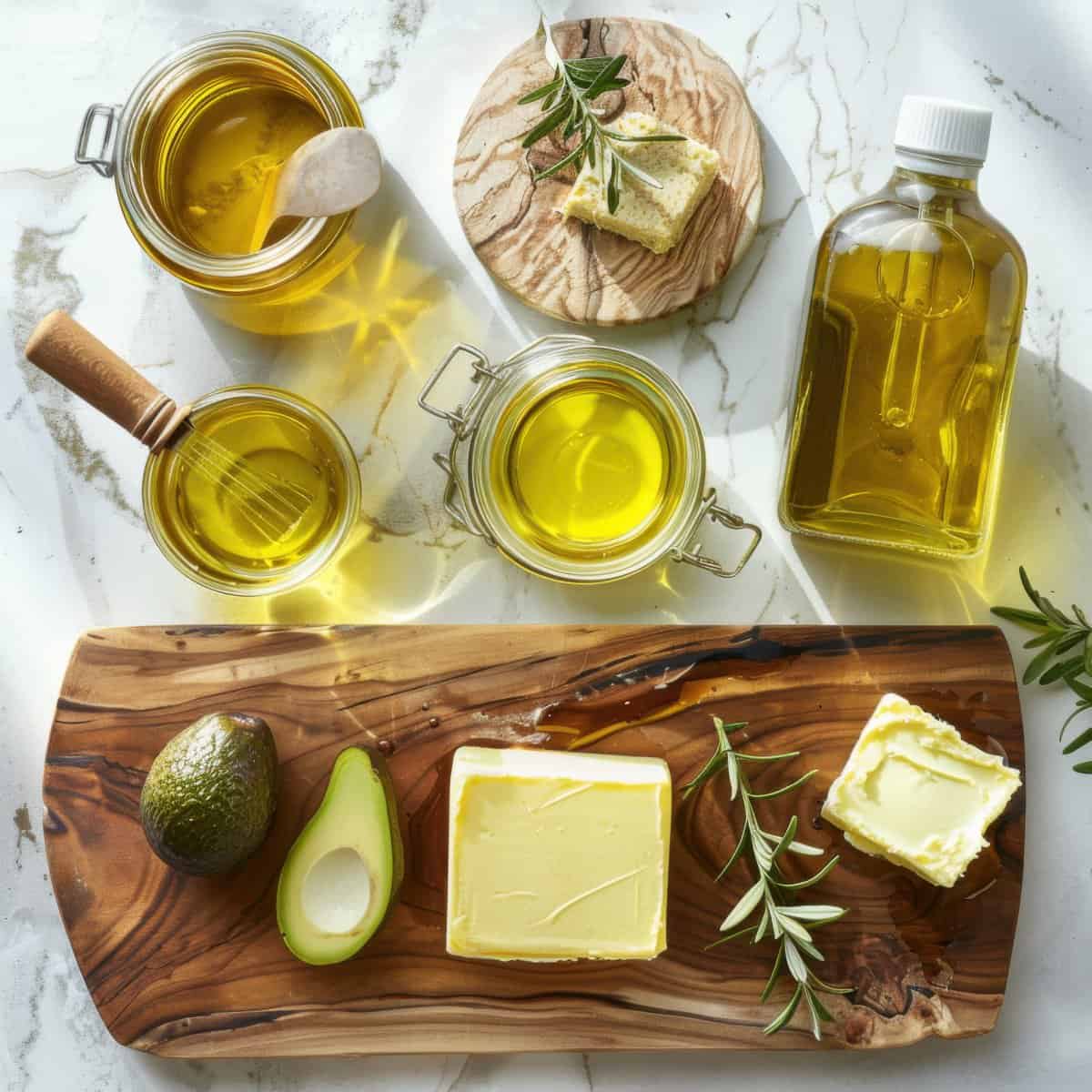
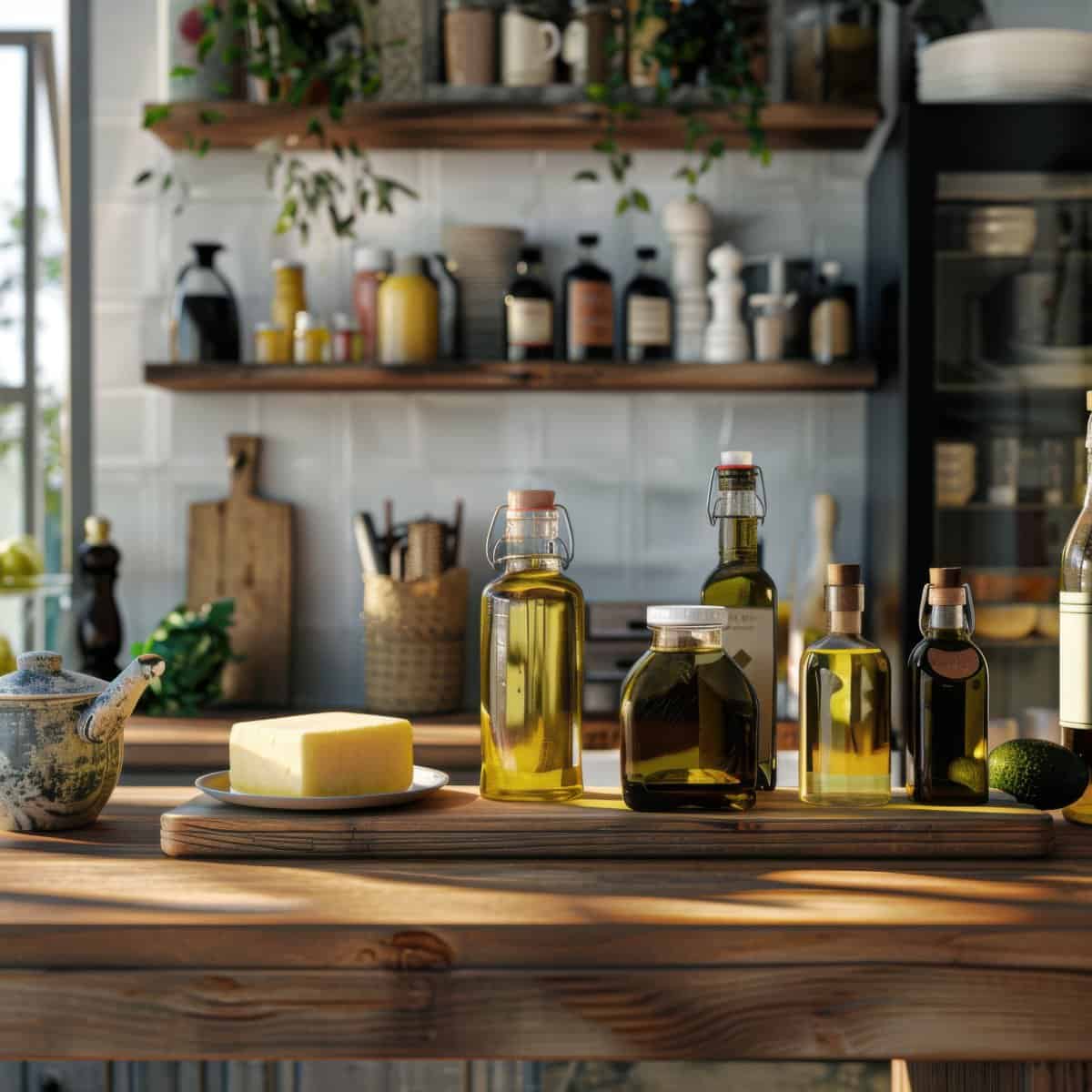
I keep six base fats in my kitchen. Each one has a job, and none of them overlap much. Here's the lineup and why each one earns its spot.
Beef Tallow
The workhorse. I buy Kettle & Fire grass-fed beef tallow as my staple and supplement it with fat I render myself from batch cooking ground beef and chuck roasts. This handles searing, pan frying, roasting, and deep frying. If I'm cooking meat, beef tallow is the default fat in the pan. When I deep fry fish, it goes in tallow. For cast iron seasoning, rendered suet is the first choice if I have it, the muscle-fat tallow is second.
Grass-Fed Ghee
The vegetable and egg fat. I use 4th & Heart as my primary brand, with quality ghee from Costco as a backup. Ghee is clarified butter with the milk solids removed, which raises the smoke point to around 450°F. This is what I reach for when cooking vegetables, eggs, and breakfast items. I switched to ghee for eggs specifically because butter kept burning in the pan, ghee handles the heat without the ugly, brown-speckled eggs that come from scorched milk solids.
Grass-Fed Butter
The flavor finisher. Butter has a low smoke point (around 300-350°F), and the milk solids brown fast because of its water content. That's a feature when you want it, butter is unbeatable for pan sauces, for the cream sweetness and browning in pancakes and French toast, and as the aromatics base when sautéing onions for rice pilaf or soup bases. The gear shift with butter isn't the product, it's pan heat management. Keep the heat gentle and butter performs. Crank it up and it burns before the food goes in.
Lard
The quiet backup. I keep Morrell brand in a 1-pound block in the fridge. Lard's primary job in my kitchen is refried beans, where nothing else gives you the same flavor and texture. It also serves as a backup to tallow when I'm running low. I don't fry in it at home because rendering pork fat puts an odor in the house that isn't bad, but isn't pleasant either. For baking, biscuits, pie crusts, lard outperforms butter and costs less.
Avocado Oil
The neutral utility player. This handles anything that needs a fat with zero flavor influence: mixes, batters, rubs, marinades, and high-heat cooking when no animal fat is available. Refined avocado oil has a smoke point around 520°F and won't compete with your seasonings. It's not my first choice for anything, but it fills every gap.
Extra Virgin Olive Oil
Finishing only. Salad dressings, drizzling on completed dishes to receive the most nutritional benefit, dipping bread. EVOO has a smoke point around 375°F, fine for the gentlest sautéing, but it breaks down and turns bitter under real heat. The expensive bottle is wasted if you're searing anything in it.
That's the base system. Six fats, clear lanes, no overlap. No seed oils in the pantry. Never needed them with better options available.
Cuisine-Specific Fats
Depending on what you cook, a few more fats earn a permanent spot.
Toasted sesame oil
A finishing oil, never for cooking. A few drops on completed ramen, stir-fry, or a rice bowl add a depth that no other oil can replicate. Heat destroys the toasted flavor and makes it bitter.
This one is personal for me. When I was in my 20s, like a lot of people in their 20s, I was drawn to Asian cuisine. It was delicious, it was trendy, and it set you apart as a cook. I loved shopping in Asian markets and exploring flavors I didn't grow up on. I had a lot of fun and learned a lot, though not nearly as much as I've learned in the recent decade thanks to the internet and the explosion of Asian cooking shows. But the most powerful flavor discovery from that time was toasted sesame oil. I loved it, had to restrain myself from putting it in everything before I learned how to throttle it for different dishes. To me, it's a flavor that screams ancient comfort food.
I use toasted sesame oil across all of my Asian cooking. It's a staple in my ramen and noodle dishes, and as more Asian and fusion batch recipes come to this site, you'll see it called for regularly. If you cook any Asian-influenced food at home, this belongs in your pantry alongside the base six.
Refined coconut oil
Neutral flavor, smoke point around 400°F. Useful for pan-frying fish and seafood when you want a fat that doesn't add a savory or dairy note. Must be the refined version, unrefined coconut oil tastes strongly of coconut and is wrong for most batch cooking applications. Coconut oil leaves a waxy film when cold, which makes it a poor choice for anything that will be stored and reheated.
Bacon fat
Similar to beef tallow but with smoke flavor baked in. Outstanding for collard greens, cornbread, and fried eggs when you want that smoky note. Save it the same way you save beef fat: strain through a cheesecloth-lined mesh strainer, heat to remove moisture, jar it. Don't use it for cast iron seasoning unless you want every dish to carry a smoke undertone.
Poultry Fats, Know They Exist
Turkey and chicken fat won't live in most people's pantries as staples, but they show up naturally in batch cooking when you roast birds. Turkey fat and chicken fat are the base for their respective gravies, nothing else gives you that flavor. Save the drippings when you roast, and you have gravy fat ready to go.
Duck and goose fat are a different story. Both birds render a significant amount of usable cooking fat during roasting, far more than gets consumed with the bird itself. Duck fat roasted potatoes are legendary for a reason. If you cook duck or goose, save every drop of rendered fat. It's a premium cooking fat that would cost $15-20 per jar if you bought it commercially.
These aren't fats you need to stock in advance. They're fats you learn to save when the opportunity presents itself.
Matching the Fat to the Job
Knowing what's in the pantry is step one. Knowing which fat to grab for which job is the system.
For baking (pie crusts, biscuits, pastry): Rendered suet first. The higher melting point creates pockets of air in dough that butter and lard can't match. If you don't have suet, lard is the next best, it makes flaky pastry and costs less than butter. Butter works but gives a different result because of its water content.
For searing, pan frying, and roasting meats: Grass-fed beef tallow. If the protein is beef, pork, or poultry, tallow is the default. The flavor complements the meat instead of competing with it. Non-grass-fed beef fat that you rendered yourself from batch cooking is just as good here, and it's free.
For vegetables, eggs, and breakfast: Grass-fed ghee. The smoke point handles the heat, the flavor is clean, and you avoid the burned-butter problem that ruins eggs. If the vegetables are going into a beef dish, I'll use beef tallow instead, match the fat to the final plate.
For aromatics bases (onion sauté for rice pilaf, soups, braised vegetables): Butter. This is where butter's cream sweetness and milk solid browning are the point, not the problem. Keep the heat low, add onions early so their moisture prevents the butter from burning, and let it do its job.
For mixes, batters, rubs, and marinades: Avocado oil. Neutral flavor, high smoke point, won't interfere with the seasoning profile you're building.
For salad dressings and finishing drizzles: Extra virgin olive oil. This is where EVOO earns its price, raw, unheated, where you taste the quality.
For pan sauce finishes: Grass-fed butter, swirled in at the end. The milk solids emulsify with the fond and liquid to create body and richness. This is a finishing move, not a cooking fat.
For deep frying fish: Beef tallow. For pan frying fish and seafood, the fat choice depends on the flavor you want, coconut oil, avocado oil, or butter all work depending on the dish. The vessel choice matters more with fish: stainless steel, not cast iron. I don't cook seafood in my cast iron because I don't want that flavor embedded in the seasoning.
The Batch Cooking Fat Decision Matrix
The quick-reference guide to matching cooking fats to cooking methods.
Beef Fat, The Free Byproduct You're Throwing Away
Rendered beef fat is the most underrated cooking fat in a home kitchen and one of the most valuable in a batch cooking system. Not because it's trendy, because it's free.
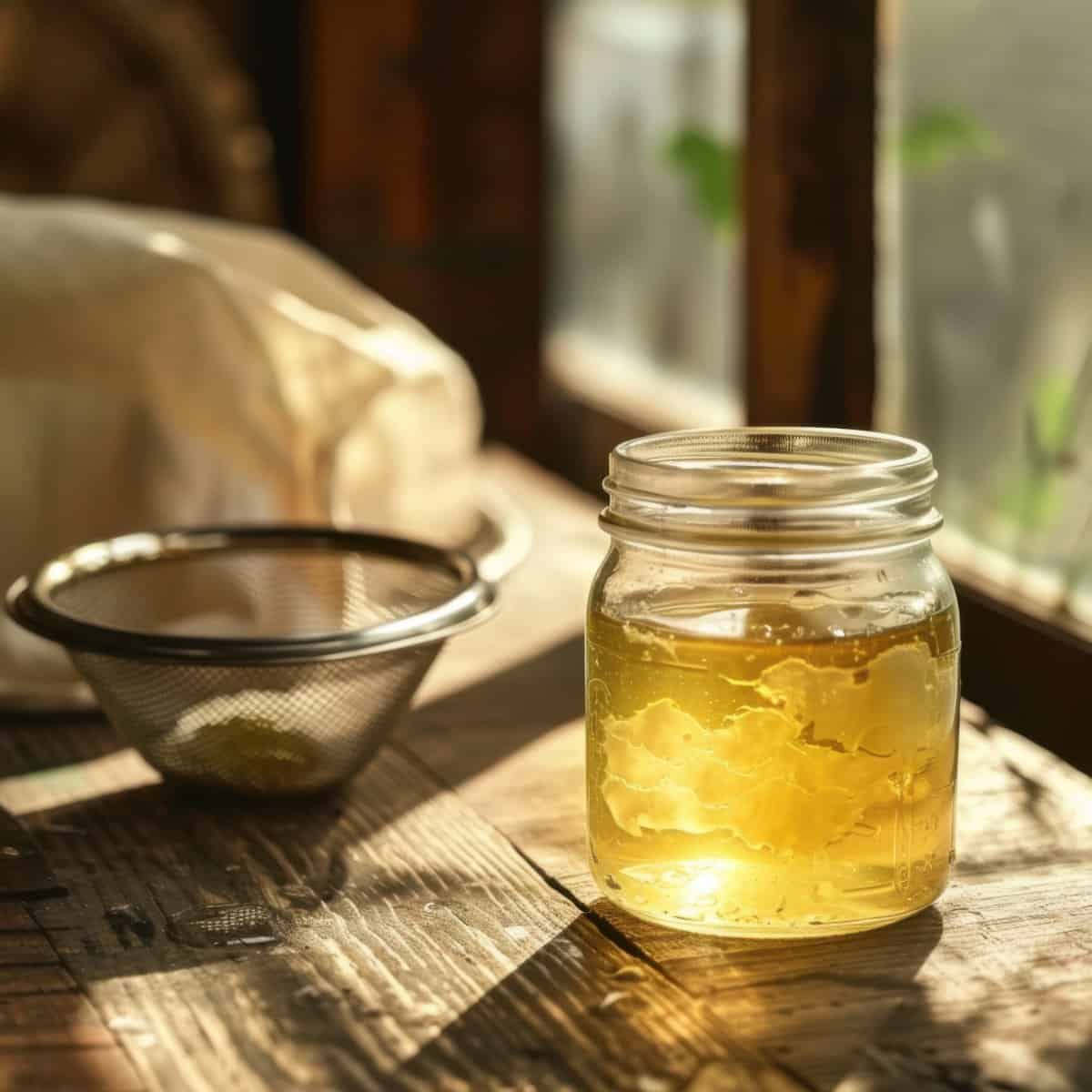
Every time you brown ground beef or cook a chuck roast, you produce rendered beef fat. Most people drain it into the trash or down the drain. That fat, strained through a cheesecloth-lined mesh strainer, heated briefly to drive off moisture, and stored in a glass jar, is now your high-heat cooking fat for the next batch session.
I started saving beef fat intentionally once I tasted the difference. I rendered fat from a chuck roast and fried potatoes in it so my kids could do a side-by-side comparison with avocado oil. Everyone could taste the difference. The beef fat has a savory depth that avocado oil simply doesn't deliver, and it complements potatoes in a way that neutral oils can't. Now my kids use beef fat for the right dishes, it's not just avocado oil for everything anymore.
How I render and save it: After cooking ground beef or a roast, I drain the fat through a cheesecloth-lined mesh strainer into a glass jar. The cheesecloth catches the fine meat solids that a strainer alone misses, you want pure fat if it's going to live on your counter. Then I heat it briefly to evaporate any residual moisture, this is what makes it counter-top stable instead of needing refrigeration immediately. Same process works for pork fat and bacon fat. You're recovering a cooking fat that you already paid for when you bought the meat.
Where to use it: Searing proteins, roasting vegetables (especially potatoes, beef fat roasted potatoes are restaurant-quality), frying eggs, making gravy, deep frying. Anywhere you want savory depth without adding a separate seasoning.
Storage: Strained and moisture-free beef fat keeps 3-6 months in the refrigerator, longer in the freezer. Keep it in a glass jar with a lid. The rendering process is the same for pork fat and bacon fat, strain, heat to remove moisture, jar it.
The cost angle: Free. A 5 pound batch of ground beef produces about a cup of rendered fat that would cost $8 -10 if you bought tallow commercially. Over a month of batch cooking, that's $40-60 in cooking fat you're currently throwing away.
How to Render and Save Beef Fat From Batch Cooking
Step-by-step guide to rendering and saving beef fat from batch cooking.
The Right Fat for Seasoning Cast Iron
If you cook with cast iron, fat selection matters even more, the fat you use to season the pan determines the quality and durability of the non-stick surface. This is a different job than cooking, and the hierarchy is different.
Seasoning hierarchy:
- Rendered suet (true beef tallow),yields a hard, plastic-like, non-stick finish that nothing else matches
- Rendered beef muscle fat, the most common and widely available option, performs well
- Lard,solid at room temperature, seasons cleanly. Bacon fat can work but will impart smoke flavor into the seasoning
- Avocado oil, last resort, only if no animal fat is available. Oils should generally be avoided for cast iron seasoning
The fastest way to build seasoning on new or re-seasoned cast iron is to fry potatoes in beef tallow. It kills two birds with one stone, the repeated frying in fat builds the seasoning layer while producing some of the best potatoes you've ever eaten. You're not seasoning and then cooking as two separate steps. You're doing both at once.
Seed oils and vegetable oils create a gummy residue on cast iron that doesn't polymerize properly. Coconut oil leaves a waxy film when it cools. Neither belongs in the seasoning process.
For the complete cast iron system, seasoning, maintenance, cooking techniques, and the full equipment breakdown, see Cast Iron Cooking. king techniques, and the full equipment breakdown, see Cast Iron Cooking.
Why You Won't Find Seed Oils on This Page
You might have noticed what's missing from this page: canola oil, vegetable oil, soybean oil, corn oil. I don't use them. I don't recommend them. They aren't in my kitchen.
Here's the practical case: with beef tallow, ghee, butter, lard, avocado oil, and olive oil in your kitchen, there is no cooking situation that requires a seed oil. None. You have high-heat covered (tallow, ghee, avocado oil), medium-heat covered (butter, ghee), finishing covered (olive oil, butter), baking covered (suet, lard, butter), and neutral flavor covered (avocado oil). Every job is filled by something that performs better.
I'm not here to argue the science or make health claims. I'm a cook, not a doctor. But when your options are fats that humans have cooked with for thousands of years, beef tallow, lard, butter, olive oil, and fats that require industrial processing to extract from seeds, I choose natural. Every time. That's not a radical position. It's a back-to-basics one.
Your kitchen, your call. But if you're building a batch cooking system from scratch, start with the fats on this page. You won't miss what you never needed.
What Cooking Fats Actually Cost at Batch Scale
Fats are a recurring cost in batch cooking. Here's how the options compare when you're cooking at volume:
Beef fat (self-rendered from batch cooking): $0.00. You already paid for it when you bought the meat. The only investment is a mesh strainer, cheesecloth, and a glass jar. Over a month of batch cooking, you're recovering $40-60 worth of cooking fat that most people throw away.
Beef tallow (commercially purchased, grass-fed): $0.75-1.00/oz depending on brand and size. Kettle & Fire is my current staple. A batch cook session using 2-3 tablespoons costs roughly $1.00-1.50. Worth every penny for the flavor and performance.
Ghee (grass-fed): $0.50-0.70/oz. 4th & Heart is the go-to; Costco offers quality alternatives at lower cost. Used for vegetables and eggs, 1-2 tablespoons per use, cost is minimal per meal.
Butter (grass-fed): $0.25-0.40/oz. Reasonable for aromatics bases and finishing. Expensive if you're using it as a primary cooking fat, and it'll burn before the cost becomes the issue.
Lard (commercial block): $0.15-0.25/oz. Morrell brand in a 1-pound block. The most affordable purchased fat on this list. Keeps well in the fridge.
Avocado oil: $0.30-0.50/oz retail. Used for batters, mixes, rubs, and high-heat situations when animal fat isn't available. Reasonable at batch scale.
Extra virgin olive oil: $0.40-0.80/oz depending on quality. Used as a finishing oil only (1-2 tablespoons per dish), so cost per meal is minimal. Expensive if you're pouring it into a hot pan, and you shouldn't be.
The pattern: your most-used cooking fat (beef tallow) is either free (self-rendered) or the cost of a quality commercial product. Your finishing fats (olive oil, butter) are used in small amounts. The expensive mistake isn't buying good fat, it's wasting it by using the wrong one at the wrong temperature.
The Batch Cooking Fat Pantry: 6 Fats, Zero Seed Oils
The complete batch cooking fat pantry, six base fats, specific brands, storage locations, weekly cost breakdown, and a starter kit for building a seed-oil-free kitchen from scratch.
The Most Common Fat Mistake in Home Kitchens
It's not using the wrong oil. It's burning butter.
Butter burns fast. The milk solids start browning the moment the pan gets above 300-350°F, and in cast iron, where the thermal mass holds and amplifies heat, the window between "butter is melted" and "butter is burned" can be seconds. The result is ugly food (brown-speckled eggs are the classic victim) and off flavors that get into everything else you cook in that pan.
I burned more butter cooking eggs than I care to admit. That's specifically why I switched to ghee for eggs. Ghee gives you butter's flavor without the milk solids that scorch. The eggs come out clean, the pan stays clean, and breakfast doesn't smell like a mistake.
The fix for butter isn't avoiding it, it's using it where it belongs. Low and slow: aromatics, pancakes, French toast, pan sauce finishes. If the recipe needs medium-high heat or above, reach for ghee, tallow, or avocado oil instead.
All Fat Selection & Cooking Oil Content
Every guide, comparison, and recipe on BatchAndGather related to cooking fats and their applications.


The Right Fat for the Right Job
Once you stop treating all cooking fats as interchangeable, your food gets better and your batch cooking gets more consistent. Base fats with clear jobs, cuisine-specific additions where they matter, and the knowledge to save every drop of rendered fat that comes out of your cooking. Match the fat to the heat, the flavor to the dish, and the cost to the volume.
For the complete batch cooking system, start with Batch Cooking 101.