
Cast iron maintenance has been made to sound harder than it is. The internet has turned a 60-second post-cook routine into a debate about soap, salt scrubs, chain mail, and whether touching your pan with water will ruin it forever.
Here's the truth: cast iron care is simple if you do it consistently, and everything is fixable if you don't. I've been maintaining the same cast iron pans for decades - including my mother's pan that I've cooked in since I was 10 years old. The routine hasn't changed because it doesn't need to. Clean it. Dry it. Reseason it. Done.
The Post-Cook Routine - 60 Seconds, Every Time
This is the complete daily care system. Not weekly. Not occasionally. After every cook.
1. Let the pan cool on the stove while you eat. Don't splash cold water on a screaming hot pan. Thermal shock can warp the iron or crack it, and the steam can burn you badly. Just leave it on the stove. Eat your meal. Come back to it when it's cool enough to handle - warm is fine, just not dangerously hot.
2. Wash with warm water, a scrubby pad, and a drop of Dawn. Yes, soap. Modern dish soap doesn't contain lye and won't strip a well-maintained seasoning. I wash with soap on purpose because flavors live in fats - I don't want garlic residue flavoring tomorrow's pancakes. A quick scrub takes 60-90 seconds. You're not soaking it. You're not scrubbing for 10 minutes. Just a quick pass to remove food residue and cooking fat.
3. Dry immediately. Don't air dry. Don't leave it in the dish rack. Put it back on the stove over high heat for about 60 seconds until all remaining moisture evaporates. You'll see the wet spots disappear. Rust starts with water left sitting on iron - this step prevents that.
4. Reseason on the stovetop. While the pan is still hot from the drying step, add a small amount of fat (1 teaspoon to 1 tablespoon depending on pan size). Wipe over the entire surface with a thick fold of paper towels. Leave on the heat until the fat just starts to smoke. Kill the heat. Let it cool naturally on the stove.
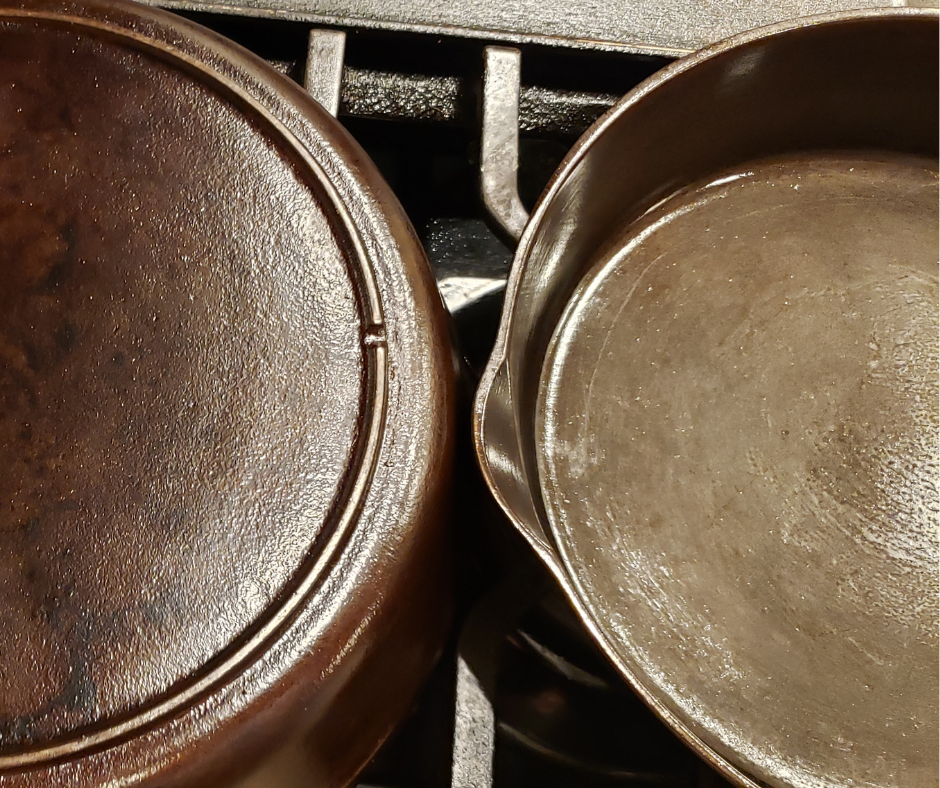
5. Leave it on the stovetop. It's ready for the next meal. I keep four cast iron pans on my stove at all times - they live where they work.
This happens after about 80% of my cooks. Occasionally, if the pan still looks and feels well-seasoned after washing, I'll skip the fat application and just do the heat-dry. But the reseasoning habit is what keeps the finish built up over time.
Storage - Where Heavy Pans Actually Live
Cast iron is heavy. A 12-inch skillet weighs 7-8 pounds empty. Stack a few in a cabinet and the shelf might not hold.
On the stovetop is where mine live. Four pans stay on the burners. The 12-inch stays in the oven (just remember to pull it out before preheating). They're ready to grab and cook with - no digging through cabinets.
If you do stack in cabinets, place a paper towel or cloth between each pan. This absorbs any residual moisture and prevents the pans from scratching each other's seasoning. Make sure the shelf can handle the combined weight.
Never store with the lid sealed on. Trapped moisture leads to rust. If you use a lid, store it separately or offset it so air can circulate.
Oil the bottom occasionally. The outside and bottom of the pan get washed too. An occasional wipe of fat on the exterior during your stovetop reseason prevents rust spots from developing where water collects.
Troubleshooting Every Common Problem
Food sticking
Two causes, almost every time: insufficient seasoning or too much heat.
If seasoning is the issue, you need more coats. Go back to the oven method and add 2-3 more full seasoning rounds. Then fry in tallow repeatedly - potatoes, eggs, anything. The cooking builds seasoning faster than oven cycles alone.
If heat is the issue, you're cooking too hot. Cast iron has thermal carryover - it stays hotter than the dial reads and keeps climbing after you reduce heat. Drop from medium-high to medium. For eggs, drop to low-medium. The pan holds more heat than you think.
My daughter struggled with eggs sticking when we first switched from Teflon to cast iron. She mastered eggs in stainless steel first (which is harder), then came back to cast iron once the seasoning built up. Now she chooses cast iron every time. The seasoning, not the technique, was the variable.
Gummy, sticky, or tacky surface
Seed oils. Almost guaranteed. Vegetable oil, canola oil, and soybean oil don't polymerize into a clean hard finish - they leave a tacky, gummy residue that accumulates with every cook.
The fix: Scrub the sticky area with a copper scrub pad under warm water using a circular motion. You'll see the surface start to level out and become smooth. Be careful not to strip all the seasoning - just remove the gummy layer. Then reseason with beef tallow using thin coats.
The prevention: Stop using seed oils in cast iron. Permanently.
Rust spots
Minor surface rust: scrub with a copper scrub pad until the rust is gone, then do a stovetop reseason on the affected area. Get the pan hot, apply fat to the previously rusted spot, let it stay hot for a few minutes. Repeat 2-3 times.
Deep rust: strip the pan completely (Easy-Off oven cleaner takes it down to bare metal), scrub with a copper pad, and do a full oven reseasoning from scratch. See the refinishing guide for the step-by-step process.
The cause: Water sat on unprotected iron. Fix your drying routine - heat-dry on the stovetop after every wash, no exceptions.
Burnt butter and scorched food
You're cooking too hot. Cast iron's carryover heat turns butter from golden to brown to black in seconds if the pan is above medium. I've burned more butter than most people eat in a week - always from doing too many things at once and failing to respect the temperature.
The fix: Turn the heat down before you think you need to. Butter on low-medium. If you turn away for 20 seconds and the butter is brown, your pan was too hot.
Metallic taste
Acidic foods (tomatoes, vinegar, citrus, wine) cooked in under-seasoned cast iron. The acid dissolves the polymerized layer and exposes bare iron, which reacts with the food.
The fix: Don't cook acidic foods in regular cast iron. Transfer to stainless steel or enamel-coated cast iron for the acid phase of the recipe. If your seasoning is very well established (years of maintenance), brief acid exposure is fine - I've reheated marinara in my seasoned pans without issue. But I wouldn't simmer tomato sauce for an hour.
Uneven, blotchy, or patchy seasoning
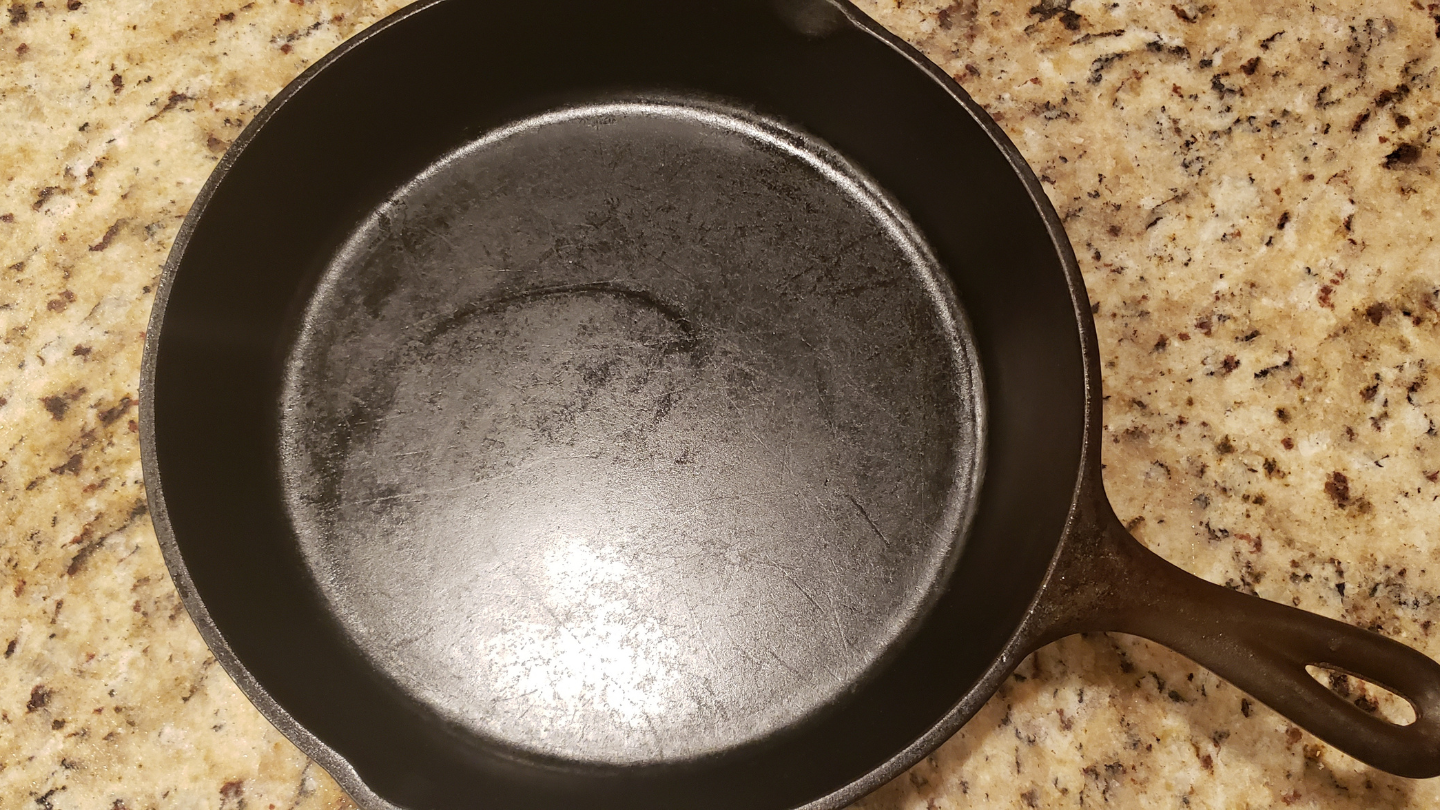
Normal, especially on newer pans or after reseasoning. The surface evens out over time as you cook. Blotchy doesn't mean broken - it means the pan is still building its coating. Keep cooking.
Excess fat solidified in weird patterns
Too much fat applied during seasoning. The excess doesn't polymerize evenly - it pools, hardens, and creates bumpy or sticky spots.
The fix: Scrub with a copper pad under warm water to level the surface. Reseason with thinner coats. The correct amount is a thin wipe that makes the pan look dry, not glossy. If the pan looks wet after you coat it, you've used too much.
The Three Things That Can Permanently Damage Cast Iron
Warping. Caused by extreme thermal shock - usually cold water on a screaming hot pan, or sustained maximum heat for long periods. Warped pans don't sit flat and cook unevenly. Prevention: let pans cool before washing. Don't crank to max heat.
Cracking. Same cause as warping, but worse - typically from dunking a hot pan in cold water or dropping it. A cracked pan is done. Prevention: handle with care, cool before cleaning.
Deep pitting from severe rust. If rust has eaten through the surface and left deep pits, the pan won't hold seasoning in those areas. Minor surface rust is always fixable. Deep pitting from long-term neglect sometimes isn't.
These are rare. With basic care - dry after washing, reseason regularly, don't thermal shock - your cast iron will outlast you.
The Soap Myth - Why It Exists and Why It's Wrong
Soaps made 30-50+ years ago contained lye. Lye strips cast iron seasoning completely. If your grandmother told you never to use soap on cast iron, she was right - for her era.
Modern dish soap does not contain lye. Dawn, Palmolive, and every major brand eliminated lye decades ago. Lodge says this directly on their website.
I use Dawn on my cast iron on purpose, and I reseason after almost every cook. The reseason replaces any surface impact from the soap, and I get a flavor-neutral pan every time. The "salt and a brush, never soap" advice exists partly to sell specialty cast iron cleaning products. My $3 scrubby pad and a drop of Dawn do the job in 60 seconds.
When to Give Up on a Pan
Almost never. Rust can be removed. Bad seasoning can be stripped and rebuilt. Gummy residue can be scrubbed off. Even neglected pans found in attics and garages can usually be refinished.
The only time to part with a cast iron pan: warping that prevents it from sitting flat, cracking from thermal shock, or deep pitting from severe long-term rust. Everything else is fixable.
For the complete strip-and-rebuild process, see How to Refinish and Reseason Cast Iron From Bare Metal.
For the seasoning system that prevents most of these problems, see How to Season Cast Iron With Beef Tallow.
For the complete cast iron guide, see Cast Iron Cooking.
Was this helpful?
You must be logged in to post a comment.