
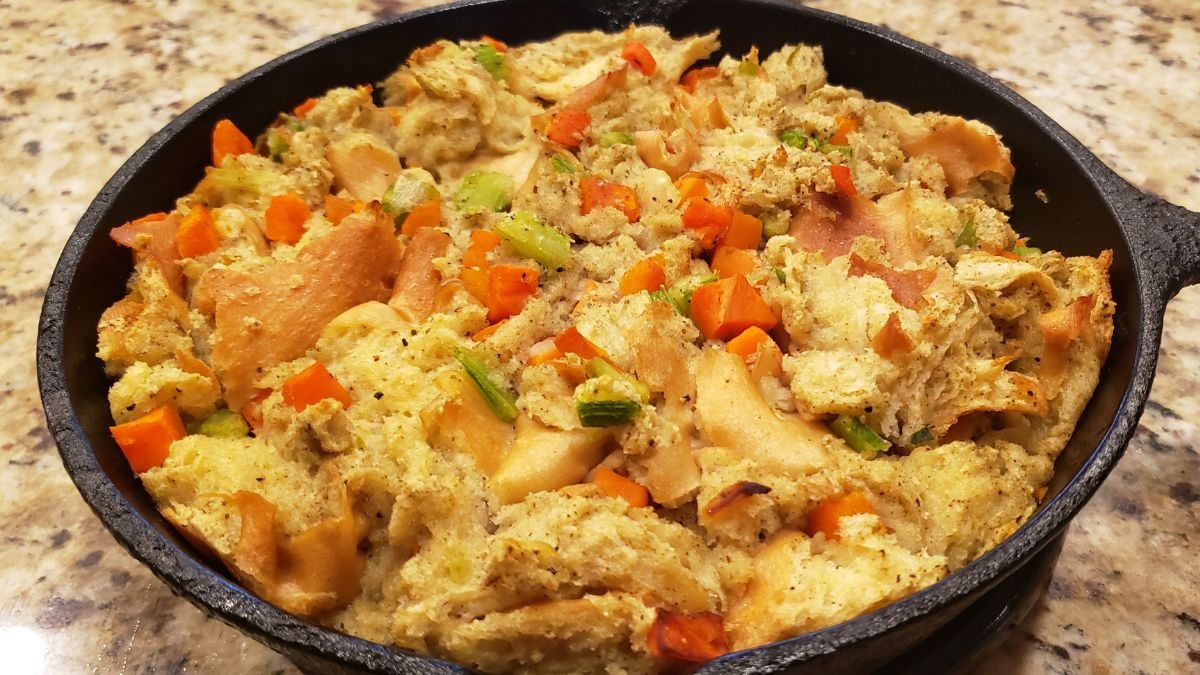

French Bread Dressing
Ingredients

Equipment
Method
- Preheat oven to 350°F.
- Melt 1/4 cup butter in a 10-inch cast iron skillet over medium-low heat.
- Add salt, onions, and celery to the skillet.
- Sauté until the onions begin to caramelize.
- Whisk together the chicken stock, poultry seasoning, pepper, and eggs in a large mixing bowl.
- Break the stale French bread into large chunks about the size of golf balls.
- Add the sautéed vegetables to the chicken stock mixture.
- Toss in the bread chunks and mix until all the bread is thoroughly soaked but not falling apart.
- Add 2 Tbsp butter to the skillet and spread evenly.
- Transfer the dressing mixture back into the skillet.
- Bake for 30 minutes until the top is golden brown and the internal temperature reaches 165°F.
- Serve in the pan on a trivet.
- Assemble the dressing the day before in the skillet or a buttered casserole dish.
- Cover and refrigerate for no more than one day.
- Place directly in a preheated 350°F oven and bake for 35-40 minutes until golden brown and the internal temperature reaches 165°F.
Notes
Tried this recipe?
Let us know how it was!Why This Recipe Works
Next to gravy, this is probably my favorite Thanksgiving food. The texture gets me every time-soft and chewy simultaneously, with that heavy influence of sage that just makes it a delight to eat. The chicken broth and butter bring it all together into one great bread dressing. Try it in a cast iron skillet. It looks fantastic in a rustic setting, and your family will love it.
French bread creates texture contrast that cornbread or sandwich bread can't match. The crusty exterior and chewy crumb of a proper baguette survive the custard treatment, giving you irregular pieces that crisp differently-pockets of crunch alongside tender, stock-soaked centers. When you break it into golf ball-sized chunks instead of uniform cubes, those irregular edges catch heat and create the kind of textural variety that makes people go back for seconds.
The Technique That Matters
The foundation of great dressing is properly dried bread. "Stale" doesn't mean rock-hard; it means the interior moisture has evaporated enough that the bread can absorb liquid without disintegrating. Fresh bread turns to paste. If your bread isn't already day-old, break it into chunks and leave it out overnight, or dry it in a 250°F oven for 20 minutes.
What You're Actually Doing
You're building layers of flavor before the bread ever enters the picture. Sautéing onions and celery in butter until they're soft and translucent creates a savory base-this isn't just about cooking vegetables, it's about developing sweetness and creating fond. The poultry seasoning blooms in that fat, releasing aromatics that will permeate every piece of bread.
When you add stock to dried bread, you're rehydrating it strategically. The bread should be moistened throughout but not swimming. You want enough liquid that the eggs can bind everything into a cohesive mass that sets during baking, but not so much that individual pieces lose their identity. The egg mixture creates structure, transforming loose, stock-soaked bread into a sliceable side dish with a golden, slightly crispy top. That cast iron skillet method creates exceptional texture-the even heat distribution means you get consistent browning and a presentation that looks impressive on the holiday table.
Selecting and Preparing French Bread
Not all French bread works equally well here. You want a crusty baguette or batard with a substantial crust-to-crumb ratio. Avoid soft sandwich-style "French bread"-it doesn't have the structure or flavor this dish requires.
What to Look For
- Crust quality: Thick, crispy exterior that shatters when you break it-this creates the textural contrast that makes this dressing special
- Crumb structure: Open, irregular holes indicate proper fermentation-these pockets hold stock without collapsing into mush
- Age: Day-old or two-day-old bread is ideal; fresh bread requires intentional drying time before you start
- Size: One pound equals roughly one large baguette-break it into irregular, golf ball-sized chunks rather than cutting uniform cubes
Common Mistakes and How to Avoid Them
Dressing failures usually happen in three places: bread prep, moisture balance, and seasoning. Each one will ruin an otherwise solid dish.
Problems and Solutions
- Problem: Soggy, pudding-like texture → Solution: Use properly stale bread and don't oversaturate with stock; you should see dry spots before adding eggs
- Problem: Dry, separated dressing that won't hold together → Solution: Add stock gradually until bread is evenly moistened, and ensure eggs are thoroughly whisked and distributed throughout
- Problem: Bland flavor despite following measurements → Solution: Cook vegetables fully to develop sweetness, season at multiple stages, and taste before baking-dressing should be slightly overseasoned raw since flavors mellow during cooking
- Problem: Burnt edges, raw center → Solution: Cover with foil for the first portion of baking, then uncover to crisp the top; moderate oven temperature is your friend
Timing and Doneness
Dressing is done when it's set throughout with a golden-brown top and crispy edges. Internal temperature should hit 165°F, but visual cues matter more: the top should look toasted, edges should be visibly crisp, and a knife inserted in the center should come out clean without wet custard clinging to it.
What Done Looks Like
The surface transforms from pale and wet-looking to golden with darker brown edges. When you press the center gently, it should feel firm with slight give-not liquid or jiggly. If you're using cast iron, the edges will pull slightly away from the sides. Scoop a serving-it should hold its shape on the spoon rather than slumping or running. Let it rest ten minutes after baking; carryover heat will finish setting the custard while steam escapes, preventing sogginess.
Variations and Serving Suggestions
The base recipe is traditional for good reason, but dressing tolerates additions well. Just remember that every add-in changes moisture content-compensate with stock adjustments.
Make It Your Own
- Seasoning variations: Add fresh sage and thyme for herbal brightness, or stir in crumbled sausage for a heartier version; dried cranberries and toasted pecans add sweetness and crunch
- Dietary modifications: Use vegetable stock instead of chicken for vegetarian prep; replace butter with olive oil or vegan butter, though you'll sacrifice some richness
- Serving ideas: Essential for Thanksgiving and Christmas dinners, but also excellent with roasted chicken any time of year; leftovers reheat beautifully and make exceptional breakfast hash bases
Why It's Worth Making
Learning to make proper dressing means you'll never settle for box mix again. This is foundational holiday cooking-the kind of recipe that earns you requests year after year. It's also forgiving once you understand the principles: stale bread, seasoned base, controlled moisture, egg binder. Master those elements, and you can adapt this formula to whatever bread, vegetables, or seasonings you prefer. But start here, with French bread and classic poultry seasoning, and learn what great dressing actually tastes like. That cast iron presentation doesn't hurt either-rustic, impressive, and delicious.
Recipe
French Bread Dressing
Ingredients
Equipment
Method
- Preheat oven to 350°F.
- Melt ¼ cup butter in a 10-inch cast iron skillet over medium-low heat.
- Add salt, onions, and celery to the skillet.
- Sauté until the onions begin to caramelize.
- Whisk together the chicken stock, poultry seasoning, pepper, and eggs in a large mixing bowl.
- Break the stale French bread into large chunks about the size of golf balls.
- Add the sautéed vegetables to the chicken stock mixture.
- Toss in the bread chunks and mix until all the bread is thoroughly soaked but not falling apart.
- Add 2 tablespoon butter to the skillet and spread evenly.
- Transfer the dressing mixture back into the skillet.
- Bake for 30 minutes until the top is golden brown and the internal temperature reaches 165°F.
- Serve in the pan on a trivet.
- Assemble the dressing the day before in the skillet or a buttered casserole dish.
- Cover and refrigerate for no more than one day.
- Place directly in a preheated 350°F oven and bake for 35-40 minutes until golden brown and the internal temperature reaches 165°F.


Was this helpful?
You must be logged in to post a comment.