
Learning how to cook without recipes is not about memorizing more. It's about understanding less - specifically, the underlying structure that every dish type shares. Once that structure is clear, the recipe becomes optional. The formula does the work.
I spent fifteen years running food service operations before I started teaching home cooks. In professional kitchens, nobody follows a recipe every time they make a sauce. They know the formula - fat, flour, liquid, ratio, finish - and they execute it. The sauce they make Tuesday from chicken stock is the same structure as the one they make Friday from beef stock. Different dish. Same formula.
That's what this page teaches. Six core formulas that cover the backbone of cooking at home. Not six recipes - six frameworks. Learn these and you're not just making rice pilaf. You're making every grain dish that follows the same structure. You're not just braising short ribs. You're executing a technique that works on any tough protein. That's the shift. That's the Formula Method.
Disclosure: Some links on BatchAndGather are affiliate links. If you click one and buy something, I may earn a small commission - at no extra cost to you. I only recommend things I'd actually use or that meet the standards I'd apply in a professional kitchen. As an Amazon Associate I earn from qualifying purchases.
Why the Recipe Model Has a Ceiling
A recipe is a fixed set of instructions designed to produce one specific outcome. Follow it precisely, and you get the dish. Deviate from it - wrong pan size, different brand of tomatoes, one substituted ingredient - and you're flying blind.
That's not a failure of the cook. That's a design limitation of the recipe format itself.
Recipes operate like arithmetic. Each one solves a single problem: this many cups of stock, this exact oven temperature, this precise cook time. The answer works - but only for that problem. Change one variable, and you don't have a framework to reason through what happens next. You either find a new recipe or guess.
Formulas operate like algebra. Instead of fixed values, they define relationships. Liquid at 1.5 times the volume of your grain. Fat and flour in equal parts by weight. Liquid reaching two-thirds up the side of your protein. The formula tells you the structure - the ratios, the sequence, the logic. The specific ingredients are variables you fill in based on what you have, what you're making, and what flavor direction you want to go.
A home cook who knows the pilaf formula can make white rice pilaf Monday, farro Tuesday, and quinoa Wednesday without consulting a new recipe each time. They're not memorizing three separate dishes - they're executing the same formula with different inputs. That's the ceiling the recipe model can't break through, and the Formula Method is what gets you past it.
A Formula in Practice: The Roux-Based Sauce
The roux-based sauce is the clearest example of formula thinking applied to cooking, because the structure is precise and the variables are obvious once you see them.
The Formula:
Equal parts fat and flour by weight → cooked to the correct stage → liquid added in ratio → seasoned and finished.
That's it. Four steps. The dish changes entirely based on the variables you bring to each step - but the structure never changes.
Step 1: Equal parts fat and flour by weight. The ratio is the foundation. Two ounces of butter and two ounces of flour. Four ounces of each. Scale up or down, but keep them equal. This is the variable the recipe version usually gives you in cup measurements, which introduces imprecision. Weight is more accurate, and professional kitchens operate by weight for this reason.
Step 2: Cooked to the correct stage. A white roux cooks for two to three minutes - just long enough to cook out the raw flour taste without developing any color. A blonde roux goes four to six minutes and picks up a light nutty tone. A dark roux (used in gumbo) goes fifteen to thirty minutes and develops deep, complex flavor at the cost of thickening power. The stage you cook to is a decision based on what you're building.
Step 3: Liquid added in ratio - and this is the number to anchor to. The baseline is 1 oz of roux to 1 cup (8 oz) of liquid for a medium-thickness sauce. That ratio is your reference point for everything. Once it's in your head, you can quick-calculate any volume without looking anything up.
Here's what that looks like scaled:
| Roux (oz) | Liquid (cups) | Yield (approx.) | Consistency |
|---|---|---|---|
| 1 oz | 1 cup | ~1 cup | Medium sauce |
| 2 oz | 2 cups | ~2 cups | Medium sauce |
| 4 oz | 4 cups (1 qt) | ~1 quart | Medium sauce |
| 8 oz | 8 cups (½ gal) | ~½ gallon | Medium sauce |
Adjusting thickness is just adjusting the ratio - not the formula.
- For a thinner sauce or soup base: pull back to 1 oz roux per 1½ cups liquid
- For a thick gravy or heavy cream sauce: push to 1 oz roux per ¾ cup liquid
- The formula holds. The ratio is the variable.
Add cold or room-temperature liquid to a hot roux, or hot liquid to a room-temperature roux - you're managing the temperature differential to prevent lumps. Whisk constantly as the liquid goes in. The sauce thickens as it comes back to heat.
Step 4: Seasoned and finished. Season with salt at the end - always. Finish with acid (a squeeze of lemon, a splash of white wine) or richness (a knob of cold butter whisked in off heat) depending on where you want the sauce to land.
What changes when you change the variables:
- Change the fat from butter to rendered bacon fat, and you've shifted the flavor profile without touching the structure.
- Change the liquid from whole milk to chicken stock, and you've moved from béchamel to velouté.
- Add shredded cheese to a béchamel, and you have the base for mac and cheese sauce.
- Add the pan drippings from a roasted turkey to a blonde roux with stock, and you have gravy.
Same formula. Different variables. Four different dishes.
That's formula thinking. Once the structure is internalized, every roux-based sauce becomes a decision tree rather than a new recipe to look up.
The BatchAndGather Formula Library
Six formulas cover the structural backbone of most home cooking. These are not simplified versions of professional technique - these are the actual frameworks professional kitchens use, translated into language that's actionable at home.
Formula 1: The Roux-Based Sauce
The structure: Equal parts fat and flour by weight → cooked to stage → liquid in ratio → seasoned, finished with acid or richness.
The ratio anchor: 1 oz roux to 1 cup liquid = medium sauce. Scale up or down from there. Thinner sauce: less roux or more liquid. Thicker gravy: more roux or less liquid. The 1:1 oz-to-cup relationship is the number that makes every roux calculation fast and formula-driven.
Fixed elements: The ratio (equal parts fat and flour), the technique (cook first, liquid second), the finish step (acid or richness to balance).
Variables: Fat type (butter, rendered bacon fat, tallow), roux stage (white, blonde, dark), liquid type (milk, stock, cream, pan drippings), finish (lemon, white wine, cold butter, cheese).
Application examples:
- Béchamel: butter roux + whole milk + salt + nutmeg
- Velouté: butter roux + chicken or veal stock
- Mac and cheese sauce: béchamel base + sharp cheddar + mild cheddar + American cheese
- Turkey or beef gravy: blonde roux + pan drippings + stock (push ratio to 1 oz roux per ¾ cup for thicker hold)
Formula 2: The Braise
The structure: Sear protein in fat → build aromatics in rendered fat → deglaze → add liquid to two-thirds up the side of the protein → low heat covered for collagen conversion time.
Fixed elements: The sear (crust development, flavor foundation), aromatics built in the same pan (fond integration), partial submersion (not full cover - two-thirds up the protein height), low and slow covered heat.
Variables: Protein type (determines cook time), fat type (tallow for beef, lard for pork, avocado oil for lighter proteins), deglaze liquid (red wine, beer, stock, tomatoes), braising liquid (stock, wine, tomatoes, coconut milk), aromatics (onion, garlic, celery, carrot, herbs).
On cook time: Collagen conversion is time and temperature dependent. Chicken thighs braise in 45 to 90 minutes. Beef short ribs need three to four hours. Pork shoulder runs four to six hours. The protein tells you the timeline - the formula is the same.
Application examples:
- Pot roast: chuck roast, tallow, red wine deglaze, beef stock, root vegetables
- Carnitas: pork shoulder, lard, orange juice, chicken stock, cumin and oregano
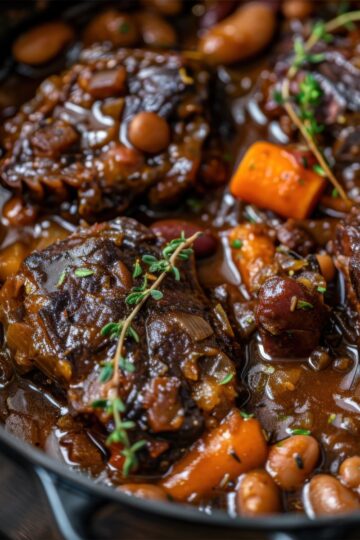
- Braised short ribs: beef short ribs, tallow, red wine, beef stock, mirepoix
- Oxtail: tallow, red wine or stout, beef stock, scotch bonnet and allspice for a Jamaican profile
Formula 3: The Pilaf
The structure: Toast grain in fat → build aromatics → add liquid in ratio → cover and cook undisturbed → rest off heat.
Fixed elements: Toast first (develops nuttiness, seals the grain for better texture), aromatics in the fat before the liquid goes in, liquid ratio maintained, undisturbed covered cook, rest off heat before serving (allows moisture redistribution).
Variables: Grain type (determines liquid ratio and cook time - see below), fat type (butter for richness, tallow for depth, olive oil for lighter applications), aromatic build (butter-onion base is standard; garlic, celery, bell pepper are additions), liquid type (chicken stock, vegetable stock, beef stock, coconut milk), finish aromatics (fresh thyme, parsley, bay leaf).
Liquid ratios by grain:
- Long grain white rice: 1.5 to 1 (1.5 cups liquid per cup of rice) - rinse 3 times before cooking
- Farro: 2.5 to 1
- Quinoa: 1.75 to 1
- Barley: 2.5 to 1
Application examples:
- White rice pilaf: long grain white rice, butter-onion sauté, chicken stock, fresh thyme
- Farro with mushrooms: farro, butter-onion-garlic sauté, beef stock, fresh thyme
- Mexican rice: long grain white rice, butter-onion-tomato sauté, chicken stock, cumin, cilantro finish
Formula 4: The Batch Protein
The structure: Season dry → develop crust in correct fat at correct temperature → bring to target internal temperature → rest → portion.
Fixed elements: Dry seasoning only (wet marinades interfere with crust development and add moisture that steams instead of sears), crust development before internal cooking (the Maillard reaction happens on the surface - it needs direct, dry heat), rest before portioning (allows carryover cooking to complete and juices to redistribute).
Variables: Protein type (determines target internal temp and cook method), fat type (tallow for beef and most proteins, avocado oil above 400°F, butter for finishing), seasoning build (Morton kosher salt + granulated garlic + granulated onion is the baseline; additional seasoning by protein and application), cook method (cast iron sear, sheet pan roast, reverse sear for thick cuts).
Internal temperature targets:
- Ground beef (batch): 160°F
- Chicken breast and thigh: 165°F
- Pork shoulder (pulled): 200 to 205°F (collagen conversion, not food safety - food safety is 145°F)
- Beef roast (medium): 130 to 135°F (pull 5°F early for carryover)
Application examples:
- Batch ground beef: seasoned with salt, granulated garlic, granulated onion; cooked in tallow until 160°F; portioned into 1 lb vacuum-sealed packs
- Batch chicken thighs: dry-seasoned, seared in cast iron, finished in oven to 165°F, portioned warm
- Pulled pork: dry-rubbed pork shoulder, low oven or smoker to 205°F, pulled and portioned
Formula 5: The Compound Sauce
The structure: Build base (stock reduction, tomato, cream) → fat and aromatics → season → finish with acid to balance.
Fixed elements: Aromatic build before liquids go in, seasoning throughout (not just at the end), acid finish (acid lifts the sauce and balances fat - it is not optional).
Variables: Base type (stock reduction, whole tomatoes, cream, roasted pepper purée), fat type (olive oil, butter, tallow), aromatics (onion and garlic are standard; shallots, fennel, leeks are additions), seasoning profile (herb-forward, spice-forward, or clean), acid source (lemon juice, red wine vinegar, white wine, balsamic).
Application examples:
- Pan sauce: fond deglazed with wine + stock reduction + cold butter finish + lemon
- Red sauce (marinara): olive oil + onion-garlic sauté + crushed tomatoes + basil + red wine vinegar finish
- Cream sauce: butter + shallots + cream reduction + lemon + fresh herbs
- Jerk pan sauce: tallow + scotch bonnet + allspice + stock + lime finish
Formula 6: The Cornstarch Slurry
The structure: Combine cornstarch with equal parts cold water → whisk until smooth → stream into hot liquid while stirring → bring to a brief boil → serve immediately or hold short-term.
The ratio anchor: 1 tablespoon cornstarch to 1 cup liquid for light thickening. Push to 2 tablespoons per cup for a heavier, more viscous result.
Fixed elements: Always suspend cornstarch in cold water before it touches heat - dry cornstarch added directly to hot liquid clumps instantly. Always stream in slowly while stirring. Always bring back to a brief boil after adding (starch needs to reach full gelatinization temperature to activate - around 203°F). The sauce will appear cloudy during this process and clear as it finishes.
Variables: Ratio (determines final viscosity), liquid base (stock, broth, sauce, cooking liquid), aromatics already in the pan.
Critical distinction from roux - read this before you choose: A roux-based sauce is a batch cooking workhorse. It holds under heat for hours, freezes well, and reheats cleanly. It's built to last.
A cornstarch slurry is a quick-finish tool. It activates fast, produces a glossy, slightly different mouthfeel than roux, and works well for applications where you're finishing a sauce at the moment of service - not building a component you'll store and reheat. Slurry-thickened sauces can thin out or turn gummy under extended heat holds, and the thickening can break down during refrigeration and reheating. For anything going into batch storage, a roux is the right structure.
Where slurry earns its place:
Chicken soup: I use a cornstarch slurry in my chicken soup - not because it's a batch component, but because soup is assembled a la minute. The protein is batched. The soup itself is built fresh in the pot: broth, vegetables, starch, protein, and a slurry finish for a heavier, more satisfying viscosity. If you prefer a thinner broth, skip the slurry entirely. You're in control of that variable. The soup is the assembly event - the slurry is a finishing decision made at the pot, not in advance.
Asian sauces: Stir fry sauces, teriyaki glazes, and most pan sauces in Asian cooking are slurry-finished, not roux-based. The glossy, translucent result and the quick activation time are exactly what these applications need. These are served immediately - not held, not stored.
Application examples:
- Chicken soup finish: 1½ tablespoon cornstarch + 3 tablespoon cold water → stream into simmering soup → brief boil → serve
- Stir fry sauce: soy, sesame oil, garlic, ginger, stock → slurry added in the last 60 seconds of cooking
- Teriyaki glaze: soy, mirin, sake, sugar reduction → slurry tightens to a glaze at the finish
- Pan sauce quick-finish: deglazed fond + stock → slurry for immediate plating
The Numbers Behind the Formulas
Every formula in this library works by ratio. To use ratios confidently, you need to move fluently between volume and weight measurements - and to scale up or down without stopping to recalculate from scratch. These tables are your reference.
Volume Conversions
| Unit | Equivalent |
|---|---|
| 1 gallon | 4 quarts = 8 pints = 16 cups = 128 fl oz |
| 1 quart | 2 pints = 4 cups = 32 fl oz |
| 1 pint | 2 cups = 16 fl oz = 32 tablespoons |
| 1 cup | 8 fl oz = 16 tablespoons = 48 teaspoons |
| 1 fl oz | 2 tablespoons = 6 teaspoons |
| 1 tablespoon | 3 teaspoons |
Weight Conversions
| Unit | Equivalent |
|---|---|
| 1 pound (lb) | 16 oz = 453.6 grams |
| 1 kilogram (kg) | 2.205 lbs = 35.27 oz = 1,000 grams |
| 1 oz (weight) | 28.35 grams |
| 100 grams | 3.53 oz |
Why this matters for formula cooking: Recipes give you cup measurements. Formulas work in ratios - and ratios are most accurate by weight. Once you're comfortable moving between ounces and grams and between cups and fluid ounces, you can scale any formula to any volume without rounding errors compounding across multiple steps. Professional kitchens work by weight. This is why.
See the Formulas in Action
These recipes demonstrate each formula in practice. One formula per card - same structure you learned above, executed on a specific dish.


Why Formula Thinking Is the Foundation of Batch Cooking
The Formula Method and batch cooking are the same idea operating at different scales.
When you batch cook, you're not making seven different meals for the week. You're executing a set of components - proteins, starches, sauces - that you'll assemble into different meals based on what you want on any given day. The components are interchangeable. The system is scalable. The thinking is algebraic.
That only works if you understand the underlying structures. When you know the roux formula, you can scale a mac and cheese sauce from four servings to forty without a separate recipe for each volume. When you know the braise formula, you can run a full batch session on three different proteins in the same oven window, adjusting time and liquid based on the protein, not looking up three different recipes.
Formula thinking is what makes the batch cooking system actually scalable. A home cook who knows the formulas doesn't need a recipe for every permutation. They set the parameters - protein, fat, seasoning, liquid, target temp - and execute. The formula handles the rest.
That's why this page is the intellectual core of everything on BatchAndGather. The batch system is built on these structures. Once the formulas are internalized, the entire system becomes extensible.
Recipes Built on Formulas
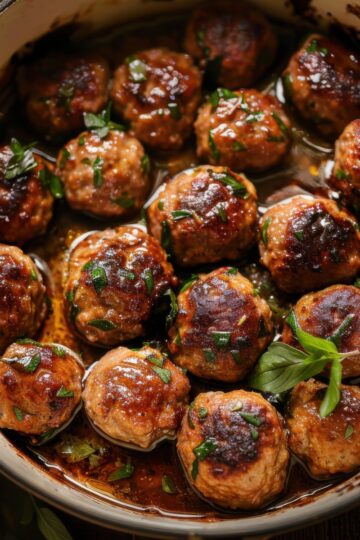
Every recipe below was built from one of the five core formulas. The specific dish is the output. The formula is the engine.


The System Behind the Formulas
The Formula Method is the teaching layer. The batch cooking system is where it gets applied.
Batch Cooking 101 is where the operational framework lives - how to structure a full batch session, what to make first, how to sequence the work so everything is ready at the right time. The formulas in this page are the technique. Batch Cooking 101 is the production system.
Batch Proteins is where the Batch Protein Formula gets applied across every protein type in the catalog - ground beef, chicken thighs, pork shoulder, and more. Every protein page references the formula structure.
Batch Sauces & Seasonings is where the Roux-Based Sauce Formula and the Compound Sauce Formula become a library of ready-to-deploy components - sauces made in bulk, portioned, and ready to pull from the freezer on assembly day.
Prep & Cooking Techniques covers the hands-on execution - cast iron care, fat selection, food safety and temperature management, and the equipment that makes the system run efficiently.
Get the Formula Method Quick Reference
Everything on this page - all six formulas, the ratio anchor for roux, the slurry distinction, the measurement tables - is available as a single downloadable reference card. One page. Print it, keep it on the counter, and you'll never need to look up a cooking ratio again.
[CTA BUTTON PLACEHOLDER - Kit.com form embed - "Send Me the Formula Reference Card"]