
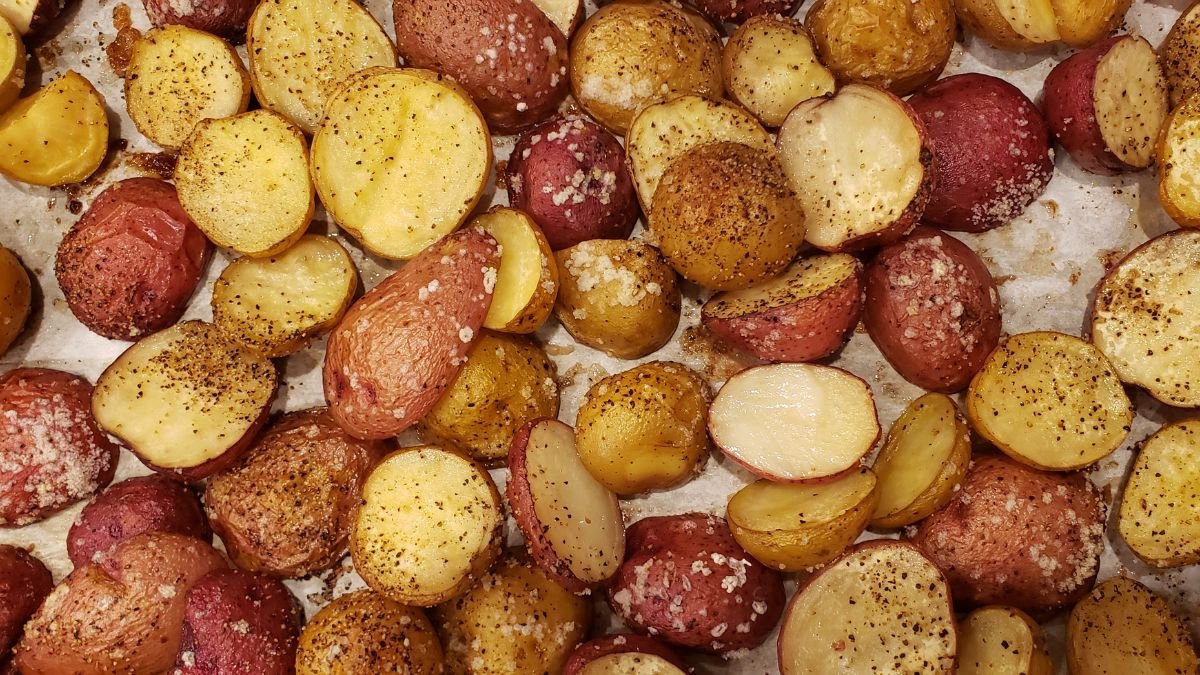

Roasted Potatoes
Ingredients

Equipment
Method
- Preheat oven to 375°F.
- Wash the potatoes and cut in half if small, quarters if larger.
- Pat completely dry with paper towels.
- Melt the beef fat and let it cool enough to handle safely.
- Toss the potatoes in a large bowl with the melted fat until evenly coated.
- Season with salt, pepper, and fresh herbs if using.
- Heat a 12-inch cast iron skillet on the stovetop over medium-high heat.
- Place the coated potatoes in the skillet and let them cook undisturbed for about 3 minutes to start a sear on the bottom.
- Transfer the skillet to the oven and roast for 30-35 minutes until golden and crispy.
- Line a half-sheet pan with parchment paper.
- Spread the coated potatoes in a single layer.
- Roast for 40 minutes until golden and crispy.
- Remove from oven and serve.
Notes
Tried this recipe?
Let us know how it was!Why This Recipe Works
Roasted potatoes are one of the easiest and most delicious things to make. You can roast different creamer potatoes, including red bliss, and they'll hold up their flavor and shape even after refrigeration. It's a great base starch item to have in the fridge-cook off a whole container of small, half-inch to inch dice roasted potatoes on Sunday afternoon, and at meal time you just roast them back in the oven for thirty minutes to reheat, or sauté them in a pan. If you resauté them in a pan with butter or beef tallow, the flavor is just awesome, plus you get those little crispy edges on the surface that make the meal even better.
The difference between pale, steamed potatoes and properly caramelized ones comes down to fat choice and moisture management. This recipe uses beef fat because it has a higher smoke point than butter and delivers deeper flavor than vegetable oil. Combined with dry surfaces and high heat, you get exactly what you're after-crackly, golden exteriors with fluffy interiors that pair with nearly any protein.
The Technique That Matters
The restaurant method for crispy potatoes isn't complicated, but it requires discipline. High heat, proper fat coating, and-most critically-dry potato surfaces. Moisture is your enemy here. Any water clinging to those pieces will steam them instead of roasting them, and you'll end up with soft, pale potatoes that stick to the pan.
What You're Actually Doing
Creamer potatoes get halved or quartered depending on size-uniformity matters because even cooking matters. After cutting, you're drying them thoroughly with paper towels. This step isn't optional. Then you're tossing them in melted beef fat until every surface is coated. The fat creates a barrier between potato and pan, conducts heat efficiently, and contains the flavor compounds that promote browning.
You have two options here: cast iron skillet for better browning on smaller batches, or sheet pan for larger quantities. Either way, what you're looking for is complete contact between potato and hot surface-no overlapping, no crowding. Every piece needs its own space to develop that crust. In professional kitchens, we'd often parboil potatoes first, but for creamer potatoes at this size, it's unnecessary. The smaller pieces roast through completely while the exteriors crisp.
Selecting and Preparing Potatoes
Creamer potatoes-sometimes called baby potatoes-are young potatoes harvested early. They have thin skins that become perfectly crispy and a creamy, slightly sweet interior. Red bliss are particularly excellent for this method because they maintain their structure even after refrigeration and reheating.
What to Look For
- Firmness: No soft spots, sprouting eyes, or green patches. The potato should feel dense and heavy for its size.
- Size consistency: If you're buying a bag, pick through for similar sizes. Quarter the large ones and halve the small ones to even things out.
- Skin condition: Thin, intact skins that aren't flaking or damaged. You're eating these skins, so they matter.
- Seasonal availability: Creamers are best in late spring through summer, but quality ones are available year-round.
Common Mistakes and How to Avoid Them
Most roasted potato failures come down to three issues: moisture, crowding, and insufficient fat. All three problems result in steaming instead of roasting.
Problems and Solutions
- Problem: Potatoes stick to the pan and tear when you try to flip them → Solution: Don't move them too early. They'll release naturally once a proper crust forms. Also, use enough fat-skimp here and you'll pay for it in cleanup.
- Problem: Centers are undercooked while exteriors burn → Solution: Cut pieces too large. Quarter anything bigger than a golf ball. Uniformity is everything.
- Problem: Potatoes are soft and pale instead of crispy and golden → Solution: You either didn't dry them properly, crowded the pan, or your oven wasn't hot enough. Fix all three.
- Problem: Uneven browning with some pieces perfect and others pale → Solution: Inconsistent sizing or not tossing them during roasting. Rotate the pan and flip pieces halfway through.
Timing and Doneness
Roasting time varies based on potato size and oven accuracy, but you're looking at roughly 35-45 minutes at 425°F. The actual temperature matters more than the time-use an oven thermometer if you're consistently getting poor results.
What Done Looks Like
The potatoes should be deeply golden brown-not pale tan-with crispy, crackled edges. If you shake the pan, they should move freely, not stick. Pierce one with a paring knife; it should slide through with zero resistance. The exterior should shatter when you bite it, and the interior should be fluffy and fully cooked through, not dense or gummy. If you're seeing pale patches, they need more time.
Variations and Serving Suggestions
The base technique is neutral enough to take different directions. The beauty of this method is its versatility-these potatoes pair with nearly any protein and take on whatever seasonings you prefer.
Make It Your Own
- Seasoning variations: Garlic powder and smoked paprika for smokiness; lemon zest and parsley for brightness; parmesan and black pepper for richness. Add dried seasonings before roasting; fresh herbs and citrus after.
- Fat substitutions: Duck fat works beautifully. Bacon fat is excellent if you're already making bacon. Olive oil works but won't crisp as well-save it for Mediterranean-style preparations.
- Serving ideas: These pair with anything from weeknight roasted chicken to holiday prime rib. They're excellent alongside eggs for breakfast or as part of a backyard barbecue spread. For meal prep, reheat them in a screaming hot pan with butter or beef tallow for the best texture.
Why It's Worth Making
Roasted potatoes are fundamental cooking. There's no hiding behind sauces or complexity-just potatoes, fat, heat, and technique. Learning to execute this properly teaches you about heat management, the role of fat in cooking, and why professional kitchens obsess over details like moisture control. Once you've mastered this, you've got a foundational side dish that works for Tuesday dinner or holiday meals. Make a batch, keep them in the fridge, and you're always thirty minutes away from crispy, delicious potatoes with those little crispy edges that make any meal better.
Recipe
Roasted Potatoes
Ingredients
Equipment
Method
- Preheat oven to 375°F.
- Wash the potatoes and cut in half if small, quarters if larger.
- Pat completely dry with paper towels.
- Melt the beef fat and let it cool enough to handle safely.
- Toss the potatoes in a large bowl with the melted fat until evenly coated.
- Season with salt, pepper, and fresh herbs if using.
- Heat a 12-inch cast iron skillet on the stovetop over medium-high heat.
- Place the coated potatoes in the skillet and let them cook undisturbed for about 3 minutes to start a sear on the bottom.
- Transfer the skillet to the oven and roast for 30-35 minutes until golden and crispy.
- Line a half-sheet pan with parchment paper.
- Spread the coated potatoes in a single layer.
- Roast for 40 minutes until golden and crispy.
- Remove from oven and serve.


Was this helpful?
You must be logged in to post a comment.