
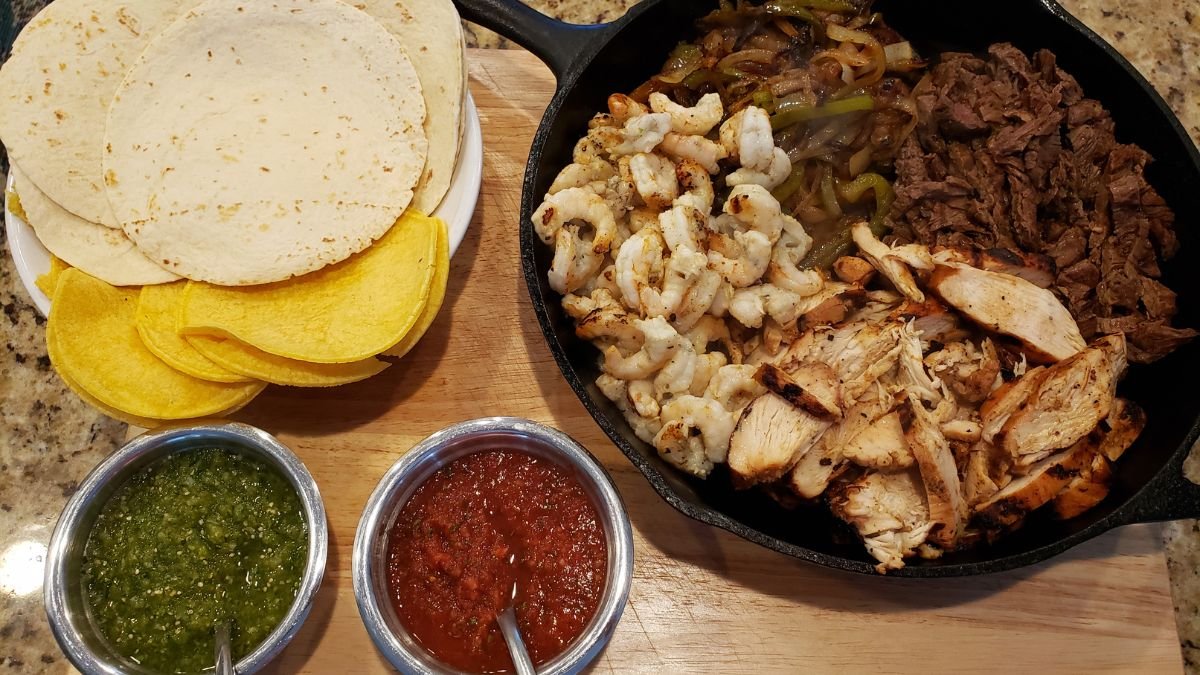

Guacamole Salsa Verde
Ingredients

Equipment
Method
- Place all ingredients in a food processor.
- Blend until everything is chopped and combined.
- If using a blender, add a little tomatillo juice from the can if it is too thick to blend.
- Serve immediately or chill in an airtight container for a few hours or overnight.
Notes
Tried this recipe?
Let us know how it was!Why This Recipe Works
I was inspired to make this by a friend at work who would cook street tacos for us when we had time. He always had this sauce, and it was different from anything I'd made before-creamier than salsa verde, more stable than guacamole, and it stayed bright green for hours. When he and his wife gave me a molcajete, I started making it myself, and it became my go-to for tacos. The technique is simple: you're blending avocados with tomatillos to create an emulsified sauce that doesn't oxidize the way chunky guacamole does. The acidity from the tomatillos and lime juice keeps everything stable, while the avocado provides richness without breaking down. This works for weeknight taco dinners, game day spreads where it needs to sit out, or any time you want something that tastes fresh without constant maintenance.
The Technique That Matters
The key here is blending to a smooth consistency rather than mashing or chunking. Most people think of guacamole as a textured dip, but when you emulsify avocado with tomatillos and aromatics, you create something that behaves more like a sauce-it clings to chips, doesn't pool liquid, and holds its color.
What You're Actually Doing
You're using the tomatillo liquid as your blending medium. That 28-ounce can of whole peeled tomatillos comes packed in its own juice, which is already acidic and flavorful. When you blend the tomatillos first with garlic, cilantro, and lime juice, you create a base that's already well-seasoned. Then you add the avocado and blend until smooth. The fat from the avocado emulsifies with the tomatillo liquid, creating a stable mixture that won't separate or turn brown quickly.
In restaurant kitchens, we'd make salsa verde in big batches by charring fresh tomatillos, but at home, canned tomatillos are the smarter move. They're already cooked, peeled, and consistent in flavor. You're not sacrificing quality-you're gaining convenience and reliability. The blending technique is what elevates this from "ingredients dumped in a bowl" to something that tastes intentional and professional.
Selecting and Preparing Avocados and Tomatillos
The core ingredients here are avocados and tomatillos. Both need attention, but you're not looking for perfection-you're looking for the right stage of ripeness and quality.
What to Look For
- Avocados: You need ripe avocados that yield to gentle pressure but aren't mushy. Since you're blending them smooth, minor brown spots won't matter, but you want creamy texture, not watery or fibrous. Hass avocados work best for their fat content and consistency.
- Tomatillos: Use canned whole peeled tomatillos, not jarred salsa verde. You want plain tomatillos with their liquid so you control the seasoning. Any brand works fine-they're all pressure-cooked and consistent in quality.
- Cilantro: Fresh cilantro with stems removed. The stems are bitter when blended raw, so take the extra minute to strip the leaves. Wash it well-cilantro holds grit that'll ruin the texture.
- Garlic: Minced fresh garlic, not jarred. Jarred garlic has a metallic taste that comes through when blended raw and won't give you the punch you need.
Common Mistakes and How to Avoid Them
This is a forgiving recipe, but there are a few ways to end up with something watery, bland, or weirdly textured.
Problems and Solutions
- Problem: Salsa is too thin and watery → Solution: Drain some of the tomatillo liquid before blending. Start with less liquid and add back if needed. You want it thick enough to coat a chip without dripping.
- Problem: Flavor is flat or bland → Solution: You need more salt. Three teaspoons of kosher salt sounds aggressive, but it's a big batch and tomatillos need seasoning. Taste and adjust-it should taste bright and punchy, not muted.
- Problem: Texture is gritty or separated → Solution: Blend longer. You're emulsifying fat and water, which takes time. Run the blender or food processor for a full minute until it's completely smooth and uniform.
- Problem: Color turns brown after sitting → Solution: Press plastic wrap directly onto the surface before refrigerating. Oxygen contact is what oxidizes avocado. The tomatillo acidity helps, but physical coverage is your best defense.
Timing and Doneness
There's no cooking involved, so "doneness" is really about proper blending and seasoning. You're done when the mixture is completely smooth with no visible chunks of avocado, tomatillo, or cilantro.
What Done Looks Like
The salsa should be a uniform pale green color, thick enough to hold a spoon upright but loose enough to drizzle. When you dip a chip, it should coat evenly without clumping or running off. Taste it cold-flavors mute when chilled, so if it tastes good at room temperature, it'll taste perfect after an hour in the fridge. The texture should be silky, almost like a thin hummus or thick salad dressing.
Variations and Serving Suggestions
The base recipe is solid, but the optional additions change the character completely depending on what you're serving it with.
Make It Your Own
- Heat level: The optional pickled jalapeños add tangy heat without making it aggressively spicy. If you want more kick, add a fresh serrano or increase the jalapeños. For no heat, skip them entirely-the base is mild and approachable.
- Smokiness: Fire-roasted peppers add depth and a subtle char flavor that makes it taste more complex, like you actually grilled something. Use jarred roasted red peppers, drained and diced.
- Serving ideas: Obviously chips, but also use it as a taco sauce (which is how I learned to love it), drizzle over grilled chicken or fish, thin it with more lime juice for a salad dressing, or spread it on sandwiches. It's versatile enough to be a condiment, not just a dip.
- Storage: Keeps in an airtight container in the fridge for 3-4 days. The acidity preserves it better than regular guacamole, so make it ahead for parties without worrying about last-minute prep.
Why It's Worth Making
This is the kind of recipe that solves a specific problem: you want something fresh and flavorful that doesn't require babysitting. It's quick enough for a weeknight when you're making tacos, but impressive enough that people ask for the recipe at parties. Once you understand the technique-blend smooth, season aggressively, control the liquid-you can make this without measuring. I love this salsa on tacos because it adds richness without heaviness, and it's become one of those dishes that just belongs in my rotation. It works every time, and people actually get excited about it.
Recipe
Guacamole Salsa Verde
Ingredients
Equipment
Method
- Place all ingredients in a food processor.
- Blend until everything is chopped and combined.
- If using a blender, add a little tomatillo juice from the can if it is too thick to blend.
- Serve immediately or chill in an airtight container for a few hours or overnight.


Was this helpful?
You must be logged in to post a comment.