
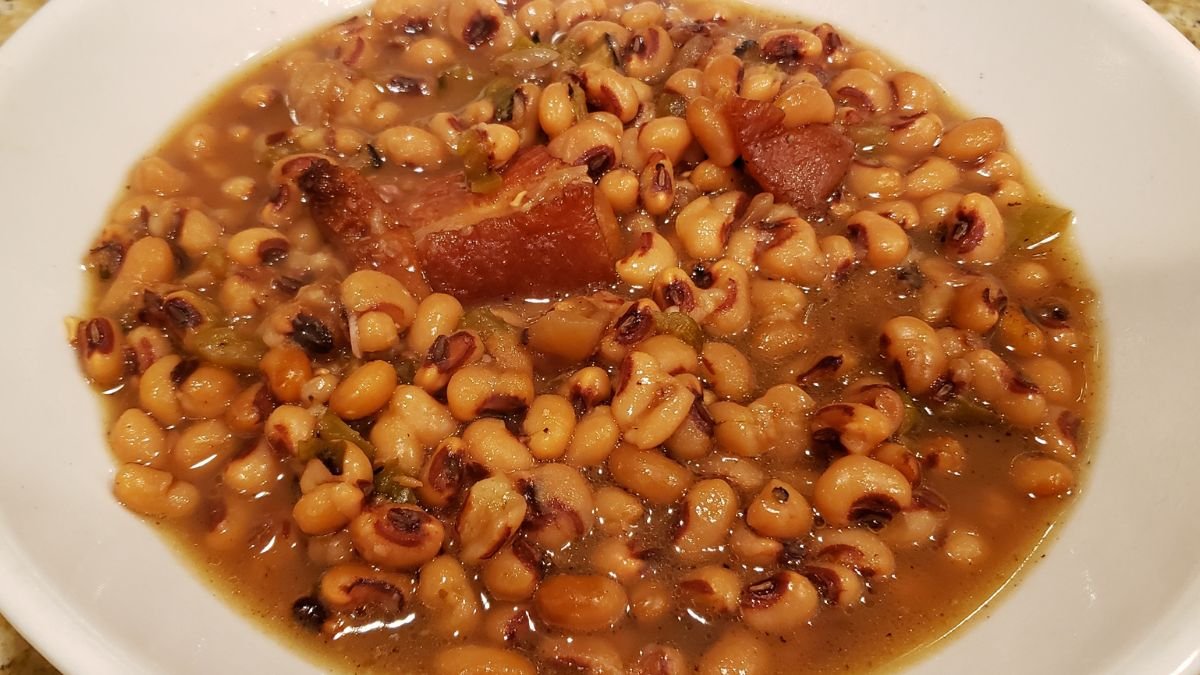

Southern Black-Eyed Peas
Ingredients

Equipment
Method
- Soak the dried peas overnight, or use the quick-soak method: boil for 2 minutes then let sit for 1 hour.
- Drain and rinse.
- Heat the bacon fat in a large stockpot over medium heat.
- Add the onions and garlic and sauté until fragrant, about 2 minutes.
- Add the ham hocks and let them sear slightly for enhanced flavor.
- Add the black-eyed peas, water, salt, and pepper.
- Stir to combine.
- Bring to a boil, then reduce heat to low.
- Cover and simmer for 1 hour, stirring occasionally.
- Check for tenderness until the peas are tender but not mushy.
- Adjust seasoning if needed.
- Remove the ham hocks before serving.
- Serve hot with a splash of hot sauce if desired.
Notes
Tried this recipe?
Let us know how it was!Why This Recipe Works
Black-eyed peas are a Southern staple, and if you're eating them on New Year's Eve or New Year's Day, you're participating in a tradition that goes back generations. The peas represent coins, the collard greens represent dollar bills-it's all about starting the year with symbols of prosperity. And honestly? It works because this is comfort food at its finest. Beyond the symbolism, these peas are just incredibly satisfying: tender, creamy centers in rich, smoky broth that begs for cornbread to soak it all up. Serve them with collard greens, spiral-sliced ham, and mac and cheese, and you've got a New Year's spread that kicks the year off right. This is about building flavor systematically-rendered fat, aromatic base, slow extraction of smokiness from pork-and understanding that proper technique turns simple ingredients into something memorable.
The Technique That Matters
The key to exceptional black-eyed peas is building your flavor foundation before the peas ever hit the pot, then managing a gentle simmer that extracts everything from the smoked pork without turning the peas to mush.
What You're Actually Doing
You start with fat-bacon fat if you've got it, because this isn't just cooking oil. It's your flavor foundation. You're using it to sweat your aromatics and bloom their flavors in hot fat before any liquid dilutes the party. When onions and garlic hit that fat, you're starting the Maillard reaction, building complexity that water alone could never deliver.
The smoked ham hock isn't just protein-it's your primary seasoning element. As it simmers, collagen breaks down into gelatin, giving your broth body. Fat renders out, adding richness. Smoke flavor permeates every drop of liquid. This is why professional kitchens always keep smoked pork bones around-they're flavor bombs that work while you're doing other things. But here's what home cooks get wrong: they undersalt, thinking the pork will handle all the seasoning. You need both. The pork gives you depth and complexity; the salt gives you proper seasoning. Taste halfway through and adjust.
Selecting and Preparing Black-Eyed Peas
Dried black-eyed peas are one of the most consistent legumes you'll work with, but fresher is always better. Beans that have been sitting in a warehouse for years take longer to cook and may never fully soften.
What to Look For
- Color and appearance: Look for consistent cream color with distinct black eyes; avoid bags with lots of broken peas or excessive debris
- Age matters: Buy from stores with good turnover; bulk bins at busy stores often have fresher stock than ancient packages collecting dust
- No soaking needed: Black-eyed peas cook relatively quickly compared to other beans; just rinse and pick through for any small stones
Common Mistakes and How to Avoid Them
Black-eyed peas seem simple, but there are several places where technique breaks down and you end up with either bland mush or tough, underseasoned peas in thin, watery broth.
Problems and Solutions
- Problem: Bland, watery broth with no depth → Solution: Build your aromatic base in fat first, use enough smoked pork, and season aggressively; taste halfway through and adjust
- Problem: Mushy, blown-out peas that have lost their shape → Solution: Maintain a gentle simmer, never a rolling boil; add salt early (it actually helps peas hold their structure), and start checking doneness around 45 minutes
- Problem: Peas stay rock-hard no matter how long they cook → Solution: Usually means old beans or overly acidic water; wait to add any tomato or vinegar until peas are fully tender
Timing and Doneness
Black-eyed peas typically take 60 to 90 minutes of gentle simmering. The range depends on the age of your peas, your altitude, and how tender you want them. You're not looking for al dente here-these should be creamy all the way through but still holding their shape.
What Done Looks Like
Fish out a few peas and taste them. They should be completely tender with no chalky or grainy texture in the center. The skins should be intact, not splitting or sliding off. The broth should have body-not thick like gravy, but not thin and watery either. It should coat a spoon lightly, enriched by rendered pork fat and broken-down collagen. Some peas will naturally break down and dissolve into the liquid, and that's what you want-that's what gives your potlikker substance and makes it worth soaking up with cornbread.
Variations and Serving Suggestions
The basic technique stays consistent, but black-eyed peas are adaptable to whatever direction you want to take them.
Make It Your Own
- Seasoning variations: Add bay leaf and thyme for herbal notes; include diced tomatoes in the last 30 minutes; finish with cider vinegar for brightness; go Cajun with cayenne and bell peppers
- Dietary modifications: Skip the pork and use avocado oil with smoked paprika and liquid smoke; vegetable stock instead of water adds body without meat
- Serving ideas: Over rice as hoppin' John; with cornbread to soak up every drop of potlikker; alongside collard greens and hot sauce; topped with diced raw onion and pepper vinegar
Why It's Worth Making
There's something grounding about a pot of black-eyed peas. This is honest food that's been feeding people for generations-not because it's trendy, but because it works. Whether you're making it for New Year's prosperity or just because you want a pot of something satisfying on the table, you're learning fundamental skills: building flavor systematically, managing a simmer, seasoning properly, recognizing doneness without a timer. These techniques translate to countless other dishes. Plus, you end up with a big pot of something deeply comforting that costs almost nothing and tastes like you put in way more effort than you actually did. That's the kind of recipe that earns its place in your regular rotation-and maybe brings you a little wealth in the new year.
Recipe
Southern Black-Eyed Peas
Ingredients
Equipment
Method
- Soak the dried peas overnight, or use the quick-soak method: boil for 2 minutes then let sit for 1 hour.
- Drain and rinse.
- Heat the bacon fat in a large stockpot over medium heat.
- Add the onions and garlic and sauté until fragrant, about 2 minutes.
- Add the ham hocks and let them sear slightly for enhanced flavor.
- Add the black-eyed peas, water, salt, and pepper.
- Stir to combine.
- Bring to a boil, then reduce heat to low.
- Cover and simmer for 1 hour, stirring occasionally.
- Check for tenderness until the peas are tender but not mushy.
- Adjust seasoning if needed.
- Remove the ham hocks before serving.
- Serve hot with a splash of hot sauce if desired.


Was this helpful?
You must be logged in to post a comment.