
There are hundreds of articles about seasoning cast iron. Most of them recommend vegetable oil or flaxseed oil and skip the most important detail: what fat you use determines whether your seasoning becomes a hard, slick, permanent cooking surface or a gummy, sticky mess you'll be scrubbing off within a month.
I've been seasoning cast iron for over 40 years. I started on my mother's pan when I was a kid, and I've refinished and reseasoned more skillets than I can count - including vintage Griswold pieces stripped down to bare metal. The method I'm about to show you is the one that works. Not the most popular. Not the easiest to find at the grocery store. The one that actually produces a finish you'd swear was factory plastic.
Beef tallow.
Why Beef Tallow and Not Vegetable Oil
Seasoning is polymerization - fat bonding to iron at high heat to create a smooth, hard coating. All fats polymerize, but they don't all polymerize the same way.
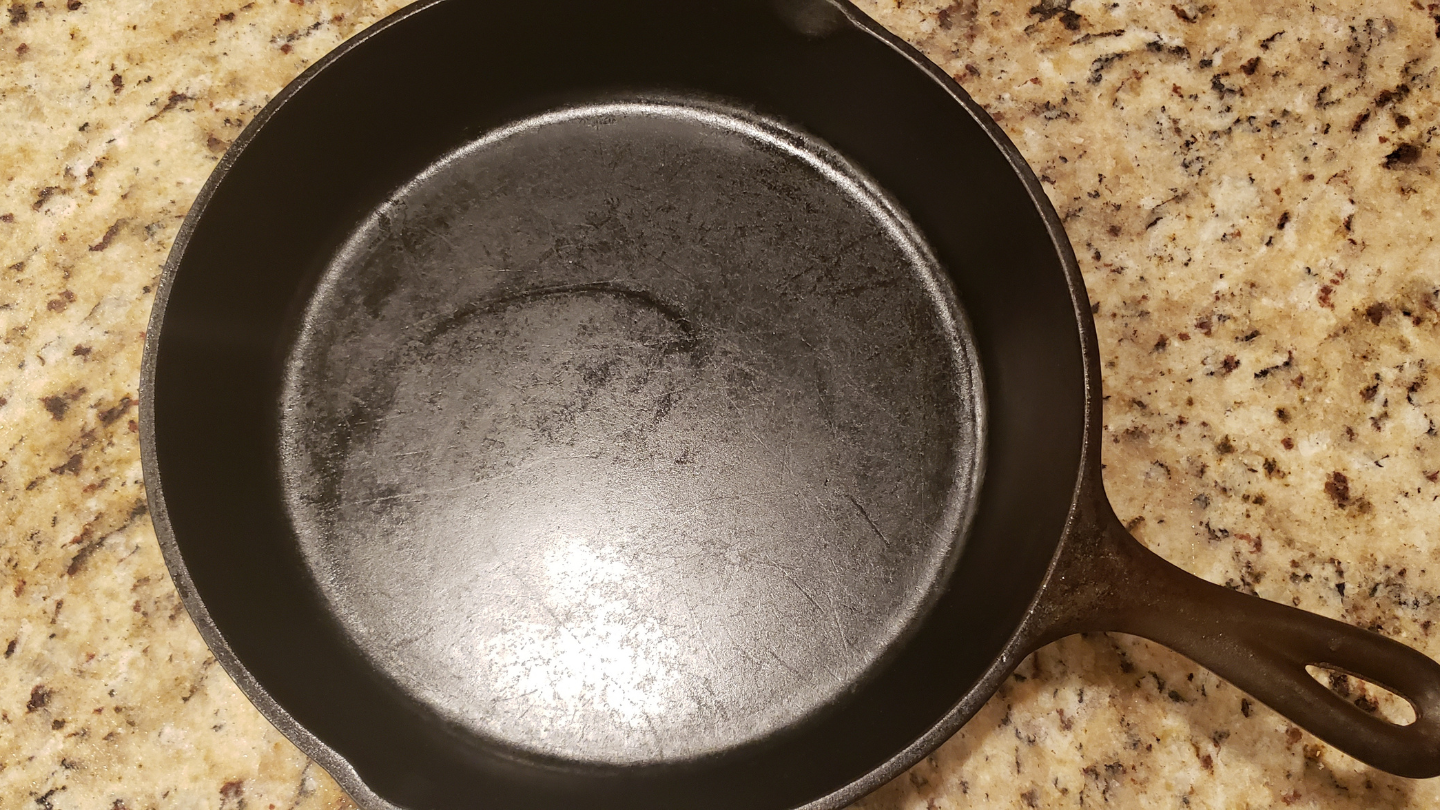
Saturated fats (beef tallow, lard) create a hard, stable polymer layer that builds up evenly and resists flaking. When you season with beef tallow, the result feels like a thin plasticized coating on the surface. Smooth. Hard. Nonstick without any chemical coating.
Unsaturated fats (vegetable oil, canola, soybean) create a softer polymer that tends to become gummy and sticky over time. That tacky residue people complain about on their cast iron? That's almost always seed oil seasoning breaking down. It looks fine at first, then fails within weeks of regular cooking.
Flaxseed oil is the internet's darling recommendation. It creates an impressive-looking initial seasoning - dark, glossy, seemingly perfect. Then it flakes off. The hard, brittle polymer it creates doesn't flex with the pan's thermal expansion. You end up with patches of bare iron showing through. Skip it.
Coconut oil leaves a waxy film when it cools. It might work in tropical climates where it stays liquid, but in a normal kitchen it creates a weird texture that doesn't cook well. Not recommended.
The Fat Hierarchy - In Order of Preference
- Beef tallow (rendered from organ fat, around the kidneys) - the supreme choice. Produces the hardest, smoothest seasoning. Worth sourcing if you can find it.
- Beef fat (rendered from muscle fat) - more available than tallow. If you batch cook ground beef, you're already producing this. Save it in a jar instead of pouring it down the drain.
- Lard (rendered pork fat) - another saturated fat that seasons cleanly. Solid at room temperature, widely available, performs well.
- Avocado oil - a last resort, not a first choice. High smoke point, adequate results, but doesn't build the same quality finish as animal fats.
Don't bother with anything else. No vegetable oil. No canola. No soybean. No olive oil (smokes too early and gums up). You will get poor results and you will blame the cast iron - or worse, me.
The Oven Method - Full Initial Seasoning
Use this for new pans, freshly stripped pans, or any pan that needs a complete seasoning from scratch. This is the full build - 4-5 coats that create your foundation.
What you need: Your cast iron pan, your chosen fat, paper towels (folded thick - the fat gets dangerously hot), oven mitts, and an oven that reaches 450-500°F.
The process:
- Preheat your oven to 450-500°F. Lodge recommends 450-500. Go as hot as your oven allows - if it can't reach that temperature, you won't achieve full polymerization.
- Wash the pan in warm water with a drop of Dawn dish soap. Rinse clean. Do not let it sit wet - move to step 3 immediately.
- Dry with a paper towel or clean kitchen cloth.
- Heat the pan on the stovetop until it's too hot to touch. This opens the pores of the metal and helps the fat bond.
- Using a thick fold of paper towels, coat the entire hot pan with a thin layer of fat. The cooking surface, the handle, the bottom, the sides - everything. Be careful. The fat gets searing hot the instant it hits the pan. Make the paper towel fold thick enough to protect your fingers.
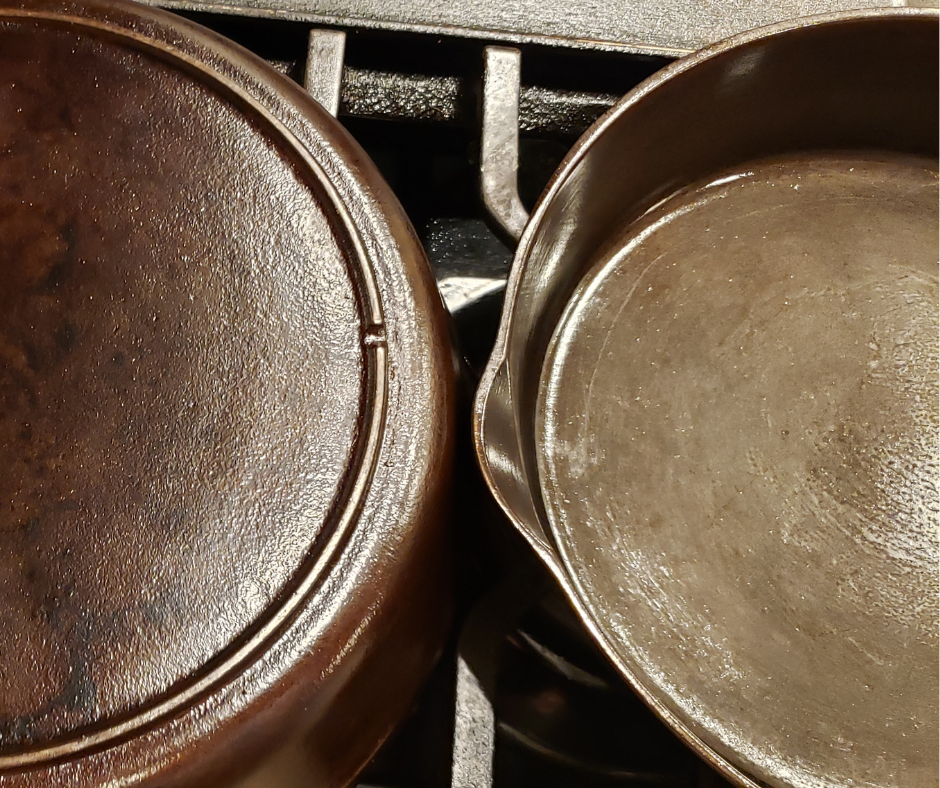
- Place the coated pan in the oven on the middle rack, upside down. An upside-down pan prevents fat from pooling on the cooking surface. Place a sheet of foil on the rack below to catch drips.
- Bake for 1 hour.
- Turn the oven off. Let the pan cool to room temperature inside the oven. Don't rush this.
- Repeat steps 4-8 four more times. Five total coats.
This can be spread over several days. You don't have to do all five coats in one session. If you want to cook with the pan between coats, go ahead - frying in it accelerates the seasoning process. Every time you fry with fat in a hot pan, you're essentially running a stovetop seasoning cycle with the bonus of getting food at the end.
The Stovetop Method - Daily Maintenance Seasoning
This is the routine that keeps your seasoning built up between full oven sessions. I do this after about 80% of my cooks - it takes 60 seconds and it's the reason my pans perform the way they do.
- After washing (yes, with soap - more on that below), put the pan back on the stove over high heat.
- Let it get hot enough to fully evaporate any remaining water. You'll see the wet spots disappear. Keep heating until the pan is too hot to touch.
- Add a small amount of fat - 1 teaspoon for a small pan, up to 1 tablespoon for a 12-inch. Beef fat, tallow, or lard.
- Using a thick fold of paper towels, wipe the fat over the entire surface. The fat will get searing hot in seconds. The thick paper towel fold protects your fingers.
- Leave on the heat until the fat just starts to smoke.
- Kill the heat. Let the pan cool naturally on the stovetop.
That's it. The pan is ready for the next meal. This is my routine, and it's the routine I require of my family if they use my cast iron.
Yes, You Can Use Soap. Here's Why I Do.
There's a persistent myth that soap destroys cast iron seasoning. The actual history: soaps made 30-50+ years ago contained lye, and lye absolutely strips seasoning. That's chemistry, not myth. You can read this directly on Lodge's website.
Modern dish soap - Dawn, for example - does not contain lye. It won't strip a well-maintained seasoning. Will it affect the surface slightly? Yes, which is exactly why I reseason after almost every cook. The 60-second stovetop reseason replaces anything the soap touched.
Here's why I wash with soap on purpose: flavors live in fats. If you don't wash the cooking fat off the surface, your pan smells and tastes like whatever you cooked last. I don't want my pancakes tasting like garlic. I don't want my eggs carrying cajun seasoning from last night's chicken thighs.
The "salt scrub, no soap ever" approach might leave a sanitary surface. But a soap-washed, reseasoned surface is sanitary AND flavor-neutral. That matters when you cook different meals in the same pan across a week.
The Fastest Way to Build Seasoning: Fry in Tallow
If you just seasoned a new pan and want to accelerate the finish, fry potatoes in beef tallow. Repeatedly.
Who's going to complain about homemade fries? Nobody. And each round of frying puts the pan through a full heat-and-fat cycle - the same process as a seasoning coat, except you get food out of it. After 4-5 rounds of frying in tallow, your pan's surface will be noticeably smoother and more nonstick than seasoning alone achieved.
This is the advice I give anyone who asks me how to season a new pan: fry in it. Fry potatoes. Fry eggs. Fry anything. The repetition of hot fat in the pan builds seasoning faster than oven cycles alone, and you're eating while you do it.
How to Know If Your Seasoning Is Good Enough
Fry an egg. If the egg doesn't stick, your seasoning is working. That's the whole test.
If it sticks, you need more seasoning coats or you're cooking too hot. Go back to the stovetop method, add a few more oven coats, and keep frying in tallow. It'll get there.
Common Seasoning Questions
How many coats do I need? Four to five for a full initial seasoning. If you're going to fry in the pan heavily from the start, you can get away with three initial coats and let the cooking build the rest. Don't go over five oven coats - you're wasting time after that. Let the cooking do the work.
Can I use my pan while I'm still building the seasoning? Yes. In fact, you should. Cook every meal in it for the first two weeks. The constant use accelerates the seasoning faster than oven cycles alone.
What temperature for seasoning? 450-500°F. Below 400°F and you won't achieve proper polymerization. The fat needs to go past its smoke point to bond to the iron.
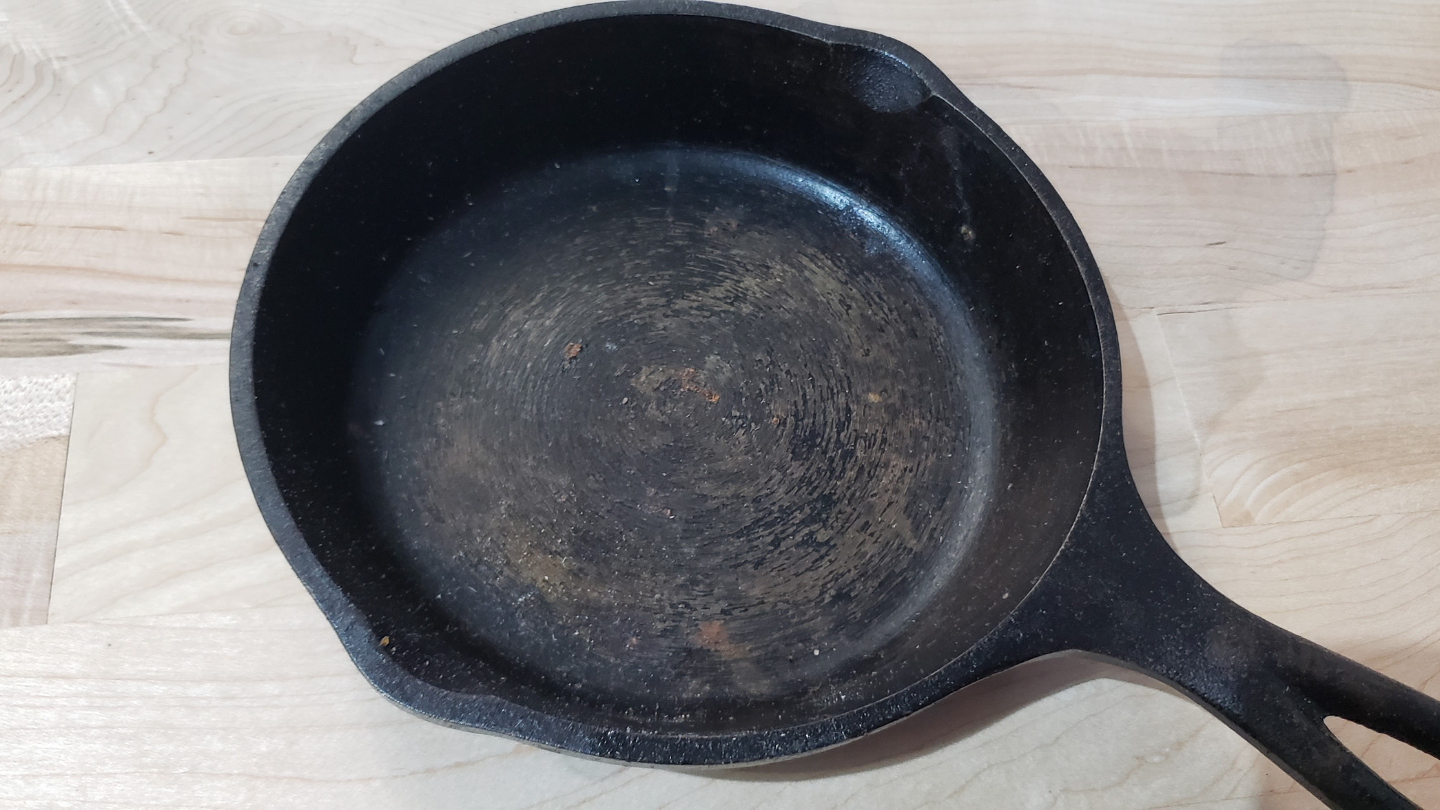
Why is my seasoning sticky or gummy? Two possible causes: too much fat applied per coat (the excess doesn't polymerize, it just sits there and gets tacky), or you used a seed oil / vegetable oil. Fix: scrub with a copper scrub pad under warm water to remove the sticky layer, then reseason with tallow using thinner coats.
Can I remove factory seasoning and start over? Yes. I use Easy-Off oven cleaner to strip pans down to bare cast iron, then reseason from scratch with tallow. This is especially worth doing on Lodge pans if you want to remove the textured factory finish and build a smoother surface. See the full refinishing guide for the step-by-step process: How to Refinish and Reseason Cast Iron From Bare Metal.
Should I season at 350 or 450? 450-500. Always. 350 isn't hot enough for full polymerization.
Why not olive oil? Low smoke point. It burns before it bonds properly and leaves a bitter, gummy residue. Olive oil is a finishing oil - pour it on completed dishes, not into a 500°F oven.
Is it OK to spray Pam on cast iron? You can cook with it in a pinch, but don't season with it. The propellant and additives don't polymerize well. Use real fat.
Does a rusty bottom matter? Yes. Rust on any surface means moisture sat on unprotected iron. Scrub the rust off with a copper scrub pad and do a stovetop reseason on the affected area. For heavy rust, do a full strip and reseason.
For the complete cast iron system - heat management, cooking technique, troubleshooting, and recipes - see the Cast Iron Cooking guide.
For how beef tallow and other fats fit into your overall cooking system, see Fat Selection & Cooking Oils.
Was this helpful?
You must be logged in to post a comment.