
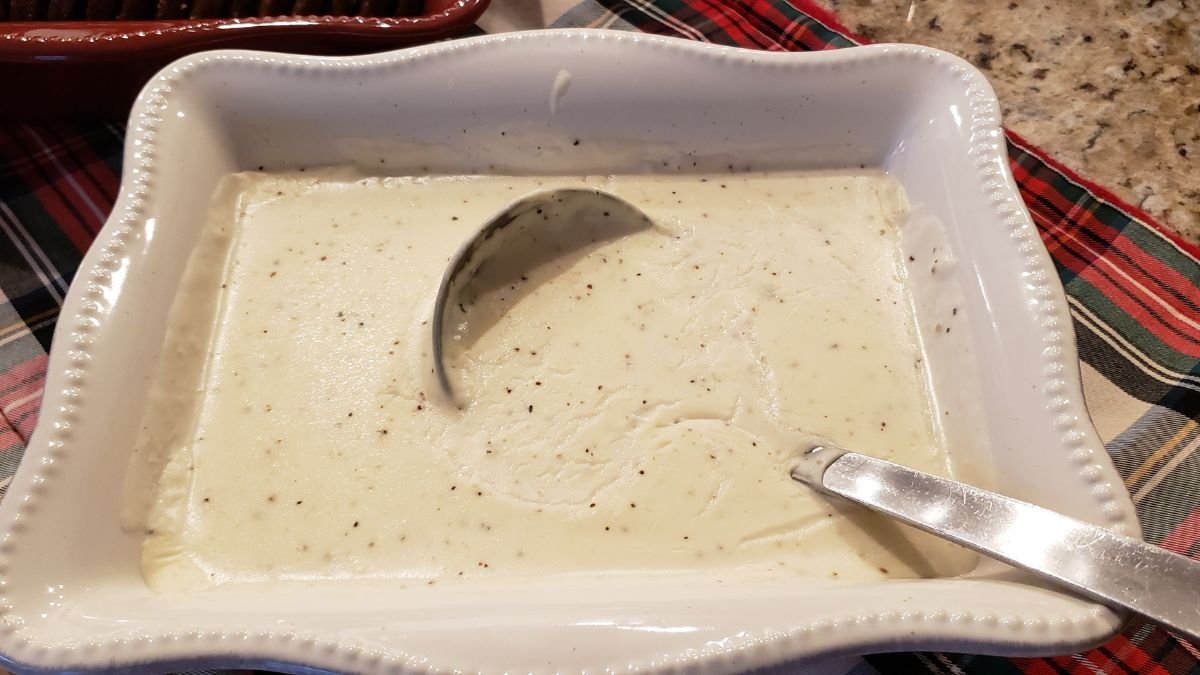

Country White Gravy
Ingredients

Equipment
Method
- Heat a 10-inch cast iron skillet over medium heat.
- Melt the butter and let the moisture sizzle off.
- Add the flour and stir slowly for 4 minutes to cook the roux.
- Remove from heat.
- Add all of the milk at once and whisk quickly to dissolve the roux into the milk with no lumps.
- Add salt and pepper.
- Return to medium heat.
- Continue stirring until the gravy starts to bubble and simmer.
- Let it simmer for 5 minutes, stirring occasionally, until thickened.
- Remove from heat.
- Serve over biscuits, country fried chicken, or country fried steak.
Notes
Tried this recipe?
Let us know how it was!Why This Recipe Works
I perfected this gravy when I was 12 years old, and I'll never forget that day. I made it to go on scrambled eggs, and it was so delicious I kept making more eggs until I'd eaten a dozen covered in white gravy. That's the power of getting this right-it's so good you'll find excuses to put it on everything. Country white gravy is the hallmark of Southern cooking in my opinion, and it's one of those recipes that separates cooks who understand technique from those just following steps. You're building a stable emulsion of fat, flour, and milk-getting the proportions and timing right means smooth, creamy gravy every single time. This isn't about shortcuts; it's about understanding what's actually happening in the pan so you can replicate it consistently, whether you're 12 or 50.
The Technique That Matters
Country white gravy is built on a roux-equal parts fat and flour cooked together to create a thickening base. Unlike brown gravies where you're developing deep flavor through caramelization, here you want a blonde roux: cooked just long enough to eliminate the raw flour taste (about 2-3 minutes) without taking on color. The goal is a paste that smells nutty and toasted, not browned.
What You're Actually Doing
When you cook flour in fat, you're coating the starch granules, which prevents them from clumping when liquid is added. This is why you can't just dump flour into milk and expect smooth gravy-you'll get lumps every time. The roux creates a stable base that accepts liquid gradually, allowing the starches to hydrate and swell evenly. In professional kitchens, we make roux in large batches because the principle scales perfectly: equal parts fat to flour, cooked to the desired color, then liquid whisked in until you reach the consistency you need.
The critical moment is adding the milk. Pour it in all at once and you'll break the emulsion-lumps form and you're fighting to salvage it. Add it gradually, whisking constantly, and the roux accepts the liquid smoothly. You're building viscosity in stages: the first addition will look tight and paste-like, but keep whisking and adding milk, and it will loosen into a creamy, pourable gravy. Once all the milk is incorporated, bring it to a simmer to fully activate the starch and thicken to final consistency.
Selecting and Preparing Flour and Dairy
Quality matters even in simple recipes. Grass-fed salted butter adds richness and depth that margarine or oil can't match. Whole milk provides the fat content necessary for proper body and mouthfeel-skim or low-fat milk will give you thin, watery gravy. The flour itself needs to be fresh and properly incorporated into the fat.
What to Look For
- Flour freshness: All-purpose flour works perfectly. Old flour can taste stale-if it smells musty or off, replace it. Fresh flour has a clean, neutral aroma.
- Butter quality: Grass-fed butter has better flavor and color. Salted butter adds seasoning throughout the cooking process, building flavor from the start.
- Milk temperature: Room temperature or slightly warm milk incorporates more smoothly than cold milk straight from the fridge. This prevents temperature shock that can break the emulsion.
- Pepper coarseness: Freshly ground black pepper has more punch than pre-ground. Visible flecks are traditional in country gravy and provide bursts of flavor.
Common Mistakes and How to Avoid Them
Even experienced cooks can struggle with gravy. The mistakes are usually about timing or temperature, not skill level. Understanding where things go wrong helps you correct course before the gravy is unsalvageable.
Problems and Solutions
- Problem: Lumpy gravy → Solution: Cook the roux fully before adding liquid, and add milk gradually while whisking constantly. If lumps form, strain through a fine-mesh sieve or blend smooth.
- Problem: Gravy too thin → Solution: Simmer longer to reduce and thicken, or make a small additional roux and whisk it in. Remember gravy thickens as it cools, so account for that.
- Problem: Gravy too thick → Solution: Whisk in additional warm milk a tablespoon at a time until desired consistency is reached. Don't add cold milk or it may break.
- Problem: Raw flour taste → Solution: Cook the roux longer before adding milk. It should smell nutty and toasted, not raw and pasty. This usually takes a full 2-3 minutes.
- Problem: Gravy breaks or separates → Solution: Heat was too high or milk added too quickly. Lower heat and whisk vigorously to re-emulsify. Add liquid more slowly next time.
Timing and Doneness
Country white gravy comes together quickly-about 15 minutes total from start to finish. The roux needs 2-3 minutes of cooking time to develop properly, then another 5-7 minutes after adding milk to reach full thickness. Don't rush the simmer at the end; this is when the starches fully activate and the gravy reaches its proper consistency.
What Done Looks Like
Finished gravy should coat the back of a spoon and fall in ribbons, not streams. It should be thick enough to cling to biscuits or potatoes but still pourable. The color is creamy ivory with visible black pepper flecks throughout. Taste is your final check: rich, savory, well-seasoned, with no raw flour flavor or graininess. Gravy continues to thicken as it cools, so if serving later, thin it slightly with warm milk when reheating.
Variations and Serving Suggestions
Country white gravy is endlessly adaptable once you master the base technique. The classic version is perfect over split biscuits, but it's equally at home over chicken-fried steak, pork chops, mashed potatoes, or breakfast hash-anything that benefits from rich, peppery sauce.
Make It Your Own
- Seasoning variations: Add crumbled breakfast sausage for sausage gravy. Stir in fresh herbs like thyme or sage. Spike with hot sauce or cayenne for heat. Add caramelized onions for depth.
- Dietary modifications: Use plant-based butter and oat or soy milk for dairy-free gravy-just ensure the milk is unsweetened and full-fat for proper consistency.
- Serving ideas: Classic over buttermilk biscuits for breakfast, ladled over chicken-fried steak for dinner, spooned over roasted vegetables for comfort food, or as a base for creamed dishes.
Why It's Worth Making
Learning to make proper country white gravy isn't just about one recipe-it's about understanding how roux-based sauces work. Master this technique and you've unlocked dozens of other sauces: béchamel, cheese sauce, pan gravies, cream sauces, and more. This is foundational cooking knowledge that makes you a better, more confident cook across the board. There's real satisfaction in making something this simple taste this good-no packets, no shortcuts, just butter, flour, milk, and proper technique. When a 12-year-old can nail this and eat a dozen eggs because the gravy is that good, you know it's a recipe worth having in your arsenal. Get it right once, and you'll never second-guess gravy again.
Recipe
Country White Gravy
Ingredients
Equipment
Method
- Heat a 10-inch cast iron skillet over medium heat.
- Melt the butter and let the moisture sizzle off.
- Add the flour and stir slowly for 4 minutes to cook the roux.
- Remove from heat.
- Add all of the milk at once and whisk quickly to dissolve the roux into the milk with no lumps.
- Add salt and pepper.
- Return to medium heat.
- Continue stirring until the gravy starts to bubble and simmer.
- Let it simmer for 5 minutes, stirring occasionally, until thickened.
- Remove from heat.
- Serve over biscuits, country fried chicken, or country fried steak.


Was this helpful?
You must be logged in to post a comment.