
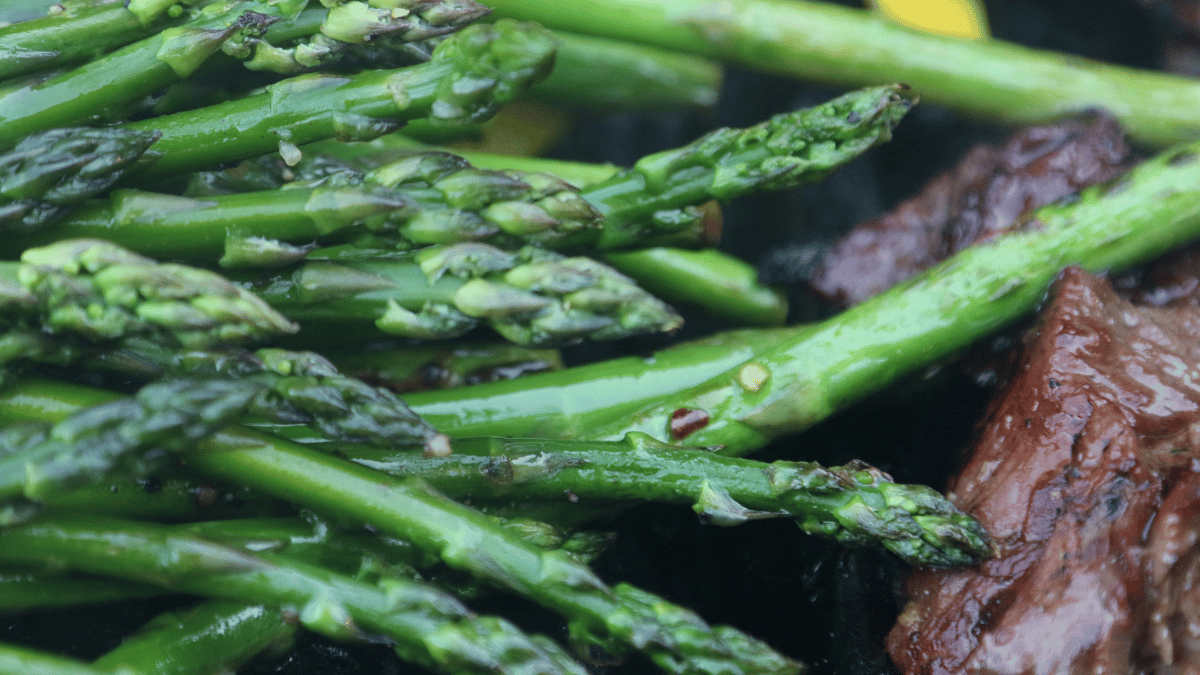

Pan Roasted Asparagus
Ingredients

Equipment
Method
- Rinse and trim the asparagus.
- Snap or cut off the tough woody ends.
- Heat a large cast iron skillet over medium-high heat.
- Add avocado oil and let it heat until it shimmers.
- Add the asparagus in a single layer.
- Season with kosher salt and pepper.
- Let cook undisturbed for 2-3 minutes until it starts to brown on the bottom.
- Toss the asparagus to cook evenly on all sides.
- Add the minced garlic if using and cook for another 3-5 minutes until the asparagus is tender-crisp and slightly caramelized.
- Remove from heat and top with Parmesan cheese.
- Serve immediately.
Nutrition
Notes
Tried this recipe?
Let us know how it was!Why This Recipe Works
Asparagus gets murdered by steaming and boiling. There, I said it. Those methods turn a vegetable with real character into soggy mush. Pan roasting in cast iron does the opposite-it concentrates flavor through caramelization and keeps the texture where it should be: tender but still with bite. This is the kind of side dish that works any night you want something quick but deliberate. It's sophisticated enough for holiday meals without requiring the fuss that holiday cooking usually demands. Plate it in a rustic cast iron pan straight from the stove, or transfer it to a fluted French white ceramic dish if you're setting a proper table. Either way, it elevates the meal without complicating your workflow. You're executing one technique properly, and the asparagus tastes like itself, only better-nutty from the char, brightened by garlic, finished with Parmesan because that salty umami punch just works.
The Technique That Matters
The entire method hinges on getting your cast iron hot enough to sear rather than steam. This isn't gentle vegetable cookery. You need aggressive heat to drive off surface moisture quickly and start the Maillard reaction that creates those brown, caramelized spots.
What You're Actually Doing
When asparagus hits a properly heated skillet, the moisture on its surface evaporates almost instantly. That's when browning begins. If your pan isn't hot enough, the asparagus releases its internal moisture faster than it can evaporate, and you end up braising instead of roasting. The difference is dramatic: braised asparagus is soft and one-dimensional; roasted asparagus has texture contrast and concentrated flavor.
In restaurant kitchens, this is standard vegetable technique for service. High heat, fast cook, immediate plate. Home cooks make two mistakes consistently: they crowd the pan, and they don't preheat long enough. Cast iron holds heat beautifully once it gets there, but it takes time. Give it five solid minutes over medium-high heat. And leave space between the spears-they need airflow to roast, not a vegetable traffic jam that traps steam and prevents caramelization.
Selecting and Preparing Asparagus
Not all asparagus is created equal, and this recipe won't fix genuinely old, woody spears. Start with good product.
What to Look For
- Freshness indicators: Tight tips, not flowering or mushy. The cut ends should look moist, not dried out and fibrous. Fresh asparagus squeaks when you rub the spears together-seriously, it's weird but it works as a test.
- Size and uniformity: Thicker spears actually work better for pan roasting because they don't overcook as quickly. Try to select spears of similar diameter so they cook evenly. Pencil-thin asparagus has its place, but it's not here-those will burn before they develop proper caramelization.
- Seasonal considerations: Spring asparagus is peak, obviously, but you can make this year-round with decent results. Just adjust your standards in December and focus even harder on proper technique to compensate for less-than-ideal produce.
Common Mistakes and How to Avoid Them
Even simple recipes have failure points. Here's what typically derails this dish.
Problems and Solutions
- Problem: Asparagus is limp and gray instead of bright with char marks → Solution: Your pan wasn't hot enough, or you crowded it. Preheat longer and work in batches if necessary. Better to make two batches that turn out right than one soggy mess.
- Problem: Tips are burnt but stalks are still raw → Solution: Heat is too high, or your spears are too thick. Drop the heat slightly or consider trimming thicker stalks lengthwise. The tips always cook faster, so this requires balance and attention.
- Problem: Everything tastes flat and boring → Solution: You under-seasoned. Asparagus needs more salt than you think. Season during cooking, not just at the end, so the seasoning integrates rather than sitting on top like an afterthought.
Timing and Doneness
Doneness is both visual and tactile. You're looking for specific cues, not just setting a timer and walking away.
What Done Looks Like
The spears should have visible brown spots-actual caramelization, not just color from oil. When you pick one up with tongs, it should bend slightly under its own weight but not flop over limply. The stalk should feel tender when pierced with a knife tip but still offer slight resistance. If it slides through like butter, you've gone too far. Total cooking time is usually 8-10 minutes for medium-thick spears, but trust your eyes and hands more than the clock. Different stovetops, different pans, different asparagus-these all affect timing.
Variations and Serving Suggestions
This method is a foundation. Once you nail it, you can push it in different directions without losing what makes it work.
Make It Your Own
- Seasoning variations: Lemon zest and red pepper flakes for brightness and heat. Balsamic reduction drizzled at the end for sweetness and acidity. Everything bagel seasoning if you're feeling weird about it, but it actually works surprisingly well.
- Dietary modifications: Skip the Parmesan for dairy-free; use nutritional yeast if you want that umami punch without cheese. The dish holds up fine without it as long as you season properly with salt.
- Serving ideas: This pairs with anything from grilled steak to roasted chicken to poached eggs. It's a solid holiday side that doesn't require last-minute fussing-make it while your main protein rests and serve it hot or at room temperature.
Why It's Worth Making
Because vegetables shouldn't be an afterthought, and this technique proves you don't need elaborate recipes to make them legitimately good. Master pan roasting in cast iron, and you've got a method that works for asparagus, green beans, broccoli, Brussels sprouts-basically anything that benefits from high heat and caramelization. This specific recipe is about understanding how heat, timing, and proper seasoning transform a simple ingredient into something you'd actually want to eat. No batch prep, no advance planning. Just solid technique executed well, which is what good cooking should be whether it's a Tuesday night or a holiday table.
Recipe
Pan Roasted Asparagus
Ingredients
Equipment
Method
- Rinse and trim the asparagus.
- Snap or cut off the tough woody ends.
- Heat a large cast iron skillet over medium-high heat.
- Add avocado oil and let it heat until it shimmers.
- Add the asparagus in a single layer.
- Season with kosher salt and pepper.
- Let cook undisturbed for 2-3 minutes until it starts to brown on the bottom.
- Toss the asparagus to cook evenly on all sides.
- Add the minced garlic if using and cook for another 3-5 minutes until the asparagus is tender-crisp and slightly caramelized.
- Remove from heat and top with Parmesan cheese.
- Serve immediately.


Was this helpful?
You must be logged in to post a comment.