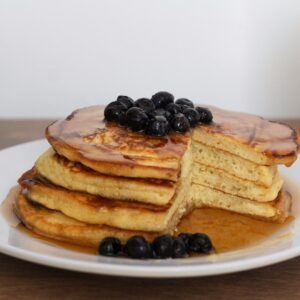
Fluffy buttermilk pancakes

Equipment
- Separate Bowl
- Whisk
- Griddle
- Cast iron skillet
- Measuring Cups
- Measuring spoons
- Spatula
Ingredients
Dry Ingredients
- 2 cup All Purpose Flour
- 2 Tbsp Sugar granulated
- 2 tsp Baking Powder
- 1 tsp Baking Soda
- ½ tsp Kosher Salt Morton brand
Wet Ingredients
- 2 cup Buttermilk
- 2 Eggs large
- ¼ cup Clarified Butter melted, for the batter
- 1 tsp Vanilla Extract
Cooking
- ¼ cup Clarified Butter for greasing the griddle

Instructions
Prep
- Whisk together the flour, sugar, baking powder, baking soda, and salt in a large mixing bowl.
- Whisk the buttermilk, eggs, melted clarified butter, and vanilla extract in a separate bowl.
- Pour the wet ingredients into the dry ingredients.
- Stir gently until just combined.
- Let the batter rest for 5 minutes to hydrate the flour and activate the leavening.
Cook
- Heat a griddle or cast iron skillet over medium heat to about 375°F.
- Grease the surface with clarified butter.
- Scoop about 1/4 cup of batter per pancake onto the griddle.
- Cook until bubbles form on the surface and the edges look set, about 2-3 minutes.
- Flip and cook another 2-3 minutes until golden brown.
- Add more clarified butter between batches as needed.
Serve
- Serve warm with butter, maple syrup, fresh fruit, or your favorite toppings.
Notes
Why This Recipe Works
I was ten years old when I made my first pancakes, standing next to my mother in our kitchen. They came out absolutely black-burned to a crisp because I didn't understand heat control yet. We both laughed so hard at those charcoal discs. But my mother was patient, walked me through it again, and after a couple more attempts, I made pancakes I could actually eat. That morning was the beginning of everything for me in the kitchen. It's fitting that pancakes-this deceptively simple dish-taught me the first real lesson about technique mattering more than enthusiasm.
Pancakes expose every flaw in your method immediately. Too much mixing creates tough, rubbery texture. Too much heat burns the outside while leaving raw centers. Stale leavening agents produce flat, dense results. But master the fundamentals-gentle mixing, proper heat, fresh ingredients-and you'll make fluffy, golden pancakes every single time. This recipe uses all-purpose flour with separate leavening agents for precise control over rise and texture. It's comfort food that works any time of day, and it's the kind of foundational recipe worth getting right.
The Technique That Matters
The critical skill here is understanding gluten development and knowing when to stop mixing. In professional kitchens, we know that overmixing pancake batter is the fastest route to tough, chewy pancakes instead of tender, fluffy ones.
What You're Actually Doing
When you combine wet and dry ingredients, you're hydrating flour proteins that immediately want to form gluten strands. For bread, that's exactly what you want-strong gluten networks create structure. For pancakes, gluten is your enemy. The goal is mixing just until dry ingredients are moistened. Lumps are not only acceptable, they're preferred. Those lumps will hydrate as the batter rests briefly, but the gluten network stays minimal, giving you tender texture.
Using separate baking powder and baking soda provides both immediate rise from baking powder and enhanced browning from baking soda reacting with acidic buttermilk. Clarified butter matters because it has a higher smoke point than whole butter, allowing you to maintain proper griddle temperature without burning milk solids. That's the difference between even golden-brown surfaces and spotty, burned coloring that tastes bitter.
Selecting and Preparing Your Flour
All-purpose flour is the correct choice for pancakes because of its moderate protein content-typically 10-12%. This provides enough structure to hold the pancake together without creating excessive chewiness from too much gluten development.
What to Look For
- Protein content: Standard all-purpose flour works perfectly; avoid bread flour (too much protein creates toughness) or cake flour (too little structure causes collapse)
- Freshness indicators: Flour should smell neutral and slightly sweet, never musty or stale; old flour produces off flavors
- Storage method: Keep flour in an airtight container to prevent moisture absorption, which affects both measurement accuracy and baking powder activation
- Measurement technique: Spoon flour into measuring cups and level off rather than scooping directly-scooping compacts flour and gives you 20-25% more than intended, leading to dense pancakes
Common Mistakes and How to Avoid Them
Pancakes seem straightforward, but several technical errors create consistent problems. Understanding these will immediately improve your results-the difference between what I made at ten years old and what I made thirty minutes later.
Problems and Solutions
- Problem: Dense, rubbery texture → Solution: Stop overmixing immediately; stir just until you can't see dry flour, then stop even if lumps remain
- Problem: Uneven browning or burned spots → Solution: Use clarified butter and maintain consistent medium heat; regular butter's milk solids burn too easily on a hot griddle
- Problem: Flat pancakes without rise → Solution: Check baking powder freshness (it loses potency after six months opened) and don't let mixed batter sit more than a few minutes before cooking
- Problem: Raw centers with burned exteriors → Solution: Lower your heat; pancakes need time to cook through, and high heat only burns the outside while leaving raw batter inside
Timing and Doneness
Pancakes communicate when they're ready to flip through clear visual cues. You're looking for bubbles to form across the entire surface, with edges appearing set and slightly dry. This typically takes 2-3 minutes on the first side at proper medium heat.
What Done Looks Like
When bubbles form and pop, leaving small holes that don't immediately fill back in, that's your signal. The edges should look matte rather than wet and glossy. Flip once-only once-and cook the second side for about 90 seconds until golden. The second side always cooks faster because the pan is fully heated and the batter is already partially set. Press gently on the center: if it springs back, they're done. If it leaves an indentation, give them another 30 seconds.
Variations and Serving Suggestions
This base recipe accepts additions and modifications easily once you understand the fundamental technique. The mixing method stays the same regardless of what you add.
Make It Your Own
- Flavor additions: Fold in blueberries, chocolate chips, or diced bananas after mixing but before cooking; add cinnamon or nutmeg to dry ingredients for warmth without changing texture
- Dietary modifications: Substitute buttermilk with regular milk plus 2 tablespoons lemon juice (let sit 5 minutes to curdle); dairy-free milk works but reduces tangy flavor profile
- Texture variations: Replace ¼ cup all-purpose flour with cornmeal for slight crunch, or whole wheat flour for earthier flavor (expect slightly denser results from higher protein)
- Serving ideas: Classic maple syrup and butter, fresh fruit and whipped cream, or savory applications with fried eggs and bacon for breakfast-dinner
Why It's Worth Making
Mastering pancakes gives you more than just a breakfast option-it teaches you fundamental lessons about technique, patience, and understanding how ingredients behave. This is the dish that started everything for me, laughing with my mother over burned attempts until we got it right. Once you nail the mixing method and heat control, you'll produce fluffy, golden pancakes every single time without conscious thought. That's the kind of foundational cooking skill that pays dividends for years, whether you're feeding kids on Saturday morning or making comfort food dinner on a weeknight. Simple ingredients, proper execution, consistent results-that's what cooking is actually about.
Recipe
Fluffy buttermilk pancakes
Equipment
- Separate Bowl
- Whisk
- Griddle
- Cast iron skillet
- Measuring Cups
- Measuring spoons
- Spatula
Ingredients
Dry Ingredients
- 2 cup All Purpose Flour
- 2 tablespoon Sugar granulated
- 2 teaspoon Baking Powder
- 1 teaspoon Baking Soda
- ½ teaspoon Kosher Salt Morton brand
Wet Ingredients
- 2 cup Buttermilk
- 2 Eggs large
- ¼ cup Clarified Butter melted, for the batter
- 1 teaspoon Vanilla Extract
Cooking
- ¼ cup Clarified Butter for greasing the griddle
Instructions
Prep
- Whisk together the flour, sugar, baking powder, baking soda, and salt in a large mixing bowl.
- Whisk the buttermilk, eggs, melted clarified butter, and vanilla extract in a separate bowl.
- Pour the wet ingredients into the dry ingredients.
- Stir gently until just combined.
- Let the batter rest for 5 minutes to hydrate the flour and activate the leavening.
Cook
- Heat a griddle or cast iron skillet over medium heat to about 375°F.
- Grease the surface with clarified butter.
- Scoop about ¼ cup of batter per pancake onto the griddle.
- Cook until bubbles form on the surface and the edges look set, about 2-3 minutes.
- Flip and cook another 2-3 minutes until golden brown.
- Add more clarified butter between batches as needed.
Serve
- Serve warm with butter, maple syrup, fresh fruit, or your favorite toppings.