
Ingredients

Equipment
Method
Dry Brine
- Remove the chicken from packaging 24-48 hours before roasting.
- Remove anything packed inside the cavity.
- Pat completely dry with paper towels.
- Combine kosher salt, brown sugar, black pepper, garlic powder, onion powder, and smoked paprika in a small bowl.
- Work your fingers gently under the breast skin to create pockets without tearing.
- Apply about 60% of the brine mix directly on the meat under the skin.
- Apply the remaining 40% over the outside — breast, legs, thighs, back.
- Press it in.
- Rub inside the cavity lightly with any remaining brine.
- Place the chicken on a wire rack over a sheet pan.
- Refrigerate uncovered for 24-48 hours.
Roasting Day
- Remove the chicken from the fridge 45-60 minutes before cooking.
- Place the apple, onion, rosemary, thyme, and sage in the cavity.
- Rub softened butter over the entire skin.
- Place the chicken on a roasting rack in a roasting pan.
- Pour chicken stock into the bottom of the pan.
- Insert a probe thermometer into the thickest part of the breast from the neck end, going under the skin.
- Roast at 425°F for 20 minutes to crisp the skin.
- Reduce heat to 325°F and continue roasting for 18-20 minutes per pound total cooking time.
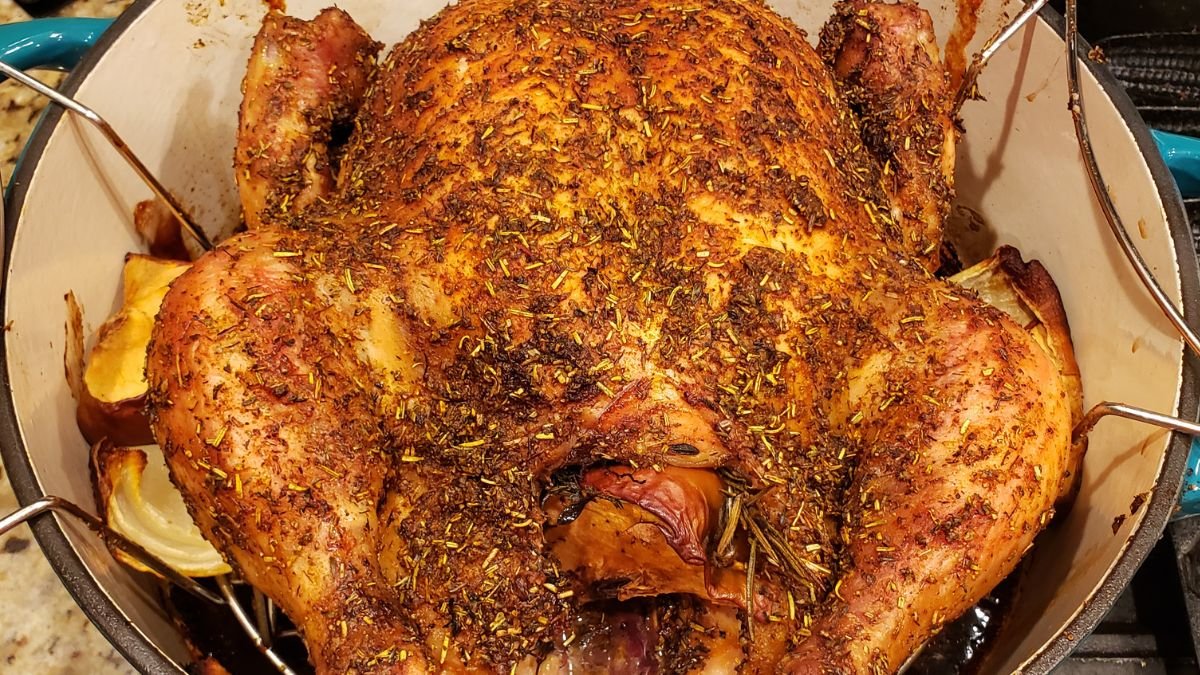
- For crispy skin, cook to 165°F in the oven and do not tent when you remove it.
- For moist meat with softer skin, pull at 155-160°F, tent immediately with foil, and rest 15-20 minutes until temperature reaches 165°F.
Rest and Serve
- Carve and serve.
Disclosure: Nutrition is estimated and provided for general guidance.
Notes
The overnight brine is what sets this apart—it seasons the meat throughout and keeps it moist during roasting. Allowing the chicken to air-dry for two hours before roasting creates crispier skin by removing surface moisture. The aromatics in the cavity infuse subtle flavor but aren't meant to be eaten. Store carved chicken in airtight containers with some of the pan juices to maintain moisture. White and dark meat can be separated for different applications—white meat works well in salads and grain bowls, while dark meat handles reheating better in soups and casseroles. The bones and carcass make excellent stock for your next batch.
