
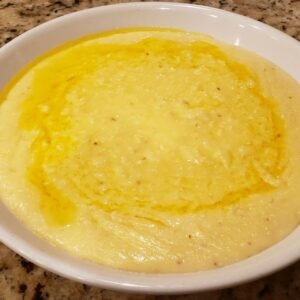
Southern-Style Stone Ground Grits

Equipment
- 4-Cup Measuring Cup
- Medium Pot
- Whisk
Ingredients
Stone Ground Grits
- 1 cup Stone Ground Speckled Grits white or yellow
- 6 cup Water 4 cups to start, 2 cups reserved
- 1 tsp Kosher Salt Morton brand
- 2 Tbsp Butter grass-fed, salted
Optional — Cheese Grits
- 4 oz American Cheese
- 2 oz Sharp Cheddar Cheese

Instructions
Prep
- Pour 1 cup of stone ground grits into a 4-cup measuring cup.
- Hold the cup under soft running cold water to wash the grits until loose husks float to the top and flow over the edge.
- Drain the water.
Cook
- Add the washed grits to a medium pot with 4 cups of water and the salt.
- Bring to a boil.
- Reduce to a simmer and cook for 30 minutes, stirring occasionally with a whisk.
- Use the reserved 2 cups of water to thin the grits as needed if they get too thick before the cooking time is up.
- When the grits are done, stir in the butter until melted.
Optional Cheese Addition
- Add the American cheese and sharp cheddar after the butter.
- Stir until melted and smooth.
Notes
Why This Recipe Works
I've been eating grits since I can remember eating, except as a kid it was in a little packet from Quaker brands and had little bits of imitation bacon in it. I thought that was good eating as a kid, but little did I know. When I discovered stone ground grits, it was game over. They are creamy with great texture and 100 times superior to anything being offered to you by a man in a hat with a big buckle.
Stone ground grits are fundamentally different from instant or quick-cooking versions. The stone grinding process leaves more of the corn's hull and germ intact, which means exponentially more flavor but also longer cooking times and a different hydration process entirely. When you cook stone ground grits properly, you're not just boiling corn-you're slowly hydrating each granule until it releases its starch and creates that creamy, cohesive texture that separates real grits from that packet nonsense. This is comfort food that requires patience and understanding, not just a timer.
The Technique That Matters
The key to perfect stone ground grits is gradual hydration with constant agitation early in the cooking process. You cannot treat these like rice where you set a ratio and walk away.
What You're Actually Doing
When you add stone ground grits to boiling salted water and whisk constantly for the first few minutes, you're preventing the granules from clumping together before they have a chance to hydrate individually. Once each piece of corn is surrounded by water and beginning to swell, you can reduce the heat and let them simmer gently. The whisking at the beginning is non-negotiable-skip it and you'll have lumps that never fully break down.
Professional kitchens often cook grits in a double boiler or very low oven specifically to prevent scorching on the bottom. At home, your medium pot on low heat works fine as long as you stir regularly. The grits will stick to the bottom if you ignore them, and once they stick and scorch, that burnt flavor permeates the entire batch. The gradual addition of reserved water lets you adjust consistency as the grits cook-some batches will absorb more liquid than others, and you want to control the final texture rather than being locked into a predetermined ratio that doesn't account for variables in the grits themselves.
Selecting and Preparing Stone Ground Grits
Not all stone ground grits are created equal. The variety of corn, the coarseness of the grind, and the freshness all affect cooking time and final flavor.
What to Look For
- Freshness indicators: Stone ground grits contain the germ, which means they can go rancid. Buy from sources with good turnover, and smell them before cooking-they should smell sweet and corny, not musty or bitter.
- Grind size: Speckled grits like many stone ground varieties have visible pieces of hull. Coarser grinds take longer to cook but have more texture. Finer stone ground grits cook faster but are still miles ahead of instant varieties in flavor.
- Storage: Keep stone ground grits in the refrigerator or freezer if you won't use them within a month. The oils in the germ can oxidize at room temperature, and you didn't come this far to eat rancid grits.
Common Mistakes and How to Avoid Them
Stone ground grits punish inattention and reward patience. Here's where most home cooks go wrong.
Problems and Solutions
- Problem: Lumpy, clumped grits that never smooth out → Solution: Whisk constantly for the first 3-5 minutes after adding grits to boiling water. Don't add grits to cold water and then heat-always add to boiling.
- Problem: Grits are still gritty and hard after the suggested cooking time → Solution: Keep cooking and add more of the reserved water. Stone ground grits can take 45 minutes to over an hour depending on the grind. They're done when they're done, not when the timer says so.
- Problem: Scorched bottom or burnt flavor → Solution: Lower your heat and stir more frequently. If you can hear sizzling or popping, the heat is too high. You want a gentle bubble, not a rolling boil.
- Problem: Grits are too thick or too thin → Solution: Use the reserved water to adjust consistency near the end of cooking. Grits will continue to thicken as they cool, so finish them slightly looser than your target texture.
Timing and Doneness
Forget the clock-your eyes, mouth, and spoon tell you when stone ground grits are finished. Cooking time varies from 30 minutes to over an hour depending on the specific grits you're using.
What Done Looks Like
Properly cooked stone ground grits are creamy and cohesive, with no raw corn taste or gritty texture between your teeth. They should flow slowly off a spoon but hold their shape on a plate. When you taste them, the corn flavor should be prominent and the texture completely tender-if you feel any hardness or detect a raw, starchy taste, keep cooking. The grits will also lose their opacity and develop a slight sheen when they're fully hydrated and cooked through.
Variations and Serving Suggestions
Plain grits with butter and salt are perfect on their own, but the cheese grits variation takes them to another level for dinner applications.
Make It Your Own
- Cheese grits: The combination of American cheese and sharp cheddar works because American cheese melts smoothly without breaking, while cheddar adds flavor. Add cheese after the grits are fully cooked and off heat, stirring until melted.
- Breakfast applications: Serve plain grits with butter, a fried egg, and hot sauce. Or go sweet with honey and cream-Southern tradition includes both savory and sweet preparations.
- Dinner base: Use grits as the foundation for shrimp and grits, braised short ribs, or sautéed mushrooms. The creamy texture balances rich, savory proteins perfectly.
- Liquid variations: Replace some of the water with chicken stock, or finish with heavy cream for extra richness. Milk can scorch easily, so if you use it, add it near the end rather than cooking in it.
Why It's Worth Making
Learning to make proper stone ground grits means you understand how to coax flavor and texture from a humble ingredient through patient technique. This isn't a convenience food-it's a dish that rewards attention and develops flavor through the cooking process itself. Once you've tasted real stone ground grits cooked properly, those instant packets become impossible to take seriously. The difference between mediocre grits and exceptional grits is entirely about technique and ingredient quality, and now you have both. Master this method and you'll have a foundation dish that works for any meal, any season, any occasion when you want real comfort food done right.
Recipe
Southern-Style Stone Ground Grits
Equipment
- 4-Cup Measuring Cup
- Medium Pot
- Whisk
Ingredients
Stone Ground Grits
- 1 cup Stone Ground Speckled Grits white or yellow
- 6 cup Water 4 cups to start, 2 cups reserved
- 1 teaspoon Kosher Salt Morton brand
- 2 tablespoon Butter grass-fed, salted
Optional - Cheese Grits
- 4 oz American Cheese
- 2 oz Sharp Cheddar Cheese
Instructions
Prep
- Pour 1 cup of stone ground grits into a 4-cup measuring cup.
- Hold the cup under soft running cold water to wash the grits until loose husks float to the top and flow over the edge.
- Drain the water.
Cook
- Add the washed grits to a medium pot with 4 cups of water and the salt.
- Bring to a boil.
- Reduce to a simmer and cook for 30 minutes, stirring occasionally with a whisk.
- Use the reserved 2 cups of water to thin the grits as needed if they get too thick before the cooking time is up.
- When the grits are done, stir in the butter until melted.
Optional Cheese Addition
- Add the American cheese and sharp cheddar after the butter.
- Stir until melted and smooth.


Was this helpful?
You must be logged in to post a comment.