
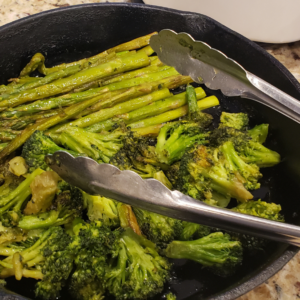
Roasted Broccoli with Garlic Butter

Equipment
- Large stockpot
- 10-Inch Cast Iron Skillet
- Oven
Ingredients
Roasted Broccoli
- 1 lb Broccoli Florets frozen
- 4 Tbsp Butter grass-fed, salted
- ½ tsp Garlic minced
- ½ tsp Kosher Salt Morton brand
- ¼ tsp Black Pepper ground
- 1 gallon Water for blanching

Instructions
- Preheat oven to 425°F.
- Bring 1 gallon of water to a boil in a large stockpot.
- Blanch the broccoli for 2-3 minutes until it turns bright green.
- Drain.
- Melt the butter over medium-high heat in a 10-inch cast iron skillet.
- Add the garlic and stir briefly.
- Toss the broccoli in the butter and garlic.
- Sprinkle with salt and pepper.
- Place the skillet in the oven for 15 minutes.
- Serve in the cast iron or transfer to a serving dish.
Notes
Why This Recipe Works
I started making this years ago for Thanksgiving because I needed another green dish on a table dominated by casseroles. Broccoli was the obvious choice, but only if it tasted good enough to earn its place next to all those rich, indulgent sides. The blanch-and-roast technique is what makes that possible. Most home cooks try to roast raw broccoli and end up with burnt florets and crunchy stems, or they steam it until it's gray and mushy. The restaurant solution splits the process: blanch first to cook it through, then roast at high heat to develop caramelization and flavor. The garlic butter adds saltiness and richness that helps the flavor profile without masking the natural sweetness that proper roasting creates. This works as a holiday side, a weeknight vegetable, or anything in between.
The Technique That Matters
The blanch-then-roast method is standard in professional kitchens because it gives you control over two separate phases: cooking and browning. When you try to do both simultaneously with raw broccoli, the timing never works-by the time the interior is tender, the exterior is burnt.
What You're Actually Doing
Blanching means dropping the broccoli into boiling water for 2-3 minutes, just long enough to cook it about 70% through and set that bright green color. The brief time in boiling water breaks down the tough cell structure without turning it to mush. Shocking it immediately in ice water stops the cooking process and locks in the color.
The roasting phase is where actual flavor develops. Dry broccoli-and this is critical-hits a hot cast iron skillet, and the Maillard reaction creates sweet, caramelized spots on the florets. This is what's missing when you skip the blanching step. Raw broccoli takes too long to cook through, so by the time the interior is done, the exterior is either burnt or you've had to lower the heat so much that you never get caramelization. Blanching first separates these two processes, giving you tender broccoli with genuinely browned, flavorful edges.
Selecting and Preparing Broccoli
Frozen florets are actually the smart choice here. They're flash-frozen at peak freshness, pre-cut to uniform size, and require zero prep work. If you're using fresh, look for tight, compact florets with no yellowing and firm stems that don't bend easily.
What to Look For
- Frozen quality: Choose bags with individually frozen florets, not a solid frozen block-they blanch more evenly and you can use exactly what you need without thawing everything
- Size uniformity: Similar-sized florets ensure everything finishes cooking at the same time, whether you're using frozen or fresh
- Color and condition: Deep green indicates proper freezing and storage; avoid bags with excessive ice crystals or visible freezer burn, which affects texture
Common Mistakes and How to Avoid Them
Most broccoli disasters come from trying to roast raw broccoli in one step or not drying the florets properly after blanching. Here's what typically goes wrong.
Problems and Solutions
- Problem: Broccoli steams instead of roasts, staying pale and limp → Solution: Pat the blanched florets completely dry with kitchen towels; any water clinging to them creates steam in the pan and prevents browning
- Problem: Burnt tips with crunchy, undercooked stems → Solution: Don't skip the blanching step; raw broccoli requires too much time at high heat to cook through, guaranteeing burnt exteriors
- Problem: Garlic burns and turns bitter → Solution: Add minced garlic to the butter off-heat or in the final minute of roasting; raw garlic burns almost instantly in a hot pan
- Problem: Soggy texture even after roasting → Solution: Use high heat and don't overcrowd the pan; broccoli needs space for moisture to evaporate and browning to occur
Timing and Doneness
The blanching time is non-negotiable: 2-3 minutes for frozen florets, no more. You're looking for bright green color and just-tender texture when you pierce the thickest part of the stem with a knife. It should still have some resistance-you're not cooking it all the way through. For roasting, 8-10 minutes in a preheated cast iron skillet at high heat gives you the caramelization you're after.
What Done Looks Like
Properly finished broccoli has deep golden-brown spots on the florets-not black char, not pale green, but genuinely caramelized brown patches. The stems should be fork-tender but not falling apart or mushy. When you toss it with the garlic butter, the florets should hold their shape while the butter coats every surface. You'll smell sweet, nutty notes instead of that sulfurous overcook smell that gives broccoli its bad reputation.
Variations and Serving Suggestions
Once you've mastered the base technique, this recipe adapts easily to different flavor profiles. The blanch-and-roast method works regardless of how you season it.
Make It Your Own
- Seasoning variations: Try lemon zest and red pepper flakes for brightness, or grated Parmesan and anchovy for umami depth; Asian-style works with sesame oil, soy sauce, and fresh ginger
- Dietary modifications: Swap butter for olive oil, ghee, or vegan butter; the technique remains identical and you still get the caramelization and flavor
- Serving ideas: Works as a side for any protein, tosses beautifully with pasta and olive oil, or serves as a base for grain bowls; this is weeknight dinner material that looks presentable enough for holiday tables
Why It's Worth Making
Learning the blanch-and-roast technique changes how you approach not just broccoli, but green beans, cauliflower, Brussels sprouts-any vegetable that benefits from both even cooking and caramelization. It's a fundamental professional method that translates perfectly to home cooking without requiring special equipment. This particular recipe proves that frozen vegetables, treated with proper technique, deliver restaurant-quality results without the premium price or tedious prep work. When broccoli tastes this good-sweet, nutty, with actual texture contrast between tender stems and crispy edges-it stops being the obligatory vegetable and becomes something people actively want on their plate. That's why it earned its place on my Thanksgiving table years ago, and why it's stayed there ever since.
Recipe
Roasted Broccoli with Garlic Butter
Equipment
- Large stockpot
- 10-Inch Cast Iron Skillet
- Oven
Ingredients
Roasted Broccoli
- 1 lb Broccoli Florets frozen
- 4 tablespoon Butter grass-fed, salted
- ½ teaspoon Garlic minced
- ½ teaspoon Kosher Salt Morton brand
- ¼ teaspoon Black Pepper ground
- 1 gallon Water for blanching
Instructions
- Preheat oven to 425°F.
- Bring 1 gallon of water to a boil in a large stockpot.
- Blanch the broccoli for 2-3 minutes until it turns bright green.
- Drain.
- Melt the butter over medium-high heat in a 10-inch cast iron skillet.
- Add the garlic and stir briefly.
- Toss the broccoli in the butter and garlic.
- Sprinkle with salt and pepper.
- Place the skillet in the oven for 15 minutes.
- Serve in the cast iron or transfer to a serving dish.

Was this helpful?
You must be logged in to post a comment.