
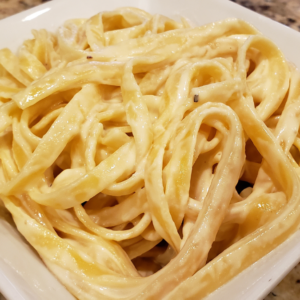
Rich and Creamy Fettucini Alfredo

Equipment
- Large Pot
- Colander
- Saucepan
- Whisk
Ingredients
Fettuccine
- 1 lb Fettuccine dried
- 1 gallon Water
- 2 Tbsp Kosher Salt Morton brand
Alfredo Sauce
- 4 Tbsp Butter grass-fed, salted
- 1 tsp Garlic minced
- 2 cups Heavy Cream 36-40% fat
- ½ tsp White Pepper ground
- 2 cups Parmesan Cheese grated

Instructions
Cook Pasta
- Bring 1 gallon of salted water to a boil.
- Cook the fettuccine according to package directions.
- Drain but do not rinse.
Make Alfredo Sauce
- Melt butter in a saucepan over medium-low heat.
- Add the garlic and sauté until it turns blond in color.
- Add the heavy cream and bring to a simmer.
- Let it simmer for 2-3 minutes.
- Whisk in the Parmesan cheese and white pepper.
- Let the sauce come back to a simmer and continue whisking for 3 minutes until the sauce is smooth and not grainy.
- Remove from heat.
Assemble
- Add the drained fettuccine directly to the sauce and toss to coat.
- Serve immediately with additional Parmesan cheese.
Notes
Why This Recipe Works
My first memory of truly great fettuccine Alfredo was at a small Italian restaurant in Tucker. I'd order it as my side dish alongside what was genuinely the best chicken parmigiana around. They never failed me-that sauce was smooth, rich, and luxurious without being heavy. It taught me early that Alfredo isn't about dumping cream and cheese in a pan and hoping for the best.
Fettuccine Alfredo gets a bad rap because most people have only experienced the American restaurant version-thick, gloppy, heavy sauce that sits in your stomach like concrete. The real technique is about emulsification: creating a smooth, creamy sauce where the butter and cheese bind with the cream through proper heat and constant movement. This isn't complicated, but it does require attention. You're coaxing fat and dairy proteins into cooperation, and that means respecting temperature and timing.
When you want something rich and satisfying-whether it's a Tuesday night dinner or you're cooking for someone special without spending three hours in the kitchen-proper Alfredo delivers. It's also genuinely kid-friendly without being dumbed down, which is a rare combination in comfort food.
The Technique That Matters
The key to Alfredo sauce is controlled emulsification. You're building a sauce where butter fat, cream, and Parmesan combine into something cohesive rather than separating into a greasy mess. This happens through gentle heat, constant movement, and adding ingredients in the right order.
What You're Actually Doing
Start with butter and garlic over medium heat-you're infusing the fat with flavor, not browning anything. Add the cream and bring it to a gentle simmer. This isn't a boil; you want small bubbles around the edges. The heat denatures the proteins in the cream just enough to help them bind with the cheese.
Here's where most home cooks mess up: they add all the Parmesan at once, the temperature drops, and the cheese clumps instead of melting. Add it gradually, whisking constantly. Each addition melts into the warm cream before the next goes in. The sauce should thicken from the cheese alone-no flour, no cornstarch. If you need thickeners beyond Parmesan, your technique needs work, not your ingredient list.
Professional kitchens keep pasta water handy for a reason. That starchy water is liquid gold for adjusting sauce consistency. If your Alfredo gets too thick, a tablespoon or two of pasta water loosens it while maintaining the silky texture. The starch in that water also helps the sauce cling to the pasta better than plain water ever could.
Selecting and Preparing Pasta and Ingredients
Quality matters more in simple recipes because there's nowhere to hide. With only five main ingredients doing the heavy lifting, each one needs to pull its weight.
What to Look For
- Fettuccine: Dried pasta is perfectly fine here-look for bronze-cut if possible. The rough surface holds sauce better than smooth, extruded pasta. Fresh fettuccine works too, but adjust cooking time significantly. The wide, flat shape is traditional because it carries the sauce beautifully.
- Heavy cream: Get the highest fat content you can find, 36-40%. Lower fat content means more water and less ability to create that rich, coating consistency. Ultra-pasteurized is fine; this isn't about subtle cream flavor.
- Parmesan: Buy a wedge and grate it yourself. Pre-grated includes anti-caking agents that prevent smooth melting. Real Parmigiano-Reggiano is ideal, but any aged, hard Italian cheese works. Room temperature cheese melts faster and more evenly.
- Butter: Unsalted or salted both work-adjust seasoning accordingly. European-style higher-fat butter makes an even richer sauce, but regular supermarket butter works perfectly well.
Common Mistakes and How to Avoid Them
Alfredo is unforgiving if you rush it or ignore temperature control. Here's what typically goes wrong and how to prevent it.
Problems and Solutions
- Problem: Sauce breaks and looks greasy or curdled → Solution: Heat was too high. Keep it at a gentle simmer, never a rolling boil. If it breaks, remove from heat and whisk in a tablespoon of cold cream to bring the temperature down and re-emulsify.
- Problem: Cheese clumps instead of melting smoothly → Solution: Cheese was too cold or added too fast. Let Parmesan come to room temperature, and add it gradually while whisking constantly. Make sure the cream is hot enough before adding cheese.
- Problem: Sauce is too thick or too thin → Solution: Adjust with pasta water, not more cream. Pasta water adds starch for body without diluting flavor. Add a tablespoon at a time until you reach the consistency where sauce coats a spoon but still flows.
- Problem: Pasta and sauce don't come together → Solution: Combine them while both are hot, and toss vigorously. The movement helps the sauce coat every strand. If the sauce slides off, it needed more cheese or pasta water for binding.
Timing and Doneness
Coordination matters here. You want the pasta to finish just as the sauce comes together-both should be hot when you combine them.
What Done Looks Like
Cook fettuccine to true al dente-it should have slight resistance when you bite through, not mushiness, but not crunch either. The pasta will continue cooking slightly when you toss it with the hot sauce, so pull it a minute before you think it's ready. Reserve a full cup of pasta water before draining.
The sauce is ready when it coats the back of a spoon and doesn't immediately run off. Draw your finger through the sauce on the spoon-the line should hold for a moment before slowly closing. It should look glossy and unified, not separated or grainy. If you see butter pooling separately, you've broken the emulsion.
Variations and Serving Suggestions
Once you master the base technique, Alfredo becomes a foundation for dozens of variations.
Make It Your Own
- Protein additions: Grilled chicken, sautéed shrimp, or crispy pancetta all work. Cook them separately and add at the end so they don't throw off the sauce timing. That Tucker restaurant served it with chicken parmigiana-still an unbeatable combination.
- Vegetable mix-ins: Peas, broccoli, or sautéed mushrooms add substance. Blanch vegetables separately, then toss with the finished pasta and sauce.
- Flavor variations: Fresh cracked black pepper instead of white for more bite. A pinch of nutmeg adds traditional Italian depth. Lemon zest brightens the richness without adding liquid.
- Serving suggestions: Keep sides simple-a crisp green salad with vinaigrette cuts the richness. Garlic bread is overkill since you've already got garlic in the sauce. A dry white wine like Pinot Grigio balances the cream.
Why It's Worth Making
Learning proper Alfredo technique teaches you emulsification principles that apply across dozens of sauces. Once you understand how to convince fat and liquid to play together, you've unlocked everything from pan sauces to hollandaise. This isn't just about making one pasta dish-it's about understanding a fundamental cooking method that professionals use constantly.
It's also genuinely satisfying to make something this rich and luxurious from such a short ingredient list. No special equipment, no exotic ingredients, just solid technique and quality basics. When you want comfort food that still feels special enough for company, Alfredo delivers every time.
Recipe
Rich and Creamy Fettucini Alfredo
Equipment
- Large Pot
- Colander
- Saucepan
- Whisk
Ingredients
Fettuccine
- 1 lb Fettuccine dried
- 1 gallon Water
- 2 tablespoon Kosher Salt Morton brand
Alfredo Sauce
- 4 tablespoon Butter grass-fed, salted
- 1 teaspoon Garlic minced
- 2 cups Heavy Cream 36-40% fat
- ½ teaspoon White Pepper ground
- 2 cups Parmesan Cheese grated
Instructions
Cook Pasta
- Bring 1 gallon of salted water to a boil.
- Cook the fettuccine according to package directions.
- Drain but do not rinse.
Make Alfredo Sauce
- Melt butter in a saucepan over medium-low heat.
- Add the garlic and sauté until it turns blond in color.
- Add the heavy cream and bring to a simmer.
- Let it simmer for 2-3 minutes.
- Whisk in the Parmesan cheese and white pepper.
- Let the sauce come back to a simmer and continue whisking for 3 minutes until the sauce is smooth and not grainy.
- Remove from heat.
Assemble
- Add the drained fettuccine directly to the sauce and toss to coat.
- Serve immediately with additional Parmesan cheese.

Was this helpful?
You must be logged in to post a comment.