
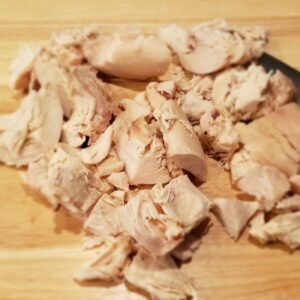
Rotisserie Chicken Breasts

Equipment
- Vacuum Sealer
- Vacuum Seal Bags
- Cutting Board
- Chef’s knife
Ingredients
- 1 whole Rotisserie Chicken store-bought, yields approximately 2 lb breast meat

Instructions
- Remove the skin from the chicken.
- Pull the breast meat from the bones.
- Discard the skin and bones.
- Roughly dice the meat.
Notes
Why Batch Rotisserie Chicken Breasts
It's Tuesday night. You got home at 6 PM, the kitchen is a mess from breakfast, and the idea of handling raw chicken, trimming it, seasoning it, and waiting 45 minutes for it to bake sounds unbearable. You're one bad decision away from ordering $45 worth of mediocre takeout.
Or you open your freezer, pull out a vacuum-sealed portion of rotisserie chicken breast that you prepped three weeks ago, and have dinner assembled in the time it takes to cook rice. Chicken fried rice. Chicken tacos. Chicken Caesar wraps. The protein is done-you're just building around it.
Here's what's funny: I won't even eat rotisserie chicken as-is. Never have. But for pulling apart and deploying into actual dishes? It's the best protein value at the warehouse clubs, hands down. No pre-cooking mess, no trimming raw meat on a Tuesday night when you're exhausted, just versatile cooked chicken ready to become whatever you need it to be.
The Restaurant Method
Professional kitchens don't start from scratch every time an order comes in. They prep components during slow periods and hold them for service. Proteins get cooked in bulk, portioned, vacuum sealed, and stored until they're needed. A line cook pulls exactly what they need, reheats it properly, and plates it in minutes.
You're doing the same thing at home. Buy rotisserie chickens when you're already at the store. Break them down when you have an hour on the weekend. Portion the breast meat into vacuum-sealed bags. Stack them flat in your freezer. When Tuesday night hits, you're pulling pre-cooked protein just like a restaurant-no raw chicken handling, no cook time, just quick assembly.
What Makes This Worth the Time
Store-bought rotisserie chicken is already cooked, already seasoned, and priced below raw chicken when you factor in your time and energy costs. At Costco or Sam's Club, you literally cannot find a better protein price value. You're not cooking from scratch here-you're processing a finished product into a more useful format. One hour of breaking down two chickens yields eight portions of ready-to-use breast meat. That's eight weeknight dinners where the hardest part is already handled.
Breast meat is the leanest, most versatile part of the rotisserie chicken. It reheats well, shreds cleanly, and works in everything from salads to tacos to stir-fries. Vacuum sealing prevents freezer burn and locks in moisture, so what you pull out of the freezer three months later tastes just as good as what you sealed on day one.
Time Investment & Meal Yield
Here's the honest math on what you're building when you batch rotisserie chicken breasts.
What You're Actually Building
- Active prep: 45-60 minutes hands-on (breaking down chickens, pulling breast meat, portioning)
- Passive cooking: 0 minutes (the store already cooked it for you)
- Portioning & sealing: 15 minutes (vacuum bags, labeled, dated)
- Result: 8 portions = 8 complete meals over the next 3-6 months
The Real-World Timeline
Two rotisserie chickens yield approximately 2 pounds of breast meat. Divide that into 4-ounce portions, and you've got eight vacuum-sealed bags in your freezer. Use one this week for chicken tacos. Pull another in two weeks for fried rice. Grab one in a month when you're making chicken Caesar salads. They sit in your freezer, ready to deploy, spreading that one-hour Sunday investment across eight separate dinners over the next several months.
Storage & The Freezer Reality
People hesitate about freezing cooked chicken for months, but let's talk about what's actually happening with commercial frozen food. That frozen pizza in your grocer's freezer? It sat in the manufacturer's warehouse freezer for weeks, then a distributor's freezer for weeks, then the grocery store's freezer for weeks before you even bought it. The sell-by date assumes it'll sit in your freezer for months more. Your vacuum-sealed rotisserie chicken has been through one freeze cycle, in a controlled environment, with professional-grade packaging. It's fresher than most "fresh" prepared foods at the grocery store.
Why Vacuum Sealing Changes Everything
- Flat storage: Vacuum-sealed bags stack efficiently, no freezer Tetris with bulky containers
- Fast thawing: Thaw overnight in the fridge, or quick-thaw in cold water if you forgot
- Zero freezer burn: 3-6 month freezer life with no quality loss-tastes fresh when reheated
- Professional standard: This is how restaurants store prepped proteins for service
The Commercial Food Comparison
Walk through the frozen aisle and check the dates on prepared meals. Most are manufactured 2-3 months before they hit store shelves. Add distributor storage, grocery store storage, and the time they expect it to sit in your freezer, and you're looking at 6-9 months from production to consumption. Your rotisserie chicken batch, vacuum sealed and frozen within hours of purchase, is significantly fresher and higher quality than anything in that aisle.
Cost Breakdown
Let's calculate the actual cost of batching rotisserie chicken breasts, using realistic warehouse club pricing and comparing it to what you'd pay for equivalent convenience.
Batch Cost Calculation
Ingredients breakdown:
- Rotisserie chickens: 2 whole chickens × $5.99 each = $11.98
- Vacuum seal bags: $0.50 per bag × 8 bags = $4.00
- Total batch cost: $15.98
- Portions created: 8 (4-ounce portions)
- Cost per portion: $15.98 ÷ 8 = $2.00
The Savings Add Up
Per-meal comparison:
- Homemade portion: $2.00 (just the chicken, before adding sides or assembly ingredients)
- Chipotle chicken bowl: $10.50
- Restaurant chicken entree: $14-18
- Grocery store pre-cooked chicken strips (12 oz): $8.99 (equivalent to 3 portions = $3.00 per portion)
- Savings per meal vs. Chipotle: $10.50 - $2.00 = $8.50
- Total batch savings: $8.50 × 8 portions = $68 saved compared to restaurant meals
Using This Component
Rotisserie chicken breast is the ultimate versatile protein. It's already seasoned, fully cooked, and ready to become whatever you need on any given night. Pull a portion from the freezer, thaw it overnight, and you're 15 minutes away from dinner.
Quick Assembly Meals
- Chicken Fried Rice: Thaw overnight, dice the chicken, stir-fry with day-old rice and frozen vegetables-dinner in 20 minutes
- Chicken Tacos: Shred the thawed chicken, warm it with taco seasoning, serve with tortillas and toppings-15 minutes to the table
- Chicken Caesar Wraps: Slice the chicken, toss with Caesar dressing and romaine, wrap in tortillas-lunch or dinner in 10 minutes
- Chicken Noodle Soup: Drop the frozen portion directly into simmering broth with noodles and vegetables-30 minutes total
This is how you stock a professional kitchen at home. One hour on Sunday breaking down two rotisserie chickens gives you eight ready-to-deploy portions in your freezer. No raw chicken handling on weeknights. No hour-long cook times when you're exhausted. Just grab a bag, thaw it, and build dinner around it. You're not meal prepping-you're operating like a restaurant line cook with a properly stocked walk-in freezer, except the walk-in is your garage freezer and the line cook is you on a Tuesday night when takeout was never really an option anyway.
Recipe
Rotisserie Chicken Breasts
Equipment
- Vacuum Sealer
- Vacuum Seal Bags
- Cutting Board
- Chef's knife
Ingredients
- 1 whole Rotisserie Chicken store-bought, yields approximately 2 lb breast meat
Instructions
- Remove the skin from the chicken.
- Pull the breast meat from the bones.
- Discard the skin and bones.
- Roughly dice the meat.
Was this helpful?
You must be logged in to post a comment.