
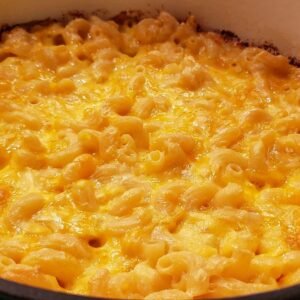
Creamy Macaroni and Cheese

Equipment
- 8-10 Quart Stockpot
- Colander
- 3-4 Quart Pot
- Whisk
- Casserole Dish
- Cast Iron Pan
- Ziplock Bags
Ingredients
Pasta
- 1 lb Macaroni Noodles or your favorite tube pasta
- 2 Tbsp Kosher Salt Morton brand, for pasta water
Cheese Sauce
- 4 oz Butter grass-fed, salted
- 2 Tbsp All Purpose Flour
- 4 ½ cup Half and Half
- 1 lb Mild Cheddar Cheese shredded
- ¼ lb Sharp Cheddar Cheese shredded
- ¼ lb American Cheese chopped
- 1 tsp Dijon Mustard
- 1 tsp Worcestershire Sauce
- ½ tsp Granulated Garlic
- 1 Tbsp Kosher Salt Morton brand
Topping
- ½ cup Sharp Cheddar Cheese shredded
Optional — For a Firmer Baked Mac and Cheese
- 3 Eggs large

Instructions
Cook Pasta
- Bring 5 quarts of water to a boil in an 8-10 quart stockpot.
- Add 2 Tbsp kosher salt.
- Add the noodles and stir until the water returns to a boil.
- Cook for 1 minute less than the package instructions for al dente.
- Drain and rinse with cold water to stop the cooking.
- Set aside.
Make Cheese Sauce
- Melt butter in a 3-4 quart pot over medium-low heat.
- Add flour and stir continuously for 5 minutes until fully incorporated.
- Turn off the heat and slowly whisk in the half and half, making sure there are no lumps.
- Turn heat back to medium-high and whisk until the sauce thickens.
- Reduce heat to low.
- Add Worcestershire sauce, Dijon mustard, granulated garlic, and kosher salt.
- Add the mild cheddar, sharp cheddar, and American cheese.
- Stir until fully melted and smooth.
- Simmer for about 5 minutes.
- Remove from heat.
Assemble
- Combine the cheese sauce with the cooked noodles in a large bowl when the sauce has cooled.
- Stir until every noodle is coated.
Bake
- Preheat oven to 350°F.
- Butter a casserole dish or cast iron pan.
- Transfer the mac and cheese to the dish.
- Cover and bake for 20 minutes.
- Remove the cover and bake for an additional 10 minutes until the top is golden and bubbly.
- Spread the 1/2 cup sharp cheddar evenly on top and place under the broiler for 3-5 minutes for an extra crispy browned crust.
Optional Egg Variation
- Whisk 3 eggs in a separate bowl.
- Fold eggs into the mac and cheese just before transferring to the baking dish.
- Increase the half and half to 5 cups to maintain the right consistency.
Notes
Why Batch Macaroni and Cheese
It's 6 PM on a Tuesday. You're fried from work, the kids are melting down, and the thought of boiling water, making a roux, and grating cheese sounds like climbing Everest. This is exactly when that vacuum-sealed portion of mac and cheese in your freezer becomes worth its weight in gold. Twenty minutes from frozen to table-just long enough to toss a salad or steam some broccoli. You're serving restaurant-quality comfort food while your neighbors are waiting 45 minutes for DoorDash.
I discovered mac and cheese as a teenager, and it became my kryptonite. Back then, we didn't make it from scratch-I found the boxed variety with the powdered cheese and thought it was magic. So simple to make that I'd eat tons of it. It took its toll on me, but it didn't stop me from loving mac and cheese. When I got older, I learned that macaroni and cheese could be a real delicacy if you made it properly. This is that version-the one I wished I'd known about back then, and the one that's perfect for Thanksgiving, Christmas, Easter, or quite frankly, any night of the week when you need a full warm plate of comfort.
Mac and cheese is the ultimate batch component because it's pure infrastructure. It's not trying to be a complete meal-it's the foundation that turns "what's for dinner?" panic into a solved problem. Pair it with rotisserie chicken and green beans, serve it alongside pulled pork, or let it stand alone when you need maximum comfort with minimum effort.
The Restaurant Method
Professional kitchens don't make mac and cheese to order during dinner service-they batch the components during prep shifts. You're doing the same thing at home. A proper cheese sauce built on a butter-flour roux, three different cheeses for complexity and melt quality, and pasta cooked just shy of al dente so it doesn't turn to mush when reheated.
What Makes This Worth the Time
The magic is in the cheese blend and technique. Mild cheddar provides the base, sharp cheddar adds flavor complexity, and American cheese-yes, American cheese-contributes sodium citrate, which keeps the sauce smooth and creamy even after freezing. The Dijon and Worcestershire aren't there to make this fancy; they're flavor amplifiers that make the cheese taste more like cheese. Cook the pasta two minutes less than package directions because it'll finish cooking when you reheat. This is professional prep work adapted for home freezers, and it delivers restaurant results because you're using restaurant methods.
Time Investment & Meal Yield
Here's the honest math on what you're building in one Sunday afternoon session:
What You're Actually Building
- Active prep: 45 minutes hands-on (making roux, shredding cheese, cooking pasta, combining)
- Passive cooking: 20 minutes simmering cheese sauce (you're cleaning up during this)
- Portioning & sealing: 15 minutes (dividing into portions, vacuum sealing, labeling)
- Result: 8 generous portions = 8 complete side dishes or 4-5 main course meals over the next 3 months
The Real-World Timeline
You'll pull the first portion this week when Wednesday gets chaotic. Another next week when you need comfort food fast. Two more when you're hosting a backyard cookout and need a crowd-pleasing side. The last portions will still be sitting there in February, ready to rescue a random Tuesday. That's the power of proper batch cooking-you invest 80 minutes once and collect dividends for months.
Storage & The Freezer Reality
Let's address the elephant in the room: "But it's been frozen for two months!" So what? That frozen lasagna at Costco has been in a manufacturer's freezer for weeks, a distributor's freezer for weeks, the store's freezer for weeks, and they expect it to sit in yours for months. Your mac and cheese went from stove to vacuum bag to freezer in under an hour. It's fresher than anything in the frozen food aisle.
Why Vacuum Sealing Changes Everything
- Flat storage: Stack portions like files in a drawer-no freezer Tetris required
- Fast thawing: Overnight in the fridge or 15 minutes in simmering water from frozen
- Zero freezer burn: 3-6 month freezer life with no ice crystals or off flavors
- Professional standard: Commercial kitchens vacuum seal prep precisely like this for service
The Commercial Food Comparison
Stouffer's mac and cheese was manufactured weeks ago, shipped to regional distributors, sat in grocery store freezers, and is labeled safe for months in your freezer. Your version has better cheese (actual cheddar, not "cheese sauce"), no stabilizers or preservatives, and went from fresh ingredients to sealed portion in one afternoon. You're eating higher quality food than you can buy, stored using the same professional methods that restaurants rely on.
Cost Breakdown
Let's calculate what you're actually spending to feed your family restaurant-quality mac and cheese:
Batch Cost Calculation
Ingredients breakdown (using Sam's Club/Costco bulk pricing):
- Pasta (macaroni, 1 lb): $1.50
- Half and half (4.5 cups): $3.00
- Mild cheddar (1 lb): $6.00
- Sharp cheddar (0.5 lb): $3.50
- American cheese (0.25 lb): $1.50
- Butter, flour, seasonings: $2.50
- Total batch cost: $18.00
- Portions created: 8 generous servings
- Cost per portion: $18.00 ÷ 8 = $2.25
The Savings Add Up
Per-meal comparison:
- Homemade portion: $2.25
- Restaurant mac and cheese side: $6-8
- Panera mac and cheese: $8.99
- Delivery mac and cheese entree: $12-15
- Savings per meal (vs restaurant side): $7.00 - $2.25 = $4.75
- Total batch savings: $4.75 × 8 = $38.00 saved compared to restaurant sides
And that's just the direct cost comparison. Factor in the delivery fees, tips, and gas you're not spending on last-minute restaurant runs, and you're easily saving $50-65 per batch while serving better quality food.
Using This Component
Here's how this batch component becomes actual dinners when Tuesday night hits and you're running on empty:
Quick Assembly Meals
- Classic Comfort Plate: Reheat mac and cheese, serve with rotisserie chicken and steamed broccoli-20 minutes total, complete meal
- BBQ Night Side: Thaw overnight, bake with breadcrumb topping while your pulled pork reheats-perfect backyard party side
- Kid-Friendly Main: Reheat from frozen, pair with baby carrots and apple slices-dinner on the table in 15 minutes when chaos strikes
- Potluck Hero: Thaw two portions, combine in a casserole dish, top with extra cheese and panko, bake-show up with restaurant-quality contribution
This is how you stock a professional kitchen at home. Cook once on Sunday, solve eight different weeknight dinner situations over the next three months, save $38 compared to restaurants, and reclaim your Tuesday nights from cooking exhaustion. Your freezer isn't storage-it's your secret weapon against decision fatigue and expensive takeout. That vacuum-sealed mac and cheese isn't just pasta and cheese sauce; it's future you being grateful that past you invested 80 minutes in building real food infrastructure.
Recipe
Creamy Macaroni and Cheese
Equipment
- 8-10 Quart Stockpot
- Colander
- 3-4 Quart Pot
- Whisk
- Casserole Dish
- Cast Iron Pan
- Ziplock Bags
Ingredients
Pasta
- 1 lb Macaroni Noodles or your favorite tube pasta
- 2 tablespoon Kosher Salt Morton brand, for pasta water
Cheese Sauce
- 4 oz Butter grass-fed, salted
- 2 tablespoon All Purpose Flour
- 4 ½ cup Half and Half
- 1 lb Mild Cheddar Cheese shredded
- ¼ lb Sharp Cheddar Cheese shredded
- ¼ lb American Cheese chopped
- 1 teaspoon Dijon Mustard
- 1 teaspoon Worcestershire Sauce
- ½ teaspoon Granulated Garlic
- 1 tablespoon Kosher Salt Morton brand
Topping
- ½ cup Sharp Cheddar Cheese shredded
Optional - For a Firmer Baked Mac and Cheese
- 3 Eggs large
Instructions
Cook Pasta
- Bring 5 quarts of water to a boil in an 8-10 quart stockpot.
- Add 2 tablespoon kosher salt.
- Add the noodles and stir until the water returns to a boil.
- Cook for 1 minute less than the package instructions for al dente.
- Drain and rinse with cold water to stop the cooking.
- Set aside.
Make Cheese Sauce
- Melt butter in a 3-4 quart pot over medium-low heat.
- Add flour and stir continuously for 5 minutes until fully incorporated.
- Turn off the heat and slowly whisk in the half and half, making sure there are no lumps.
- Turn heat back to medium-high and whisk until the sauce thickens.
- Reduce heat to low.
- Add Worcestershire sauce, Dijon mustard, granulated garlic, and kosher salt.
- Add the mild cheddar, sharp cheddar, and American cheese.
- Stir until fully melted and smooth.
- Simmer for about 5 minutes.
- Remove from heat.
Assemble
- Combine the cheese sauce with the cooked noodles in a large bowl when the sauce has cooled.
- Stir until every noodle is coated.
Bake
- Preheat oven to 350°F.
- Butter a casserole dish or cast iron pan.
- Transfer the mac and cheese to the dish.
- Cover and bake for 20 minutes.
- Remove the cover and bake for an additional 10 minutes until the top is golden and bubbly.
- Spread the ½ cup sharp cheddar evenly on top and place under the broiler for 3-5 minutes for an extra crispy browned crust.
Optional Egg Variation
- Whisk 3 eggs in a separate bowl.
- Fold eggs into the mac and cheese just before transferring to the baking dish.
- Increase the half and half to 5 cups to maintain the right consistency.
Was this helpful?
You must be logged in to post a comment.