
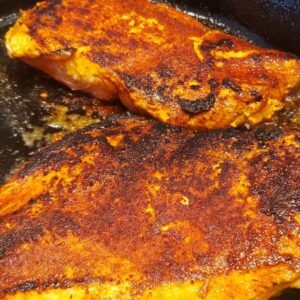
Blackened Chicken Breasts

Equipment
- Large 2.5-Gallon Ziplock Bag
- 2 Half-Sheet Pans
- Parchment Paper
- Aluminum foil
- Cast Iron Pan
- Meat thermometer
- Vacuum Seal Bags
- Vacuum Sealer
Ingredients
- 6 lb Chicken Breasts boneless, skinless
- 2 Tbsp Cajun Seasoning your favorite or recipe below
- 2 Tbsp Garlic minced
- ¼ cup Soy Sauce
- 6 oz Pineapple Juice
- 1 cup Orange Juice
- ½ cup Avocado Oil
- 1 cup Onion sliced, yellow or white
- 1 cup Green Peppers sliced
- ½ cup Butter grass-fed, unsalted
- ¼ cup Avocado Oil
- ¼ cup Cajun Seasoning

Instructions
- Place chicken breasts in large 2.5-gallon ziplock bag.
- Add 2 Tbsp Cajun seasoning, minced garlic, soy sauce, pineapple juice, orange juice, and 1/2 cup avocado oil to bag.
- Seal bag and massage to coat chicken evenly.
- Marinate chicken in refrigerator.
- Remove chicken from marinade and pat dry.
- Heat cast-iron pan over high heat.
- Add ghee to hot pan.
- Season chicken with 1/4 cup Cajun seasoning on all sides.
- Place chicken in hot pan.
- Cook until blackened crust forms and internal temperature reaches 165°F.
- Remove chicken from pan and let rest.
- Vacuum seal chicken in portions.
Notes
Why Batch Blackened Chicken Breasts
It's Tuesday night. You're exhausted from work, decision fatigue is real, and the thought of starting dinner from scratch makes takeout look tempting. But here's what changes the game: you open your freezer and pull out a vacuum-sealed portion of blackened chicken breasts with peppers and onions. Twenty minutes later, you've got restaurant-quality Cajun chicken over rice-the kind of dinner that would normally take 90 minutes of active cooking if you started from raw chicken breasts. This is the Tuesday night scenario that makes batch cooking worth every minute. You're not just prepping meals; you're building infrastructure that saves your weeknight sanity and reclaims hours you'd otherwise spend standing over a stove when you're already tired.
The Restaurant Method
In professional kitchens, we never start proteins from scratch during service. Everything is prepped during the day, portioned, and ready to fire when tickets come in. This blackened chicken uses the same system: marinate in bulk, sear in batches on screaming-hot cast iron for that signature crust, finish in the oven for consistent doneness, then portion and vacuum seal with the peppers and onions. When you need dinner, you're reheating a component that's 90% done, not starting from raw chicken breasts. The marinade-pineapple juice, orange juice, soy sauce, and Cajun seasoning-does double duty as both flavor builder and tenderizer, while the two-stage cooking method gives you that blackened crust without smoking out your kitchen.
Here's what I've learned after years of batch cooking chicken: once you've got the blackened chicken breasts already prepared and vacuum sealed, you can do what most restaurants do. I'll take one out, dice it up, toss it with Alfredo cream sauce I make in the pan and pasta that I've already got cooked and stored cold in the fridge. Toss that all together, and I've essentially replicated what casual dining chains charge $15 for-a great blackened chicken Alfredo pasta dish, ready to eat. That's the hardest and messiest part of the dish already done: cooking the chicken. Once that's handled, you're just assembling components.
What Makes This Worth the Time
Chicken breasts benefit massively from batch preparation for one critical reason: they're lean, which means they cook quickly but also dry out easily when reheated. This recipe solves that problem with an acidic marinade that keeps the meat tender, plus cooking to proper temp (165°F, no more) before vacuum sealing. The peppers and onions cook alongside the chicken, creating a complete component that reheats beautifully. You're also building in that restaurant-quality blackened crust-something you'd never achieve starting from scratch on a weeknight when you're rushing. Batch cooking chicken breasts this way means you get better texture and flavor than cooking them fresh when you're tired and distracted.
Time Investment & Meal Yield
Here's the honest math on what you're building with this batch component:
What You're Actually Building
- Active prep: 30 minutes hands-on (mixing marinade, trimming chicken breasts, slicing vegetables)
- Marinating time: 2-4 hours or overnight (you're doing literally anything else)
- Active cooking: 45 minutes (searing batches in cast iron, roasting in oven, sautéing peppers)
- Portioning & sealing: 15 minutes (vacuum bags, labeled, dated, stacked flat)
- Result: 24 servings = 24 complete weeknight dinners over the next 2-3 months
The Real-World Timeline
You'll use these portions spread across weeks and months-one tonight with rice, another next week in tacos, a third in salads when it's warm outside. This isn't meal prep where everything gets eaten in five days. This is building a freezer stash that gives you options. Each portion sits ready for the moment you need it, which might be next Tuesday or six weeks from now when your grocery pickup gets delayed. That's the power of properly vacuum-sealed batch components: they're there when you need them, not forcing you into a rigid meal schedule.
Storage & The Freezer Reality
Let's address the elephant in the room: yes, these chicken breasts will sit in your freezer for weeks or months. And that's completely fine-better than fine, actually. Frozen pizza sits in the manufacturer's freezer for weeks, then the distributor's freezer for weeks, then the grocery store's freezer for more weeks, and it's expected to sit in your freezer for months after that. Your batch components are fresher than any "fresh" prepared food at the grocery store because you control the entire timeline from raw ingredient to sealed package.
Why Vacuum Sealing Changes Everything
- Flat storage: Vacuum-sealed bags stack like files in a drawer-no freezer Tetris, no bulky containers taking up unnecessary space
- Fast thawing: Flat bags thaw overnight in the fridge, or you can reheat directly from frozen in a skillet with a splash of water
- Zero freezer burn: Properly vacuum sealed means 3-6 months of freezer life with quality that tastes fresh when reheated
- Professional standard: This is exactly how restaurants store prep between service days-you're using commercial kitchen methods at home
The Commercial Food Comparison
That rotisserie chicken at the grocery store? It was likely cooked yesterday, maybe the day before, sitting under heat lamps or in refrigeration. Your vacuum-sealed blackened chicken was cooked by you, portioned immediately, and frozen at peak quality. The frozen meals in the grocery freezer aisle went through weeks of storage and transport before you even bought them. Your batch components skip all that and go straight from your kitchen to your freezer, making them fresher and higher quality than anything you'd buy prepared.
Cost Breakdown
Let's do the actual math on what this batch costs versus what you'd pay at a restaurant for the same quality:
Batch Cost Calculation
Ingredients breakdown:
- Chicken breasts: 6 lbs × $2.99/lb = $17.94
- Cajun seasoning: $2.00 (using 6 tablespoon from bulk container)
- Pineapple juice, orange juice, soy sauce: $4.50
- Peppers, onions, garlic: $3.50
- Avocado oil and butter: $3.00
- Total batch cost: $30.94
- Portions created: 24 (each approximately 4 oz chicken plus peppers/onions)
- Cost per portion: $30.94 ÷ 24 = $1.29
The Savings Add Up
Per-meal comparison:
- Homemade portion: $1.29
- Restaurant equivalent: $12.99 (Cajun chicken plate at Applebee's or Chili's)
- Savings per meal: $12.99 - $1.29 = $11.70
- Total batch savings: $11.70 × 24 portions = $280.80 saved over restaurant dining
Even if you add rice, a vegetable side, and a dinner roll to each homemade meal (another $1.50 per serving), you're still at $2.79 per complete dinner versus $12.99 at a restaurant. And your version doesn't involve getting everyone in the car, waiting for a table, tipping, or dealing with oversalted chain restaurant food. You're eating better quality for less than a quarter of the cost.
Using This Component
Here's how this batch component becomes actual Tuesday night dinners without the stress:
Quick Assembly Meals
- Classic Cajun Chicken Bowl: Thaw overnight, reheat in skillet while rice cooks. Serve over rice with the peppers and onions, add a side salad. Dinner in 20 minutes.
- Blackened Chicken Alfredo Pasta: Dice the chicken, toss with Alfredo sauce made in the pan and cooked pasta from the fridge. Restaurant-quality dish in 20 minutes with minimal cleanup.
- Blackened Chicken Tacos: Reheat from frozen in a skillet, slice into strips, load into tortillas with shredded lettuce, cheese, and sour cream. Ready in 15 minutes.
- Cajun Chicken and Rice Soup: Dice the chicken, add to chicken broth with the peppers and onions, stir in cooked rice, heat through. Comfort food in 20 minutes flat.
This is how you stock a professional kitchen at home. You're not cooking from scratch every night-you're assembling meals from high-quality components you prepared when you had time and energy. Cook once, eat for weeks, save serious money, and reclaim your Tuesday nights from the stress of figuring out what's for dinner. Your freezer becomes a walk-in cooler stocked with components that actually solve the "what's for dinner" problem instead of just postponing it.
Recipe
Blackened Chicken Breasts
Equipment
- Large 2.5-Gallon Ziplock Bag
- 2 Half-Sheet Pans
- Parchment Paper
- Aluminum foil
- Cast Iron Pan
- Meat thermometer
- Vacuum Seal Bags
- Vacuum Sealer
Ingredients
- 6 lb Chicken Breasts boneless, skinless
- 2 tablespoon Cajun Seasoning your favorite or recipe below
- 2 tablespoon Garlic minced
- ¼ cup Soy Sauce
- 6 oz Pineapple Juice
- 1 cup Orange Juice
- ½ cup Avocado Oil
- 1 cup Onion sliced, yellow or white
- 1 cup Green Peppers sliced
- ½ cup Butter grass-fed, unsalted
- ¼ cup Avocado Oil
- ¼ cup Cajun Seasoning
Instructions
- Place chicken breasts in large 2.5-gallon ziplock bag.
- Add 2 tablespoon Cajun seasoning, minced garlic, soy sauce, pineapple juice, orange juice, and ½ cup avocado oil to bag.
- Seal bag and massage to coat chicken evenly.
- Marinate chicken in refrigerator.
- Remove chicken from marinade and pat dry.
- Heat cast-iron pan over high heat.
- Add ghee to hot pan.
- Season chicken with ¼ cup Cajun seasoning on all sides.
- Place chicken in hot pan.
- Cook until blackened crust forms and internal temperature reaches 165°F.
- Remove chicken from pan and let rest.
- Vacuum seal chicken in portions.
Was this helpful?
You must be logged in to post a comment.