
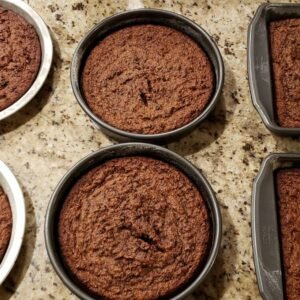
Jamaican Christmas Cake

Equipment
- Large Container
- Separate Mixing Bowl
- Electric Mixer
- 9-Inch Cake Pan
- Parchment Paper
- Roasting pan
- Wire Cooling Rack
- Skewer
- Sifter
- Measuring cups and spoons
Ingredients
Soaked Fruit (prepare at least 1 week ahead)
- 3 ¾ lb Raisins
- 5 lb Prunes
- 3 lb Currants
- 1 quart White Rum Wray & Nephew Overproof recommended, any white rum will work but overproof gives the cake more punch
- 2 quart Port Wine Taylor or any ruby port
Cake Batter
- 2 lb Butter grass-fed, salted
- 2 lb Sugar granulated
- 24 Eggs large
- 1 ½ Tbsp Browning Grace brand
- 3 Tbsp Vanilla Extract
- 1 ½ Tbsp Almond Extract
- Lemon zest of 1
- Lime zest of 1
Dry Ingredients
- 1 ½ lb All Purpose Flour
- 1 ½ lb Bread Crumbs
- 1 ½ Tbsp Baking Powder
- ¼ cup Pumpkin Pie Spice
- 1 tsp Kosher Salt Morton brand
For Finishing
- White Rum for drizzling over cooled cakes

Instructions
Soak the Fruit
- Combine the raisins, prunes, and currants in a large container at least 1 week before baking.
- Pour the white rum and port wine over the fruit.
- Stir to combine.
- Cover tightly and store in a cool dark place.
- Stir every couple of days until the fruit plumps as it absorbs the alcohol.
Batter
- Cream the butter and sugar together until light and fluffy.
- Beat in the eggs one at a time, making sure each is fully incorporated before adding the next.
- Stir in the vanilla extract, almond extract, browning, lemon zest, and lime zest.
Dry Ingredients
- Sift together the flour, bread crumbs, baking powder, pumpkin pie spice, and salt in a separate bowl.
- Gradually fold the dry mixture into the wet ingredients until just combined.
Combine
- Gently fold the soaked fruit with all of their liquid into the batter.
Bake
- Preheat oven to 300°F.
- Grease and line your cake pans.
- Pour the batter into the prepared pans, smoothing the tops.
- Place each cake pan inside a larger pan filled with about 1 inch of water.
- Bake for 2-3 hours.
- Check after 1 1/2 hours with a skewer inserted into the center until it comes out clean when done.
Finish
- Let the cakes cool in their pans.
- Drizzle additional white rum over the tops while still warm.
Storage
- Wrap cooled cakes tightly and store in airtight containers.
Notes
Why This Recipe Works
Every year, my wife's family carries on a beautiful tradition that started with her mother - making Christmas cake together. They gather at different houses in small groups, and the kitchen comes alive for the night. Flour everywhere, bowls and pans stacked up, the whole place buzzing with conversation and laughter. That kitchen is some of the best bonding time the family has all year - and I believe that was always the real point.
Then over the next few days and weeks they share their cakes with each other, and everyone has strong opinions about whose turned out best - though they always genuinely acknowledge the winner. Every cake is a little different, and every one carries something of her mother in it.
So here is what this recipe represents: my careful adaptation of what my wife's mother created. I documented her approach and recipe, and built this version to honor what she made so well for her family. The method involves properly macerating dried fruit in alcohol for weeks or months, building a batter structure strong enough to support pounds of boozy fruit without collapsing, and baking low and slow to create that dense, moist texture that actually improves over months. Her recipe stays with the family. This one carries her spirit forward.
The Technique That Matters
The magic happens before you even turn on your oven. Soaking raisins, prunes, and currants in white rum and port transforms dried fruit into something entirely different-plump, intensely flavored, and boozy in the best way. A week is the minimum; many Caribbean bakers start this process months before Christmas.
What You're Actually Doing
You're rehydrating fruit with alcohol instead of water, which serves multiple preservation and flavor purposes. The alcohol keeps this cake shelf-stable for months, adds complexity you can't get any other way, and creates moisture without sogginess. The fruit absorbs liquid slowly over time, which is why rushing this step produces noticeably inferior results.
When building the batter, you're creating structure strong enough to suspend pounds of heavy, alcohol-soaked fruit. The combination of flour and bread crumbs provides more support than flour alone-a professional baker's trick for fruit-heavy cakes that prevents center collapse. The browning isn't just for color; it adds bitter-caramel notes that balance sweetness and give that characteristic dark appearance. Baking low and slow prevents the outside from setting too quickly while the dense interior struggles to cook through all that fruit. This isn't a cake that's done in 45 minutes-it takes hours of gentle, even heat.
Selecting and Preparing Your Fruit
With nearly 12 pounds of dried fruit in this recipe, quality matters tremendously. This is where individual family variations really show up-everyone has their preferred combinations and opinions about soaking time.
What to Look For
- Plump, moist dried fruit: Avoid rock-hard raisins or prunes that have been sitting on shelves forever-they need to be pliable enough to absorb liquid properly over the soaking period
- Whole currants: Look for Zante currants specifically, not dried blueberries labeled as currants-the flavor profile and size are completely different
- Quality alcohol: Wray & Nephew overproof rum is traditional and gives proper Caribbean punch, but any white rum works-just know the flavor will be less assertive with standard-proof rum
- Ruby port: A decent ruby port works well-you want something with good fruit character that won't taste harsh after baking
Common Mistakes and How to Avoid Them
This cake has specific failure points that can ruin weeks of preparation. These are exactly the issues that lead to the friendly competition and behind-the-scenes judging at family gatherings.
Problems and Solutions
- Problem: Fruit isn't fully softened and plump → Solution: Don't rush the soaking time-one week minimum, and stir the fruit every few days to ensure even absorption throughout
- Problem: Cake sinks in the middle or has a dense, gummy center → Solution: Mix the batter thoroughly but don't overmix, ensure baking powder is fresh, and absolutely don't open the oven door during the first two hours
- Problem: Outside burns before inside finishes cooking → Solution: Use a water bath for gentle heat, tent with foil if browning too quickly, and trust the low temperature-this cake legitimately takes hours
- Problem: Cake is dry despite all the fruit → Solution: Feed it with rum immediately after baking while still warm, then continue feeding every few days until serving time
Timing and Doneness
With a cake this dense and fruit-heavy, visual cues and standard timing are less reliable than physical testing. This is where experience really shows-the successful bakers in my wife's family know this instinctively from years of practice.
What Done Looks Like
A skewer inserted into the center should come out with maybe a few moist crumbs but no wet batter clinging to it. The cake will have pulled away slightly from the pan edges, and the top should feel firm to gentle pressure-not spongy or jiggly. Internal temperature should read around 200°F in the center. These cakes are meant to be dense and moist, so don't expect a completely clean skewer like you would with standard layer cake. When in doubt, slightly overbaking is safer than underbaking-the rum feeding process will restore any moisture lost.
Variations and Serving Suggestions
While tradition matters with this cake, there's room for personal preference-which is exactly what every family member explores with their annual variations.
Make It Your Own
- Fruit additions: Some families add candied cherries, mixed peel, or chopped dates-keep the total weight similar and adjust soaking time if using larger fruit pieces
- Spice preferences: Traditional recipes use individual spices-cinnamon, nutmeg, and allspice in whatever ratio your family prefers
- Serving traditions: Slice thin-this is rich and intensely flavored-serve with rum cream, hard sauce, or simply alongside strong coffee or a glass of aged rum
- Aging protocol: Wrap cooled cake in rum-soaked cheesecloth, then wrap tightly in foil-feed with rum weekly by unwrapping and drizzling or brushing more rum over the surface
Why It's Worth Making
This isn't a recipe you make because it's quick or convenient-you make it because it's a tradition worth preserving and a technique worth understanding. Jamaican Christmas Cake represents the kind of celebratory baking that requires real commitment, and that commitment is part of what makes it meaningful. Yes, you could follow this documented recipe exactly and get consistent results every time. But you might also understand why my wife's family keeps winging it year after year-there's something valuable in the process itself, the all-night bonding time in that messy kitchen, the friendly competition, the pride in creating something unique each year. When you slice into a cake that's been aging for weeks, that's been fed with good rum, that carries the weight of Caribbean Christmas tradition, you're serving something that tells a story. Whether you follow the recipe precisely or eventually start improvising like the family bakers, you'll understand why this cake is worth every bit of effort.
Recipe
Jamaican Christmas Cake
Equipment
- Large Container
- Separate Mixing Bowl
- Electric Mixer
- 9-Inch Cake Pan
- Parchment Paper
- Roasting pan
- Wire Cooling Rack
- Skewer
- Sifter
- Measuring cups and spoons
Ingredients
Soaked Fruit (prepare at least 1 week ahead)
- 3 ¾ lb Raisins
- 5 lb Prunes
- 3 lb Currants
- 1 quart White Rum Wray & Nephew Overproof recommended, any white rum will work but overproof gives the cake more punch
- 2 quart Port Wine Taylor or any ruby port
Cake Batter
- 2 lb Butter grass-fed, salted
- 2 lb Sugar granulated
- 24 Eggs large
- 1 ½ tablespoon Browning Grace brand
- 3 tablespoon Vanilla Extract
- 1 ½ tablespoon Almond Extract
- Lemon zest of 1
- Lime zest of 1
Dry Ingredients
- 1 ½ lb All Purpose Flour
- 1 ½ lb Bread Crumbs
- 1 ½ tablespoon Baking Powder
- ¼ cup Pumpkin Pie Spice
- 1 teaspoon Kosher Salt Morton brand
For Finishing
- White Rum for drizzling over cooled cakes
Instructions
Soak the Fruit
- Combine the raisins, prunes, and currants in a large container at least 1 week before baking.
- Pour the white rum and port wine over the fruit.
- Stir to combine.
- Cover tightly and store in a cool dark place.
- Stir every couple of days until the fruit plumps as it absorbs the alcohol.
Batter
- Cream the butter and sugar together until light and fluffy.
- Beat in the eggs one at a time, making sure each is fully incorporated before adding the next.
- Stir in the vanilla extract, almond extract, browning, lemon zest, and lime zest.
Dry Ingredients
- Sift together the flour, bread crumbs, baking powder, pumpkin pie spice, and salt in a separate bowl.
- Gradually fold the dry mixture into the wet ingredients until just combined.
Combine
- Gently fold the soaked fruit with all of their liquid into the batter.
Bake
- Preheat oven to 300°F.
- Grease and line your cake pans.
- Pour the batter into the prepared pans, smoothing the tops.
- Place each cake pan inside a larger pan filled with about 1 inch of water.
- Bake for 2-3 hours.
- Check after 1 ½ hours with a skewer inserted into the center until it comes out clean when done.
Finish
- Let the cakes cool in their pans.
- Drizzle additional white rum over the tops while still warm.
Storage
- Wrap cooled cakes tightly and store in airtight containers.

Was this helpful?
You must be logged in to post a comment.